When I first started working as a ferro manganese supplier over a decade ago, I quickly learned that one of the most common questions I get from new clients—especially those in steel manufacturing—is how to tell ferromanganese apart from manganese metal. It’s not just a trivial distinction; getting this wrong can throw off entire production runs, lead to material waste, and even affect the quality of the final steel products. Back when I was new to the industry, I once had a small fabricator order the wrong material because they thought the two were interchangeable. The result? A week of delayed deliveries and a frustrated client who had to cover extra costs to correct their order. That experience taught me just how critical it is to break down these differences clearly. Ferro Manganese
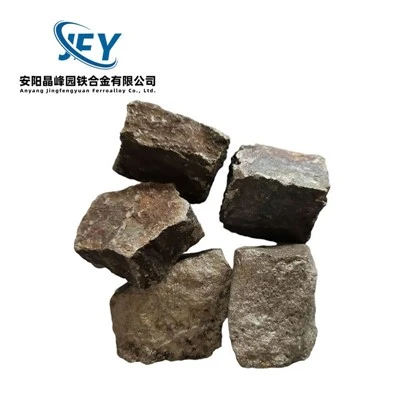
First, let’s start with the basics. Manganese metal is a pure element, found on the periodic table with the symbol Mn and atomic number 25. It’s a hard, brittle, silvery-white metal that’s rarely used in its pure form for industrial applications—mostly because it’s so reactive that it doesn’t hold up well on its own. Ferromanganese, on the other hand, is an alloy. It’s made by combining manganese ore with iron (and sometimes other elements like carbon or silicon) in a furnace, usually through a smelting process. This alloy is where the name comes from: “ferro” is Latin for iron, so it’s essentially manganese bound with iron.
The way each is produced is one of the biggest practical differences. Manganese metal is typically made via electrolysis—a process where electricity is used to separate pure manganese from its ore. This method is energy-intensive and results in a product that’s around 95% to 98% pure manganese. Ferromanganese, by contrast, is produced through carbothermic or silicothermic smelting. In carbothermic smelting, manganese ore, coke (carbon), and limestone are heated in a blast furnace at high temperatures. The carbon reacts with the oxygen in the ore, leaving behind a mix of manganese and iron. The most common grades of ferromanganese have between 70% and 80% manganese, plus iron, and small amounts of carbon (high-carbon ferromanganese has 6-7% carbon, while low-carbon has less than 1.5%). This production method is far more cost-effective for large-scale industrial use, which is why ferromanganese is the go-to material for most steel manufacturers.
Now, let’s talk about their key properties because that’s what matters most to buyers. Pure manganese metal has a high melting point—around 1246°C—and is very reactive, meaning it can oxidize quickly when exposed to air. It’s also much more brittle than many other metals, which makes it difficult to handle and incorporate into steel without specialized equipment. Ferromanganese, being an alloy, has a lower melting point (around 1200°C to 1300°C, depending on the grade) and is less reactive. The combination of manganese and iron gives it better structural stability, making it easier to transport, store, and add to molten steel during production.
Their roles in manufacturing are where the difference really shines. In steel production, both materials add manganese, which is a crucial element for strengthening steel, improving its hardness, and increasing its resistance to wear and corrosion. But how they do it is different. Manganese metal is used in specialized applications where ultra-high purity is required—like in the production of non-ferrous alloys, batteries, or some types of high-grade specialty steel. Since it’s pure, it doesn’t introduce extra elements that could contaminate the final product. Ferromanganese, however, is the workhorse of the steel industry. Every ton of steel made usually uses 5 to 15 kilograms of ferromanganese. The iron in the alloy blends seamlessly with the molten steel, and the manganese removes impurities like sulfur and oxygen, which makes the steel stronger and more ductile. That’s why 90% of all manganese consumed globally is in the form of ferromanganese—plain and simple, it’s just more practical for large-scale steelmaking.
Cost is another factor that’s on every buyer’s mind. Because producing pure manganese metal is so energy-intensive and requires more complex processing, it’s significantly more expensive than ferromanganese. For example, last year, the price of high-purity manganese metal was around two to three times higher than standard high-carbon ferromanganese. That’s a big difference for a steel mill that might buy thousands of tons of manganese material annually. Using ferrom锰 (wait, no, only English) – using ferromanganese cuts down costs without sacrificing the quality of the steel for most applications. Of course, if a mill needs pure manganese for a specialty product, they have to pay the premium, but for most standard steel grades, ferromanganese is the obvious choice.
I should also mention the different grades of ferromanganese, because that’s something buyers need to understand too. High-carbon ferromanganese is the most common, used in general steel production. Medium-carbon and low-carbon grades are used in more specialized applications, like stainless steel or electrical steel, where lower carbon content is important. Manganese metal, by comparison, is usually only available in one or two purity grades, since its main selling point is being pure.
Another key difference is handling and storage. Manganese metal’s high reactivity means it needs to be stored in airtight containers to prevent oxidation, which can make it unstable over time. Ferromanganese, being an alloy, is more stable—it can be stored in standard warehouses without special protection, which reduces logistical costs for suppliers and buyers alike. When it comes to adding the material to molten steel, ferromanganese’s alloy structure means it melts evenly and mixes well with the molten metal, while pure manganese can sometimes react too quickly, leading to uneven distribution if not handled properly.
Let me share a recent example from my own business to illustrate why this matters. A few months ago, a client who makes automotive steel parts contacted us asking for “manganese metal” because they thought it would make their parts stronger. After discussing their production process, I learned they were making standard mild steel—an application where ferromanganese is perfect. If they had ordered pure manganese metal, they would have spent 2.5 times more for a product that didn’t offer any additional benefit for their specific needs. We supplied them with high-carbon ferromanganese, which met their strength requirements, fit their budget, and was easy for their team to use in their existing melting setup. That’s the kind of consultation I prioritize as a ferro manganese supplier—making sure clients get the right material, not just what they asked for without context.
Now, it’s important to note that there are some misconceptions out there. Some people think ferromanganese is just “manganese with iron added,” but it’s more than that—the smelting process changes its properties in ways that make it far more useful for industrial applications. Pure manganese is good for certain niche uses, but it’s not designed for the bulk production that most manufacturers rely on. Another misconception is that ferromanganese is less pure, but for most steel applications, the small amount of iron and carbon in ferromanganese is actually beneficial. It’s the balance of elements that makes it effective.
If you’re a buyer trying to decide which material is right for your operation, here are a few questions to ask yourself: What type of steel or alloy am I making? Do I need ultra-high purity, or is standard grade sufficient? What’s my budget? For most standard carbon steel, structural steel, or pipe production, ferromanganese is the clear, cost-effective choice. For specialty steel, batteries, or non-ferrous alloys, pure manganese metal might be necessary. But even then, it’s worth checking with a trusted supplier to make sure you don’t overpay for something you don’t need.
As someone who’s been in this industry for years, I’ve seen how choosing the right manganese material can make or break a project. I’ve worked with small fabricators and large steel mills alike, and the one thing that stands out is that transparency about the difference between these two materials saves everyone time, money, and frustration.
If you’re currently sourcing manganese materials and you’re not sure whether ferromanganese or pure manganese metal is the right fit for your production, feel free to reach out to us to discuss your specific needs. We can walk you through the different grades, explain the pros and cons of each, and help you make a decision that works for your budget and product quality goals. Don’t hesitate to contact our team to start a conversation about your next order.
Cored Wire References
- "Ferromanganese Production and Applications", International Manganese Institute, 2022.
- "Manganese Metal: Properties and Industrial Uses", US Geological Survey Minerals Yearbook, 2021.
- "Steel Alloying Elements: Manganese and Its Alloys", Steel University, 2023.
- "Cost Comparison of Manganese Alloys and Pure Manganese", Industrial Materials Journal, 2022.
Anyang Jingfengyuan Ferroalloy Co., Ltd.
As one of the most professional ferro manganese manufacturers and suppliers in China, we’re featured by quality products and good price. Please rest assured to buy bulk ferro manganese in stock here and get quotation from our factory. We also accept customized orders.
Address: Longquan Town Industrial Park, Long’an District, Anyang City, Henan Province
E-mail: Jingfengyuan@jfyferroalloys.com
WebSite: https://www.jfy-ferroalloy.com/
