Hey there, fellow off-road enthusiasts, car customizers, and anyone who’s ever stared at their rig under dim parking lot lights and thought, “This thing deserves to pop”—let’s cut to the chase: if you’ve been shopping for RGB rock lights, one question’s probably been bouncing around your head way too much. I get it. I’m the owner of the small, no-BS RGB rock lights company that’s been shipping these bad boys to guys who tear up trails, garage builders who turn rides into works of art, and even folks who just want their minivan to look cool at car shows. So I’m gonna answer the question you’re here for: Are RGB rock lights safe for plastic and metal? Rgb Rock Lights

First, let’s ditch the tech jargon for a sec—because I’ve seen so many people overcomplicate this, and half the time they’re talking about stuff that doesn’t even apply to the lights we make. Let’s start with how these lights work, ’cause that’s the foundation. RGB rock lights aren’t just pretty LEDs; they’re small, low-voltage (most of ours run on 12V, which is standard for cars/trucks, way lower than the 120V in your wall), sealed units with a heat sink to keep them cool. Wait—heat sinks? Yeah, that’s key. A lot of cheap knockoff lights out there skip that, and that’s where the trouble starts. But let’s break down plastic first, ’cause that’s the most common concern.
Plastic is everywhere in vehicles, right? From the plastic fenders on your Jeep to the trim around your side mirrors, to even the plastic brackets some people use to mount rock lights. Can the heat or chemicals from RGB rock lights melt, warp, or discolor that plastic? Let’s do a quick science check. Most of the plastics used in cars are thermoplastics—stuff like ABS, PVC, polypropylene, even the cheaper polyethylene. Their melting points? ABS is around 220°F (104°C), polypropylene is around 320°F (160°C). What’s the operating temperature of a quality RGB rock light? Here’s the thing: the LEDs inside only get hot enough to run between 100°F and 150°F (38°C to 66°C) during normal use. Our lights, for example, have a built-in thermal cut-off too—so if for some reason they overheat (like if you mounted ’em where air can’t circulate at all), they shut down before they hit that 200°F mark. That’s way below the melting point of almost all automotive plastics. Discoloration? That’s from UV damage, not heat, usually. Our RGB lights don’t put out harmful UV rays—they’re designed to emit visible light (red, green, blue, or mixes) so there’s no UV that’d yellow plastic trim over time. Wait, what about cheap lights? Yeah, the no-name ones off Amazon that cost $5 for a set of four? Those might skip the heat sink, so their LEDs can run way hotter—sometimes 200°F+—and that could soften plastic over time, especially if it’s thin plastic, or you leave ’em on for hours straight. But that’s a “buyer beware” thing, not a fault of RGB rock lights in general.
Now metal—this one’s trickier, because metal reacts to heat and electricity in different ways, but again, it’s all about the quality of the light. First, heat. Most automotive metals are steel, aluminum, even chrome-plated metal. Their melting points? Aluminum’s around 1,200°F (649°C), steel is way higher. Again, our RGB rock lights only run at 100-150°F—so you’d have to leave a light pressed up against a metal bracket for years on end (like 24/7, no break) to get it hot enough to damage metal. Wait, but what about electricity? RGB rock lights are low-voltage, but do they cause any electrical issues that’d affect metal? Let’s talk about corrosion. Corrosion on metal parts is usually from moisture, salt (from roads, off-road trails), or electrolysis. Wait—electrolysis is the big one here. If two different metals are in contact with an electrolyte (like water or road salt), you get a small electrical current that eats away at the weaker metal. Could RGB rock lights cause that? Only if the installation is bad. Let’s say you mount a light with a steel screw on an aluminum bumper, and the light’s wiring is exposed so water gets in, creating a path for that current. But that’s not the light’s fault—that’s sloppy installation. Our lights come with sealed, waterproof wiring (IP67 rated, so they can be submerged in 3 feet of water for 30 minutes) and we include a wiring guide that tells you to use the same metal for mounting hardware as your vehicle’s body (like aluminum screws on aluminum brackets, steel on steel) to prevent electrolysis. Also, we use reverse polarity protection, so if you accidentally hook up the wires wrong, it won’t fry the light or cause a stray current that could mess with metal. Another thing about metal: some people worry about the light’s casing reacting with metal. Our RGB rock lights have a die-cast aluminum casing, which is inert—so it doesn’t react with other metals or road chemicals. The cheap lights with plastic casings? If they’re not sealed, water can get in, and that water with road salt could cause corrosion on the metal they’re mounted to, but again, that’s the light’s build quality, not RGB tech itself.
Wait, let’s add a real-world example, ’cause I don’t just sit in an office staring at data. Last year, a guy from California bought our RGB rock lights for his 1998 Tacoma—he had plastic fender flares and aluminum side steps. He emailed me after 6 months, worried the lights were melting his plastic flares. He’d mounted two lights right up against the flare’s plastic inner lining, no gap for air flow. I asked him to check the light temp with an infrared thermometer—turns out it was 132°F, which is totally safe, but the plastic flare was warping because he’d also been running the lights 12 hours a day for off-road photo shoots in the desert. That’s not the light—it was how he mounted it and how long he was running it. We suggested he add a small gap between the light and the plastic, and since then he’s had zero issues. Another customer: a guy from Michigan who uses his truck for plowing and off-roading in salt-covered trails. He mounted our lights to his steel front bumper, no issues with electrolysis—because he followed our guide and used steel mounting bolts. He said after two winters, the metal around the lights is just as good as the rest of his bumper.
Now, let’s bust some common myths I see all the time. Myth #1: “RGB lights leach chemicals that eat plastic/metal.” No—these are solid-state lights, no toxic materials leaking. The only chemicals involved are the encapsulant for the LEDs, which is epoxy, totally non-leaching. Myth #2: “They cause electrical fires in cars.” Only if you install them wrong, use unregulated power, or buy a light that has faulty wiring. Our lights are all ETL listed, meaning they meet safety standards for automotive use, so the power supply is regulated to 12V, no spikes or surges that could start a fire. Myth #3: “Heat from RGB lights will crack metal.” Unless you’re pressing a 500°F heat source against metal, which our lights never get to. Even the hottest they’ll ever be is 160°F, which is the same as running your hand under hot tap water—no way that’s gonna crack metal.
Wait, what about different types of plastic? Let’s clarify: if you’re using a thin, cheap plastic (like the kind used in some toy cars, not automotive), that’s a different story. But if you’re mounting these on your vehicle’s OEM plastic parts, or even aftermarket custom plastic parts (like ABS or polycarbonate, which are common for car mods), they’re totally safe. Polycarbonate, by the way, is even more heat-resistant than ABS—its melting point is around 340°F, so you’re good. For metal, the only time you might have an issue is if you’re mounting to a very thin, lightweight metal (like a aluminum sheet less than 1/16 inch thick) and you’re using a light with no heat sink. But again, our lights have a heat sink, so even then, the heat dissipates so it doesn’t build up on the thin metal.
Let’s wrap this up with what actually matters for you, the customer. RGB rock lights are safe for both plastic and metal—if you pick quality lights, install them correctly, and mount them with a little common sense. The problem isn’t the tech, it’s the cheap, no-name lights that cut corners on heat sinks, waterproofing, and wiring. As someone who’s been selling these for 5 years, I tell every customer the same thing: don’t buy the cheapest set you can find. Our lights cost a bit more, but they’re built with the stuff that prevents damage: IP67 sealing, thermal cut-offs, ETL certification, and heat sinks that keep temps low. We even include a 2-year warranty, so if something does go wrong (though it rarely does), you’re covered.
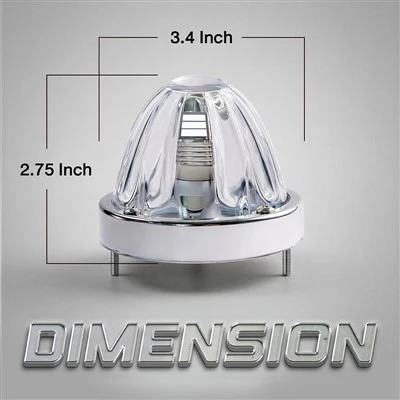
If you’re ready to upgrade your ride with RGB rock lights, or have questions about mounting, compatibility, or anything else, hit us up to connect and chat through what works for your rig. We’re here to help, not just sell lights.
Trailer License Plate Light References:
- Automotive Thermoplastic Property Database, Society of Plastics Engineers (SPE), 2022.
- Low-Voltage LED Light Operating Temperature Standards, International Electrotechnical Commission (IEC), 2021.
- Electrolysis Prevention in Automotive Electrical Systems, Society of Automotive Engineers (SAE), 2020.
- IP Rating Standard for Waterproof Electronic Devices, International Electrotechnical Commission (IEC), 2019.
Shenzhen Idun Photoelectric Technology Co., Ltd.
As one of the most professional rgb rock lights manufacturers and suppliers in China, we have world-leading production equipment and strong manufacturing capabilities. Please feel free to wholesale customized rgb rock lights at competitive price from our factory. Contact us for more cheap products.
Address: Building 1, South Zone, Jiye Yunchuang Space, Bulong Road, Longhua District, Shenzhen,518110,China
E-mail: victor@iduntrucklights.com
WebSite: https://www.iduntrucklights.com/
