Hey folks, let’s cut to the chase: if you’re here because you’re looking for answers on when scrubbers became mandatory, or you’re a facility manager, engineer, or just someone who’s sick of guessing why everyone’s suddenly talking about exhaust gas cleaning systems—you’re in the right spot. I’ve been selling scrubbers for 12 years now, and I’ve answered this question so many times, half the time I can recite the key dates in my sleep. But let’s break it down like we’re chatting over a coffee, no stuffy jargon, no corporate fluff, just the real story of how scrubbers went from “nice to have” to “do-or-die” for so many industries. Scrubber

First, let’s start with what a lot of people miss: scrubbers didn’t just pop up overnight because someone decided they liked cleaning air. The whole push started with the air we all breathe, and the rules governments finally got around to writing to stop industries from dumping crud into the atmosphere. Back in the day—like, pre-2000s—most places had weak, or no, limits on sulfur emissions, especially from ships, power plants, and big manufacturing sites. Yeah, I said ships. You might not think about a cargo ship belching exhaust halfway across the Atlantic, but those bad boys burn the cheapest, gnarliest fuel you can buy—high-sulfur bunker fuel, the stuff that’s basically leftover after refining gasoline. Before rules, that was totally fine. Ships could pump out as much sulfur as they wanted, power plants could burn coal with 3% sulfur no questions asked, and the air got hazier, more acidic, and way worse for people with asthma or heart issues.
The first big shift, honestly, was the International Maritime Organization (IMO) in 2008. Wait, that’s not a typo—IMO set the first global sulfur cap for ships in 2008, but hold up, that wasn’t mandatory yet. They were testing the waters, so to speak, for what would come. Back then, the cap was 3.5% sulfur globally, but they marked specific areas—called Emission Control Areas (ECAs)—like the Baltic Sea, North Sea, and the US/Canada coastal regions, where the cap would drop way lower, to 1%. Ship operators thought, “Cool, 2008 is a distant date, we can drag our feet on upgrading.” Spoiler: they couldn’t.
Fast forward to 2012. That’s when IMO finally made the ECA 1% cap mandatory. That was the first time scrubbers started moving from a niche product for tech nerds to something shipowners were actually shopping for. Because, let’s be real, if you run a fleet, you have two choices: either switch to low-sulfur fuel (which costs like 30% more than the cheap stuff) or install a scrubber. Scrubbers let you burn that high-sulfur fuel but clean the exhaust before it goes out the stack, so you don’t break the rules. A lot of operators went the scrubber route because, long-term, it saved them cash on fuel—especially for big ships that burn thousands of tons of bunker fuel a month. That’s when my phone started ringing off the hook, I swear.
But the big one, the one that made scrubbers mandatory for almost every ship on the planet, was 2020. Oh man, 2020 was a year that messed with everyone, but for the shipping industry, it was the line in the sand. IMO dropped the global sulfur cap from 3.5% to 0.5% mandatorily worldwide. No more “oh that’s just a rule for the ECAs.” This was every ship, everywhere. Suddenly, low-sulfur fuel jumped in price because demand spiked, and scrubbers went from a side project to a requirement. I had guys calling me at 2 a.m. from shipyards, begging for a quote because their vessel was scheduled to sail from Singapore in six months, and they still hadn’t fitted a scrubber. That’s the year scrubbers stopped being a “recommended upgrade” and became non-negotiable for international shipping.
Wait, but let’s not sleep on other industries, because scrubbers aren’t just for ships. Power plants got their own mandatory rules around the same time. The US EPA updated their Clean Air Act in 2011, setting strict limits on sulfur dioxide (SO2) and nitrogen oxides (NOx) from coal-fired power plants. A lot of older plants couldn’t afford to retool their boilers to burn low-sulfur coal, so scrubbers became the cost-effective fix. By 2015, most new power plants in the US were required to install flue-gas desulfurization (FGD) systems— that’s just the fancy term for the scrubbers we sell—to meet those limits. And it wasn’t just the US; the EU had similar rules kicking in around 2018, making scrubbers mandatory for power plants across the bloc by the early 2020s.
But here’s the thing: it’s not a single “one date scrubbers became mandatory” answer. That’s the mistake a lot of blogs make—they say 2020, and that’s it. No, it’s a chain of rules that built up over 15 years, industry by industry, until every major polluting sector had to have them. For example, the chemical manufacturing industry, which spews a ton of acid gases, got mandatory scrubber rules in 2022 under OSHA (the US Occupational Safety and Health Administration) and EU REACH regulations. Smaller industries like food processing, which has to clean exhaust from drying processes, started having local mandatory rules around 2019 too. So if you’re a small business owner asking when your sector made scrubbers mandatory, it depends on what you do—shipping? 2020. Power plant? 2015. Chemicals? 2022. That’s why it’s not a one-size-fits-all date.
Let me be honest here—there was a lot of pushback from industries back in the day. Shipowners complained scrubbers were too heavy, too expensive to install, too much hassle. Some tried to argue they’d just switch entirely to low-sulfur fuel and skip scrubbers. But by 2019, right before the 2020 cap kicked in, it was clear that wasn’t going to work. Low-sulfur fuel supplies were stretched thin, especially in Asia, where most ships are built and serviced. Scrubber manufacturers like us were cranking out units 24/7 to keep up. I remember one customer who told me he tried to delay his scrubber install for six months, and by the time he pulled the trigger, lead times were 12 months. He ended up paying a 20% premium just to get his unit in time for the 2020 deadline.
Now, you might be wondering—do scrubbers still need to be installed now? Absolutely. More rules are coming, actually. IMO has already announced that by 2030, the global sulfur cap might drop even lower, to 0.1% in some areas, and they’re working on rules for carbon emissions too—so we’re even building hybrid scrubbers that clean both sulfur and carbon, for future-proofing. That’s why if you’re behind on your install, don’t wait. Lead times for custom scrubbers are still long, and the last thing you want is to have a vessel or plant offline because you missed a compliance deadline and got a fine that could run into millions of dollars.
Wait, let’s circle back to the original question for a sec, because I know a lot of you are here for a clear answer. If you work in international shipping, the short answer is 2020— that’s when scrubbers became mandatory across almost all global trade routes. If you work in a US or EU power plant, it’s 2015. If you work in chemical or manufacturing, it’s usually between 2018 and 2023, depending on your location. And if you’re just someone curious about why scrubbers matter, that’s the timeline: from voluntary test runs in the 2000s to mandatory compliance in the 2010s and 2020s, driven by rules to clean up the air we all share.
I’ve been doing this long enough to see the impact too. Ten years ago, I’d meet customers who thought scrubbers were a scam, a way for vendors to line their pockets. Now, they come to me before they even build a new ship or a new power plant, because they know it’s non-negotiable. And honestly? That’s a good thing. The air over the North Sea is way clearer now than it was in 2010, and kids growing up today don’t have to deal with the same asthma spikes we saw when I was younger. Scrubbers aren’t just a piece of equipment—they’re how we make industries a little less harmful to everyone.
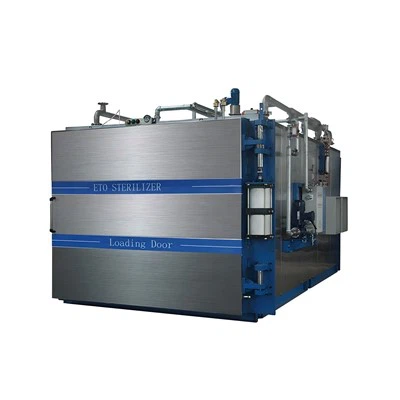
If you’re a fleet manager, plant operator, or engineer who needs to get compliant, or you just have questions about what type of scrubber works best for your operation—reach out. We’ve installed units on container ships, bulk carriers, coal plants, chemical facilities, even smaller commercial operations, and we can help you navigate the rules, cut through the jargon, and get the right system up and running without breaking the bank. No sales pitch, just straight talk—we’ve been in this for years, and we know what it takes to keep you on the right side of the regulations.
Industrial EO Sterilizer References
- International Maritime Organization. (2008). MARPOL Annex VI: Regulations for the Prevention of Air Pollution from Ships.
- U.S. Environmental Protection Agency. (2011). Clean Air Act Amendments: National Ambient Air Quality Standards for Sulfur Oxides.
- European Commission. (2015). Integrated Pollution Prevention and Control (IPPC) Directive: Industrial Emissions Rules.
- International Maritime Organization. (2019). Third IMO Greenhouse Gas Study 2019.
- Occupational Safety and Health Administration. (2022). Process Safety Management Standards for Chemical Manufacturing Facilities.
Hangzhou Riches Engineering Co., Ltd.
Hangzhou Riches Engineering Co., Ltd. is one of the most professional scrubber manufacturers and suppliers in China, specialized in providing high quality custom service and ODM service. We warmly welcome you to buy high-grade scrubber for sale here from our factory.
Address: No. 368, Wenjiao Road, Fuyang District, Hangzhou
E-mail: jason@riches-company.com
WebSite: https://www.eto-sterile.com/
