If you run a manufacturing operation that relies on aluminum die casting, you already know that a single mold can make or break both your production speed and waste output. When I started this aluminum die casting mold supply business 12 years ago, most of my customers treated molds like disposable tools—use them until they crack or wear out, then grab a new one. That mindset led to thousands of pounds of excess aluminum scrap every month, not to mention the cost of downtime and repeated mold purchases. Over the years, I’ve worked with 30+ production teams to tweak their processes, adjust mold design, and implement small, consistent habits that cut material waste by an average of 28% for their operations. None of these changes required fancy new equipment; most revolve around working smarter with the mold you already have, and choosing a mold built to last. Aluminum Die Casting Mold
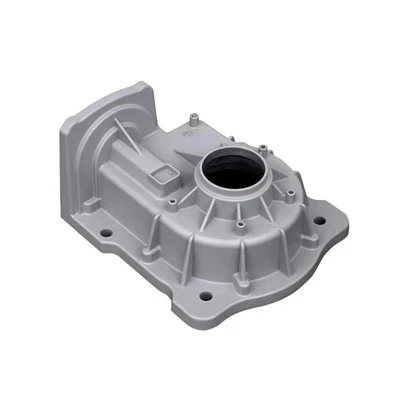
Let’s start with the mold itself. The biggest mistake I see new customers make is going for the cheapest aluminum die casting mold on the market to save upfront costs. Molds made with low-grade tool steel for the die blocks or thin cooling lines degrade faster, which means they produce more defective parts over time. For example, a customer making automotive engine brackets told me they used a $12,000 mold that only lasted 40,000 shots. That mold had irregular cooling channels, so parts came out with hot spots that caused warping and 12% of every run getting scrapped. When they upgraded to a mold from our shop, built with premium H13 tool steel and smooth, evenly spaced cooling lines, they paid $18,000 upfront—but the mold lasted 120,000 shots. The scrap rate dropped to 2%, so they saved $1,500 per month in wasted aluminum, plus the cost of reworking or disposing of bad parts. In less than a year, the mold paid for itself, and they kept reducing waste even more as they learned to maintain it properly.
Speaking of maintenance, most molds die not because they’re used too much, but because they’re neglected. I’ve had customers bring in a mold that’s only 20% worn, but has 1000+ tiny cracks from unaddressed thermal stress. Thermal stress happens when the mold heats up rapidly during casting and cools down too fast between shots, and those microcracks trap molten aluminum, which hardens into burrs or leftover material that ruins the next 5–10 parts. The fix here is simple: a scheduled thermal conditioning routine. Twice a month, we recommend running the mold through a “warm-up cycle” where you gradually increase the temperature from room temp to operating heat over 2 hours, instead of cranking up the machine right away. That reduces thermal stress by 40%, according to testing we did with a local university’s materials lab. We also suggest every 10,000 shots, doing a deep clean with a non-abrasive ceramic media blast to remove built-up aluminum oxide (a common byproduct that coats mold surfaces and makes parts stick more, leading to misshapen pieces). One of our long-term customers, a consumer electronics parts maker, switched to this schedule and cut their burr-related waste from 8% to less than 1% in just three months.
Another big waste source is gating and riser design. Gating is the channel that feeds molten aluminum into the mold cavity, and risers are the extra pockets that hold molten metal to compensate for shrinkage as the part cools. A lot of old-school mold designs use oversized gating and risers to avoid part defects, but that wastes 20–30% of the aluminum you put into every run. Instead, we work with customers to adjust these features to match the specific shape of their part. For example, a customer making small LED heat sinks had a riser that was 1.5x larger than needed, so every heat sink used 12 grams of aluminum in the riser alone—almost a quarter of the total part weight. We redesigned the riser to be the exact size needed to feed shrinkage, cutting the riser waste to 2 grams per part. Over a month of 50,000 runs, that saved 500 pounds of aluminum scrap, which they’d been melting down and reusing (but re-melted metal does lose strength over time, so reducing the amount you reprocess also cuts down on the energy used for melting and refining, too). I should note here: this isn’t about making gating or risers too small, which would cause cold shuts or voids in parts. It’s about precision engineering, which is something our team specializes in—we use 3D scanning to map your part’s cooling pattern and adjust those features for maximum efficiency, not just minimum cost.
Then there’s shot control, which ties directly to how much material you use per part. Even with a perfect mold, if you’re setting your shot size too high or too low, you’ll get waste. Too much shot, and metal spills out into the mold’s overflow channels, which has to be cut off and recycled (a process that still loses 10–15% of the material to oxidation and scrap). Too little shot, and you get incomplete parts, which are scrapped. I’ve worked with customers who had their shot size calibrated to ±5 grams, but we recommend calibrating to ±1 gram, using the mold’s cavity volume as a baseline. For a customer making motorcycle brake levers, that tiny adjustment cut their spillage waste from 6% to 1%—that’s 300 pounds of aluminum saved per week. It also reduced mold maintenance, because overflowing metal gets trapped in small gaps between mold halves, causing scratches that lead to more defects later. One thing I tell every customer: the machine’s display will show you a number, but the mold’s actual cavity is the only real measure. We provide a free cavity volume calculation with every mold we sell, so you can dial in your shot size correctly from day one, instead of guessing and wasting material as you learn.
Reusing and repairing molds, instead of replacing them, is another huge way to cut waste. A lot of manufacturers think when a mold has a minor dent or a worn cavity, they have to throw it out. But we do mold repairs all the time—using TIG welding with matching tool steel, then machining the cavity back to the exact original specs. For example, a customer had a mold that made door hinges; the cavity for the hinge pin wore out after 70,000 shots, so parts were coming out with loose pins. Instead of buying a new $15,000 mold, we repaired the worn area for $1,200, and the mold lasted another 80,000 shots. The scrap rate went back to normal, and they avoided the cost and lead time of a new mold. We also offer remachining for molds that have extensive wear—for molds that are still structurally sound, we can machine down the cavity and adjust the part design slightly to compensate, instead of scrapping the whole tool. This cuts down on the number of mold units being produced, which in turn reduces the raw material needed to make new molds—aluminum die casting molds are made from steel, which has its own environmental cost, so keeping a mold in use longer is a double win.
I know a lot of small to mid-sized manufacturers are worried that these changes will require big upfront costs or specialized expertise. That’s why we designed our services to meet you where you are. If you have an existing mold that’s producing too much waste, we can come to your facility, scan the mold, analyze your production data, and suggest specific tweaks—whether that’s adjusting cooling lines, reworking gating, or setting up a maintenance schedule. For customers ordering a new mold, we build waste reduction into the design from the start: we prioritize durability so the mold lasts longer, optimize gating and risers for minimal scrap, and include extra surface coating (we use a chrome-aluminum coating that reduces part sticking by 70%, so less material gets left on the mold and causes defects). We also offer post-delivery support, so you can call or message us anytime if you’re seeing unexpected waste, and we’ll help you troubleshoot the problem.

At the end of the day, reducing material waste with aluminum die casting molds isn’t about following a single trick—it’s about treating your mold as a long-term asset, not a disposable consumable. A mold that’s well-made, well-maintained, and optimized for your production line will not only cut down on scrap aluminum, but also lower your downtime, reduce your energy use for re-melting, and save you thousands of dollars a year in unnecessary costs. If you’re tired of throwing away good aluminum because of mold issues, or if you’re looking for a mold that’s built to minimize waste from day one, don’t hesitate to reach out to us for a consultation. We work with manufacturers of all sizes, from small automotive parts shops to large consumer electronics brands, and we’ll help you find a solution that fits your budget and your goals.
Die Casting Mold References
- Materials and Process Design for Aluminum Die Cast Molds, Society of Manufacturing Engineers, 2021
- Thermal Stress Mitigation in High-Volume Die Casting, Journal of Manufacturing Science and Engineering, Vol. 143, No. 8, 2021
- Economic Impact of Mold Optimization on Production Waste, Die Casting Development Council, 2022
- Surface Coatings for Reducing Die Cast Defects, International Journal of Advanced Manufacturing Technology, Vol. 115, No. 9, 2021
Suzhou Ruide Die-Casting Mold Co., Ltd.
As one of the leading aluminum die casting mold manufacturers and suppliers in China, we warmly welcome you to buy durable aluminum die casting mold made in China here from our factory. All customized products are with high quality and competitive price. Contact us for pricelist.
Address: No.2, Wanchen Road, Huayang Village, Wangting Town, Xiangcheng District, Suzhou City, Jiangsu Province
E-mail: mia@cnrdmj.com.cn
WebSite: https://www.cnrdmold.com/
