If you’ve ever shopped for carbon raiser products—whether you’re a foundry manager, metalworking engineer, or someone sourcing materials for steel or iron manufacturing—you’ve probably seen suppliers throw around the term “fixed carbon content” and wondered why it matters. As someone who’s spent 12 years in this industry, running a carbon raiser supply operation that works directly with foundries across North America and parts of Europe, I get how confusing this specification can feel. It’s not just a random number; it’s the single most critical metric that separates a carbon raiser that improves your melt quality from one that causes scrap, increased energy costs, or even equipment damage. Today, I’m breaking down exactly what fixed carbon content in carbon raiser is, why it varies so much between products, and how to make sure you’re getting the right number for your operation. Carbon Raiser
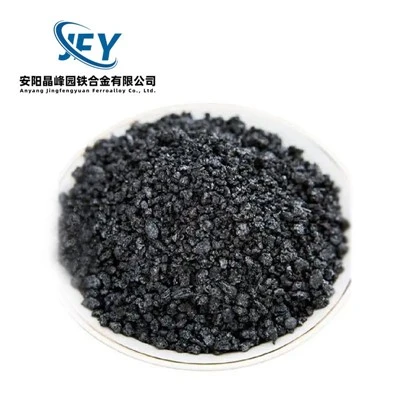
First, let’s start with the basics: carbon raiser, also called recarburizer, is a carbon-rich material added to molten iron and steel during the foundry or steelmaking process to boost carbon levels to the precise grade required. For example, gray iron needs a carbon content of 2.5–4% to have the right strength and machinability, while ductile iron often sits at 3.6–3.9%. If your base melt only has 2% carbon, you add carbon raiser to make up the difference. Now, fixed carbon is not the same as total carbon. Total carbon includes all carbon in the material, including volatile compounds—think moisture, tar, and small hydrocarbon molecules that burn off during heating. Fixed carbon is the solid, stable carbon that remains after all volatiles are removed when the material is heated to 950°C in an oxygen-free environment, per standard testing methods like ASTM D3172. That’s the part that actually dissolves into the molten metal to adjust its carbon content. The volatiles just burn away as smoke or gas, so they’re useless for your process—even a high total carbon product can be a waste if its fixed carbon is low.
So, what’s the typical fixed carbon content you’ll find in commercial carbon raiser products? Let’s be clear: there’s no universal number, because it depends on the raw material used and how it’s processed. The lowest grade carbon raiser, often made from low-quality coal pitch or unprocessed petroleum coke, usually has a fixed carbon content of 85–90%. Then you have the mid-grade products, made from calcined petroleum coke (CPC) that’s been heat-treated to remove most volatiles, which clocks in at 92–98% fixed carbon. The highest grade, which we supply for precision steel and high-performance iron applications, boasts 98.5–99.5% fixed carbon. Wait, why such a big gap? Let’s break that down.
Raw material is the biggest driver. Petroleum coke is a byproduct of oil refining, and it comes in two main types: fuel grade and needle coke. Fuel grade coke is cheaper, dirtier, and has high levels of sulfur, ash, and volatiles—so when calcined, it only has 85–90% fixed carbon. Needle coke, on the other hand, is a purer, more structured byproduct used in graphite electrodes, which means it has far fewer impurities and volatile compounds to burn off. That translates to a much higher fixed carbon content. Then there’s coal-based carbon raiser, which is made from anthracite coal or coal tar pitch. Anthracite-based carbon raiser usually has fixed carbon in the low to mid 90s, while coal-tar-based products can hit 95–97% fixed carbon, but they often have higher polycyclic aromatic hydrocarbons (PAHs), which can be a safety concern in enclosed foundry spaces.
Processing also plays a huge role. Calcination is the process of heating raw carbon material to between 1200°C and 1500°C in a controlled atmosphere to remove volatiles and moisture. If a supplier skips calcination to cut costs, the fixed carbon content will be artificially low—those volatiles will burn off in your furnace, not theirs, meaning you’re paying for a product that doesn’t deliver the carbon you’re paying for. Some suppliers will test for total carbon instead of fixed carbon to hide this, but that’s a red flag. At our operation, we calcine all our carbon raisers to a minimum of 1800°F (roughly 980°C) to ensure we’re removing as many volatiles as possible without degrading the carbon structure, which is why our premium grade hits 99.2% fixed carbon on average.
Now, why does this matter for your business? Let’s do a quick cost-benefit analysis, because that’s what most of my clients care about. If you buy a low-grade carbon raiser with 88% fixed carbon, you’ll need to add more of it to reach your desired carbon level. That means more material handling, more time spent adding it to the melt, and more ash and residual impurities from the volatiles that don’t contribute to carbon content. Those impurities can end up in your final product, leading to defects like porosity or brittleness, which force you to scrap parts or rework them. On the other hand, a high fixed carbon product means you need less of it: a 99% fixed carbon product delivers almost 15% more usable carbon per pound than an 85% fixed carbon product. Even if the premium product costs 20% more per pound, you’ll end up spending less total because you need less material, and you’ll have fewer defects. I’ve had clients switch from low-grade to our premium grade and cut their carbon raiser costs by 12% within the first quarter, while also reducing scrap rates by 8%. That’s not a small win.
There’s also a myth floating around that higher fixed carbon means higher sulfur content, which is a big concern for steelmakers, since excess sulfur causes hot shortness (brittleness when hot). That’s not true for reputable suppliers who process their carbon raiser correctly. When we calcine needle coke, we also remove most of the sulfur—our premium grade has a sulfur content of less than 0.05%, which is far lower than industry standards for most steel applications. Low-grade fuel coke, however, can have sulfur content up to 1%, which is why it’s only used for aluminum melting or other non-ferrous processes where sulfur isn’t a problem. So fixed carbon and impurity levels are linked, but only if the supplier is doing the processing right.
Another common mistake I see is customers not matching fixed carbon content to their specific process. For example, a small foundry making gray iron castings for garden tools might not need a 99% fixed carbon product—they can save money with a 95% fixed carbon coal-based product that works just as well for their needs. But a large foundry making high-stress ductile iron parts for automotive engines, or a steel mill making alloy steel for turbines, needs that high fixed carbon to avoid defects. That’s why we don’t sell a one-size-fits-all product; we test each client’s base melt and required grade to recommend the right fixed carbon level. Last year, a client in Detroit was buying a 98% fixed carbon product for their ductile iron, but after testing their melt, we found they only needed 96.5% fixed carbon. Switching to our mid-grade product saved them $45,000 a year, no loss in melt quality.
Now, how do you verify the fixed carbon content of a carbon raiser before you buy it? First, ask for a Certificate of Analysis (CoA) from the supplier. A legitimate CoA will list fixed carbon, total carbon, volatile matter, ash, sulfur, and moisture content—if it only lists total carbon, that’s a sign they’re hiding something. Second, look for suppliers that use standardized testing methods, like ASTM D3172 for fixed carbon and ASTM D3175 for volatile matter. Third, ask for third-party test results. We work with independent testing labs to verify all our product specs, and we share those results with clients who request them. I once had a client who tried a competitor’s carbon raiser that claimed 95% fixed carbon, but third-party testing showed it was only 88%—that’s a huge difference, and it would have cost them thousands in wasted material and defects.
As a carbon raiser supplier, my top priority isn’t just to sell you a product—it’s to make sure it solves your specific problem. Too many suppliers cut corners on calcination or use low-grade raw materials to offer lower upfront prices, but that ends up costing their clients more in the long run. Fixed carbon content isn’t just a number on a spec sheet; it’s the measure of how much value you’re getting from your carbon raiser. For foundries and steel mills, every pound of usable carbon means less rework, lower energy costs, and higher quality final products.
If you’re currently sourcing carbon raiser and not sure if your fixed carbon content is right for your operation, or if you’re seeing inconsistent melt quality that you suspect is linked to your recarburizer, I’m here to help. We can work with you to test your base melt, assess your process requirements, and recommend the right fixed carbon level for your needs—no one-size-fits-all solutions, just tailored advice that saves you money and reduces defects. Whether you’re a small job shop or a large industrial facility, we have the products and expertise to support your operation. Reach out to our team to schedule a consultation and get a custom quote that fits your budget and needs.
Carbon Raiser References:
ASTM International. (2020). Standard Test Method for Proximate Analysis of Coal and Coke. ASTM D3172-20.
ASTM International. (2021). Standard Test Method for Volatile Matter Analysis of Coal and Coke. ASTM D3175-21.
Foundry Trade Journal. (2022). “Recarburizer Specs: What Every Foundry Manager Needs to Know.” Foundry Trade Journal, Vol. 196, No. 3792, pp. 45–50.
Steel Manufacturers Association. (2021). “The Role of Recarburizers in Modern Steelmaking.” SMA Technical Bulletin TB-21-04.
Anyang Jingfengyuan Ferroalloy Co., Ltd.
As one of the most professional carbon raiser manufacturers and suppliers in China, we’re featured by quality products and good price. Please rest assured to buy bulk carbon raiser in stock here and get quotation from our factory. We also accept customized orders.
Address: Longquan Town Industrial Park, Long’an District, Anyang City, Henan Province
E-mail: Jingfengyuan@jfyferroalloys.com
WebSite: https://www.jfy-ferroalloy.com/
