Let me take you behind the scenes of our workshop floor to answer the question we get more than any other these days: What is a waterproof battery charger panel? For 12 years, I’ve stood next to our assembly line as techs solder tiny circuit boards, test every water resistance rating, and ship panels to hikers, RV owners, construction crews, and everyone in between who needs power that doesn’t quit when the weather turns. If you’ve ever been stuck with a dead phone mid-hike after an unexpected downpour, or watched your RV batteries die because a spray of lake water hit their charger, this is the product that solves exactly those problems—and I’m going to break it down like I’d explain it to a new intern on day one. Battery Charger Panel
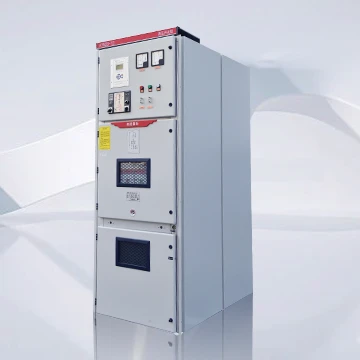
First, let’s get rid of the biggest misconception floating around the internet right now: a waterproof battery charger panel isn’t just a regular charger stuck in a plastic bag. It’s a purpose-built system designed to charge lead-acid, lithium-ion, or deep-cycle batteries while being fully protected from water, moisture, dust, and even short exposure to harsh chemicals or UV rays. Most standard chargers stop working the second a drop hits their internal circuitry—water is an excellent conductor of electricity, and it creates short circuits that fry circuits in seconds. Our waterproof panels are engineered to prevent that, and every step of their design centers on one core promise: consistent charging, no matter where you use them.
Let’s start with the core components, because that’s where the science lives. The foundation of every waterproof panel is a sealed, rigid or semi-rigid enclosure—usually made of heavy-duty ABS plastic or marine-grade aluminum, depending on the model. For marine or industrial use, we go with aluminum because it also blocks EMI (electromagnetic interference) that can mess with sensitive battery systems, like the ones in electric boats or medical equipment. That enclosure isn’t just a box; it’s IP-rated, which is non-negotiable for waterproof panels. The IP code is a two-digit rating: the first digit is dust protection, the second is water. For our standard waterproof panels, we use IP65 ratings, which means they’re completely dust-tight and resistant to low-pressure water jets from any direction—perfect for rain, hose-downs, or splashes from a lake. For extreme environments, like construction sites in monsoon season or offshore rigs, we build IP67 panels that can be submerged in up to 1 meter of water for 30 minutes, no problem.
Inside that enclosure, the key parts are the charge controller, the input/output ports, and the sealing gaskets. The charge controller is the brain—this is what regulates the voltage and current coming into the battery, preventing overcharging, over-discharging, or damage from power surges. The big mistake cheap suppliers make here is putting a regular, uncoated controller in a waterproof box. At our facility, we coat every charge controller in a conformal polymer layer—usually acrylic or silicone—before it goes into the enclosure. That coating acts like a raincoat for the circuit board, stopping any moisture that does seep in from touching the metal traces. We test every single coated board by spraying it with salt water (for marine units) and letting it sit for 72 hours before we even connect it to a battery. If it doesn’t charge consistently through the test, it gets tossed—no exceptions, even if it’s just a tiny defect in the coating.
Then there are the ports and the seals. The ports for plugging in your battery or a charging cable have their own waterproofing, not just the enclosure. We use rubber grommets and sealed, water-resistant connectors—often rated for IP65 or higher—instead of the flimsy screw-on ports you see on cheap no-name panels. The gaskets that line the lid of the enclosure are made of EPDM rubber, the same stuff used in car windshield seals and marine hatches. They’re engineered to compress exactly when the lid is tightened, creating a moisture-tight barrier that never degrades, even after years of temperature swings from 120°F summer work sites to 0°F winter RV trips. We test every gasket by opening and closing a panel 10,000 times, which is roughly 20 years of regular use, before it’s approved for production.
Now, let’s talk about what makes these panels different from other waterproof charging solutions you might have seen—like a waterproof portable charger you can toss in your backpack. Those are small, designed for short-term power, usually for phones or small gadgets. A waterproof battery charger panel is built for deep-cycle batteries—the kind that power RVs, boats, forklifts, solar off-grid systems, even medical equipment for field work. That means they have higher wattage ratings (we make models from 12V 10A for small boats up to 48V 50A for industrial forklifts), they can run continuously for weeks on end, and they’re designed to be mounted permanently, not just carried around. Last year, we shipped a batch of our IP67 24V panels to a team working on a research station in Antarctica—they needed to charge their deep-cycle batteries in -40°F temperatures, with blizzards that blow snow horizontally for days. Those panels didn’t skip a charge cycle all winter, and that’s exactly the standard we build every unit to.
Another question I get all the time: Can a waterproof battery charger panel be charged itself? The answer is yes, but not the same way as a solar panel (though some panels do integrate solar input). Wait, let’s clarify: Most waterproof battery charger panels have two connections: an input (usually for a wall outlet or solar array) and an output that connects to your battery. But for portable off-grid use, we also make hybrid waterproof panels that have a 12V input for a car or portable solar charger, plus the output for your deep-cycle battery. So for example, if you’re camping off-grid, you can plug a small portable solar panel into the input of your waterproof charger panel, and the panel will then charge your RV’s house battery, even if it’s raining. That’s a game-changer for anyone who doesn’t have a permanent solar setup.
Let’s get real about common use cases, because that’s where these panels earn their name. Take a construction worker on a highway job site in Florida: it rained three days last week, and the lead-acid battery for the crane lift was dying because the standard charger they used kept shorting out when it rained. We supplied them with 12 waterproof 12V charger panels, and after three weeks of rain, not a single one had a failure. Or the small boat owner in the Pacific Northwest: their old charger would stop working after a season of saltwater spray and occasional waves washing over the dock. Our IP65 marine-rated panels are mounted under their console, and last summer, their boat was swamped in a small storm—they dried it out for 24 hours, plugged the charger back in, and it worked like new. That’s not luck; that’s intentional design.
But here’s the thing: not all waterproof battery charger panels are created equal, and that’s why so many people end up with a unit that fails after a few months. We see this all the time. Some cheap suppliers will take a standard plastic enclosure, slap a charge controller in it, and call it waterproof because it’s got a plastic lid. But that enclosure isn’t IP-rated, the gaskets are made of cheap rubber that cracks after a few months of UV exposure, and the charge controller has no conformal coating. Last quarter, a customer sent back a panel that stopped working after two months of use on his farm—we tested it, and found that dust and moisture had seeped through a gap in the lid’s gasket, corroding the circuit board. That’s not a waterproof panel; that’s a plastic box with a charger inside. We have a 5-year warranty on every waterproof panel we make, and that warranty isn’t just a marketing line—it’s because we test every unit to make sure it stands up to the real weather, not just a lab test.
Let’s also address a common concern: Are waterproof battery charger panels safe? The short answer is yes, when they’re built correctly. Water and electricity sound scary, but the IP rating and conformal coating prevent water from touching the live circuits. All our panels are UL-listed and CE-certified, which means they meet strict safety standards for overcharge protection, short-circuit protection, and thermal shutdown. We test for overcurrent by running 150% of the rated wattage through each panel for 24 hours straight—if it doesn’t shut off and stop charging safely, it gets rejected. That’s why our panels are used in medical settings too; a clinic we work with uses them to charge backup batteries for portable ultrasound machines that are used in remote areas without power. They can get splashed, dropped in rain, and still work when a patient needs a scan.
Now, I want to talk about where the future of waterproof battery charger panels is going, because that’s what keeps us up at night in our engineering department. Over the past two years, we’ve been working on panels that integrate with smart battery systems—so you can control charging rates, check battery health, and get alerts for issues like overheating, right from your phone. We’re also developing panels that are even more energy-efficient, so they use less power while charging, which is a big deal for off-grid systems that run on solar. The next big leap is combining waterproof panels with renewable energy inputs, like small wind turbines, so users can charge their batteries without ever having to plug into the grid, no matter the weather. But even as we innovate, we’re not cutting corners on the basics: the sealing, the conformal coating, the IP ratings. That’s non-negotiable.
So if you’re here because you need a waterproof battery charger panel for your work, your equipment, or your personal gear, don’t settle for a cheap box. Ask for the IP rating, ask about conformal coating, ask about the warranty, and ask for real-world testimonials from customers who use them in the same conditions you do. For over a decade, we’ve built our reputation on making panels that work when the weather is bad, because we know that when your power matters, you can’t afford for your charger to fail. Whether you’re a contractor working through monsoon season, a boater dealing with salt spray, a farmer in a rural area with unreliable power, or anyone who needs to keep their batteries charged no matter what, our waterproof battery charger panels are built for that exact purpose.
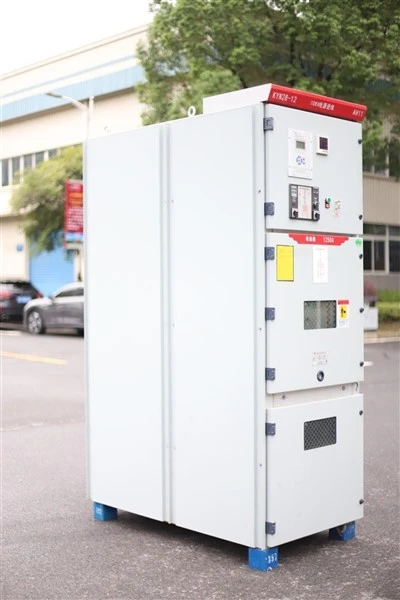
If you’re looking for a reliable, durable waterproof battery charger panel for your application, we’d love to discuss your specific needs—whether that’s a custom wattage, IP rating, or feature set. Reach out to us to connect with our team to talk through your requirements, get a quote, or ask any other questions you have about our panels. We’re here to help you keep your power running, no matter the conditions.
Motor Soft Starter References
- International Electrotechnical Commission. IEC 60529: Degrees of Protection Provided by Enclosures (IP Code). 2013.
- Underwriters Laboratories. UL 1236: Standard for Safety for Battery Chargers. 2021.
- American Boat and Yacht Council. ABYC H-24: Battery Charging Systems for Marine Vessels. 2020.
- European Committee for Electrotechnical Standardization. EN 60335-2-29: Household and Similar Electrical Appliances – Safety – Part 2-29: Particular Requirements for Battery Chargers. 2019.
Worldwide Electric Stock Co., Ltd.
As one of the most professional battery charger panel manufacturers and suppliers in China, we have world-leading production equipment and strong manufacturing capabilities. Please feel free to buy advanced battery charger panel at competitive price from our factory.
Address: No. 1 Wanzhou Road, Xiangyang City, Hubei Province, China
E-mail: sales@worldwide-electric.com.cn
WebSite: https://www.wwegroup-electric.com/
