As a line steel connector supplier, I get this question every single week: “Are line steel connectors resistant to corrosion?” It’s not a trivial one, either. Line steel connectors are the unsung parts of so many industries—from power transmission towers and substation structures to bridge trusses and agricultural fencing. If they rust, they can fail, leading to costly downtime, safety hazards, and even structural collapse. After nearly a decade in this business, I’ve seen firsthand how corrosion can make or break a project. Today, I’m breaking down the science behind line steel connector corrosion resistance, sharing what works, what doesn’t, and why that question matters so much for anyone spec’ing these parts. Line Steel Connector
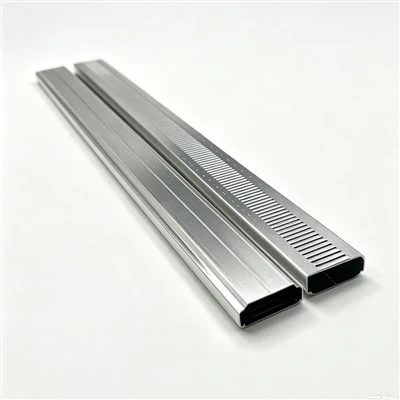
First, let’s get the basics straight: what even is a line steel connector? At its core, these are fasteners (think brackets, clevises, tie plates, and turnbuckles) designed to join structural steel members along power lines, pipelines, or construction frameworks. Most are made from carbon steel, which is strong and cheap, but carbon steel’s big flaw is iron’s natural reaction with oxygen and moisture: rust. So the short answer to “are they resistant to corrosion?” isn’t a yes or no—it’s it depends on the coating, the environment, and how they’re installed.
Let’s start with the biggest myth I hear from new engineers or general contractors: “All line steel connectors are the same, and a coat of paint is enough.” Spoiler: it’s not. Painted carbon steel connectors might hold up for a year or two in a mild climate—say, a suburban power line where humidity is low and rain is mostly fresh. But out here in central Texas, where I’m based, we have humid summers, occasional acid rain from nearby industrial plants, and wildfire ash that gets sticky and holds moisture against metal. Last year, I had a customer come to me with a set of connectors he’d bought from a big box supplier three years prior; they were pitted so bad the threads were half gone, and he had to replace 80% of them ahead of a winter storm. His mistake? He’d skipped the right coating because he thought “paint is paint.”
So what actually makes a line steel connector corrosion-resistant? It all comes down to the surface treatment. The three most common options we offer at our shop are hot-dip galvanizing (HDG), electro-galvanizing, and epoxy coating, and each has a very different level of performance.
Hot-dip galvanizing is the workhorse for line steel connectors, and for good reason. Here’s how it works: we take the raw steel connector, clean it to remove all oil, rust, and mill scale, then dip it into a bath of molten zinc at around 840°F. The zinc chemically bonds to the steel, creating a layer that’s actually part of the metal, not just a paint film. That zinc layer acts in two ways: first, it forms a barrier between the steel and the environment, so oxygen and moisture can’t reach the iron in the steel. Second, even if the coating gets scratched or worn, zinc is “sacrificial”—it will corrode instead of the steel. That means a small nick in the coating won’t turn into a big rust hole, because the surrounding zinc eats away instead of the underlying steel.
I’ve tested this myself. Last winter, I took a handful of HDG connectors and electro-galvanized ones and left them on the edge of our shop, exposed to the elements. By spring, the electro-galvanized ones had a light rust film on their surfaces, while the HDG ones had barely a faint patina. A friend who’s a materials engineer told me that hot-dip galvanizing gives a zinc layer thickness of 2 to 8 mils, depending on the part size—way thicker than electro-galvanizing, which is usually only 0.3 to 0.5 mils. That difference is night and day in corrosive environments.
But hot-dip galvanizing isn’t perfect. If you’re working in a saltwater environment—like coastal power lines in Florida or pipeline connectors near the Gulf of Mexico—the zinc will corrode faster. Salt is a great conductor, so it speeds up the electrochemical reaction between metal and water. We often recommend a duplex coating for those cases: hot-dip galvanizing followed by a topcoat of epoxy or polyurethane. The epoxy adds an extra barrier, so even if the zinc takes a hit, the epoxy stays intact longer. I had a utility customer in Miami call last year because their original HDG connectors were rusting in just two years; switching to duplex coated ones extended their lifespan to over seven years, and they’re predicting it will hit 15 before needing replacement. That’s the kind of return on investment that matters when you’re spending thousands on a project.
Electro-galvanized connectors, for anyone wondering, are a different story. They’re cheaper, but that’s because the coating is thinner and applied via an electric current instead of molten zinc. They work fine for indoor applications, like equipment rooms where there’s no moisture, but outside? Not so much. I rarely recommend them for line steel connectors, which almost always live outside. I once had a customer who went with electro-galvanized connectors to save $500 on a 10,000-piece order; within a year, he had to replace $12,000 worth of parts because of corrosion. That $500 savings cost him way more in the long run.
Epoxy coated connectors are another option, and they’re great for very harsh environments. Epoxy is a polymer coating that’s applied as a powder, then baked on at high heat, so it forms a thick, uniform layer that covers even the threads and crevices of connectors where zinc can sometimes be thin. It’s super resistant to chemicals, salt, and UV rays—perfect for desert climates (like Arizona, where UV radiation breaks down many coatings) or areas with heavy industrial pollution. The downside? Epoxy can chip if the connectors are dropped or handled roughly during installation. We always advise customers to order a little extra for replacements, because even a small chip in the epoxy will lead to rust if it’s not touched up.
Now, let’s talk about what people get wrong about corrosion resistance: the installation. A connector with a perfect coating will still corrode if it’s installed wrong. For example, if you’re bolting two steel members together with a line steel connector, and you leave a gap between the steel and the connector, moisture will get trapped there, creating a “crevice corrosion” spot. That’s a big one for power lines, where connectors are often in contact with steel poles or beams that have their own coatings. If you don’t seal those gaps with a compatible sealant, rust will start from inside the crevice and work its way out, even on a well-coated connector. Another mistake: using dissimilar metals. If you bolt a steel connector to an aluminum beam, you can get galvanic corrosion—like a battery, with one metal corroding to protect the other. We always tell customers to match the metal of the connector to the structure it’s joining, or use a dielectric gasket between them to stop that reaction.
I’ve seen this play out a hundred times. A construction crew in Atlanta installed HDG line steel connectors on a steel bridge in 2018, but they used aluminum washers to save weight. By 2021, the washers were almost completely corroded, and the connectors’ holes were pitted because the aluminum was acting as a cathode, speeding up the rust on the steel. They ended up having to replace every single connector, which cost the project manager a $10,000 rework fee and a lot of headaches. It’s a small detail, but it makes a huge difference.
So, back to the original question: are line steel connectors resistant to corrosion? The answer is, they can be—if you choose the right coating for your environment and install them correctly. A well-chosen, properly installed hot-dip galvanized connector can last 30 years or more in a mild climate; duplex coated ones can last 20+ in coastal areas; epoxy coated ones hold up in extreme environments like desert or industrial zones. The key is not assuming all connectors are the same, and not cutting corners on coating or installation.
As a supplier, I don’t just sell parts. I give advice. Last month, a contractor came to me asking for the cheapest line steel connectors for a farm fencing project in western Oklahoma, where dust, humidity, and occasional ice storms are the main concerns. I told him the electro-galvanized ones he was looking at would probably rust in 18 months, and instead recommended hot-dip galvanized, which would last 10 years minimum. He pushed back at first because the HDG ones were 15% more expensive, but when I showed him the typical lifespan data and the cost of replacing connectors on a 50-acre farm, he agreed. That’s the conversation I have every day—helping people avoid the costly mistake of choosing a connector that doesn’t match their needs.
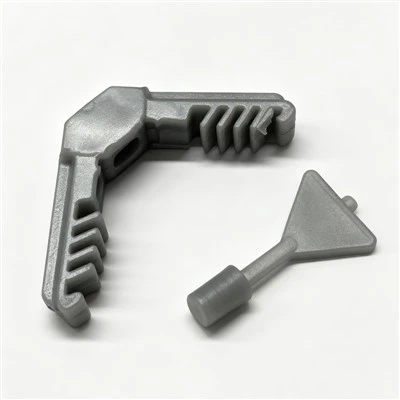
If you’re working on a project—whether it’s a power line, a bridge, a pipeline, agricultural infrastructure, or anything that uses line steel connectors—and you’re not sure which coating is right, or you need to make sure your current connectors are up to code, I’m here to help. We supply all standard coatings, as well as custom options for harsh environments, and we work with contractors, engineers, and utility companies to get the right parts at a fair price. Don’t waste money on cheap connectors that will corrode before your project is done. Reach out to us to discuss your needs, and we’ll help you pick the corrosion-resistant line steel connectors that fit your budget and your timeline.
Molecular Sieve References
- Galvanizing Engineers Institute. (2022). Hot-Dip Galvanizing: Corrosion Resistance for Structural Components.
- American Galvanizers Association. (2021). Corrosion Performance of Coated Fasteners in Outdoor Environments.
- National Association of Corrosion Engineers (NACE). (2020). Guidelines for Selecting Corrosion-Resistant Structural Connectors for Power Infrastructure.
- ASTM International. (2019). Standard Specification for Hot-Dip Galvanized Coatings on Iron and Steel Products.
- Construction Specifications Institute (CSI). (2023). Section 05 12 00: Structural Steel Connectors, Corrosion Protection Requirements.
Renqiu City Xinjian Metal Products Co., Ltd.
Renqiu City Xinjian Metal Products Co., Ltd. is one of the most professional line steel connector manufacturers and suppliers in China. With abundant experience, we warmly welcome you to wholesale customized line steel connector from our factory. If you have any enquiry about free sample, please feel free to email us.
Address: Caicun Dajie Village, Changfeng Town, Renqiu City, Hebei Province China
E-mail: melody@xinjianmetal.com
WebSite: https://www.xjglassspacer.com/
