If you’ve ever stood on a scorching summer afternoon, fanning yourself while sticky sweat drips down your neck, you’ve probably wondered if there’s an easier way to cool off without cranking an AC that runs your electric bill through the roof. That’s where a cooling mist generator comes in – and no, it’s not just a fancy spray bottle for your backyard. As a supplier of these units, I talk to people every week who have no clue what they do, why they work, or when they’re actually useful. Let me break it down like I would to a new customer, no jargon, no stuffy textbook stuff. Cooling Mist Generator
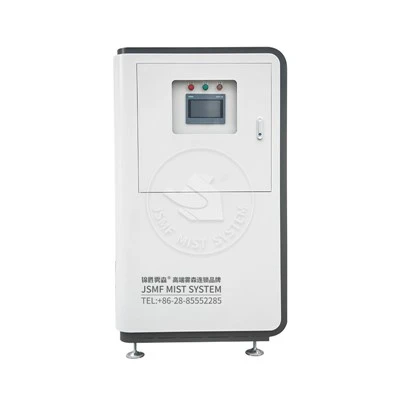
First off, what it isn’t: it’s not a humidifier, even though both use water. Humidifiers pump out tiny water particles to add moisture to dry air, perfect for winter when indoor heat turns your skin into a desert. A cooling mist generator does the opposite – it’s designed to cool air fast, even in super hot, dry or mild humidity conditions. The core job is simple: take regular tap water, break it into micro-sized droplets way smaller than what a spray can produces, and blast those droplets into the air.
Here’s the science that makes it work, and why you don’t just feel wet when the mist hits you. When a liquid turns into a gas, it needs to absorb heat from its surroundings – that’s evaporative cooling, plain and simple. If the droplets are too big, they hang in the air and just make everything damp, leaving you feeling sticky instead of cool. A good cooling mist generator makes droplets so tiny – like 10 to 50 micrometers, about a tenth the width of a human hair – they evaporate almost instantly the second they hit the air. That means the heat gets pulled right out of the air around you, and you feel that cool rush immediately, not later when the water soaks your shirt.
Now, let’s talk about how these things work in the real world, because no one cares about lab tests – they care about using them. Most units have three main parts: a water tank, a high-pressure pump, and a set of nozzles. The pump pushes water through the nozzles at 700 to 1,200 psi, way higher than your kitchen faucet, which breaks the water into those tiny droplets. Some cheaper knockoff units use low pressure, which makes bigger droplets that don’t evaporate, so they just leave puddles on the ground – that’s not a real cooling mist generator, that’s a bad misters that waste water. A proper unit will have filters too, so mineral buildup from tap water doesn’t clog the nozzles over time, which is a huge pain I see customers deal with all the time when they buy cheap ones.
You might be wondering, when do people actually use these? The answer is way more than just backyard barbecues, though that’s the most popular use. Let’s list a few: restaurants with outdoor patios – no one wants to eat outside when it’s 95 degrees, but a cooling mist generator drops the temp by 10 to 15 degrees, so patrons stay longer and spend more. Construction sites – workers can’t take breaks every two minutes to hydrate in the heat, and OSHA actually recommends these units for jobs where temp gets above 90 degrees, because they’re safer than sitting in an unventilated AC trailer. Greenhouses – plants hate extreme heat too, and these misters cool the air without making the soil too wet, which prevents mold. Even event organizers use them for concerts or festivals, where 50,000 people in a field can turn into a sauna by midday.
Wait, but what about humidity? I get that question all the time, and it’s a fair one. If it’s already 80% humidity, evaporative cooling doesn’t work as well – the air is already full of moisture, so the droplets can’t evaporate fast. But a good cooling mist generator is still useful there, just not as dramatic – it can cut temp by 5 to 8 degrees, which is way better than nothing. For dry climates, though, like Arizona or Texas in the summer, it’s game-changing – you can get that 15 degree drop, and most people don’t even get their clothes damp at all. That’s why these units are way more popular in arid and semi-arid areas, but we sell plenty to humid places too, for specific outdoor spots where AC isn’t an option.
Now, let’s bust a common myth: a cooling mist generator costs a fortune to run. Let’s do the math, real numbers. A standard outdoor unit uses about 1 to 3 gallons of water per hour. That’s way less than a sprinkler, and way less than running a window AC for the same space. A small patio unit runs on a regular 110V outlet, same as your fridge, so electricity costs are negligible – like $0.10 to $0.50 an hour, depending on your electric rate. Compare that to a 5,000 BTU window AC, which uses about 1 kWh per hour and costs around $0.15, and that’s before you factor in installation, which you don’t need for a mist generator.
Another myth: they’re only for big industrial jobs. We sell small, portable units too – the kind you can wheel to your backyard, plug into an outlet, and cool a 10×20 foot space for a party. Those are perfect for people who don’t want to shell out for a whole AC system for a small outdoor area. The key is matching the unit to the space – too small, and it won’t do anything; too big, and you’ll waste water and money.
As a supplier, I’ve seen a lot of mistakes people make when buying a cooling mist generator, so let me share those. First, skip the low-pressure, cheap Amazon ones – most of them are just sprayers with a fancy name, and their nozzles clog after a week because they don’t have good filters. Second, don’t buy a unit without a shutoff timer or a pressure regulator – those let you adjust mist output so you’re not wasting water when you don’t need it, like at night. Third, make sure it’s made for outdoor use – indoor units aren’t built to handle rain or temperature swings, so they’ll break fast if you put them on a patio.
What about maintenance? It’s actually super easy. Every month, you just flush the water tank to get rid of any sediment, change the filter if it’s reusable, and wipe the nozzles with a soft cloth to prevent clogs. If you live in a really hard water area, we recommend adding a little descaling solution every few months, which keeps the nozzles working for years. I have customers who’ve had our units for 5 years with almost no maintenance, that’s how well they’re built when you buy a quality one.
Wait, also, a lot of people ask about safety. A properly built cooling mist generator uses water at high pressure, but the nozzles are designed so the mist doesn’t go fast enough to hurt anyone – they’re not pressure washers. The only thing to watch is not pointing them directly at someone’s face for too long, but that’s just common sense. Also, since they use tap water, you don’t have to worry about harmful chemicals, unlike some portable AC units that use refrigerants.
Let me give a real example. Last summer, a local taco shop here bought one of our mid-sized units for their patio. Before that, on 98 degree days, half their tables were empty because customers refused to sit outside. After installing, they told me their patio sales went up 40% in two months. They even run it only during lunch and dinner, so it doesn’t waste water all day, and their electric bill didn’t change at all. That’s the thing about these units – they’re not a luxury, they’re a practical way to make outdoor spaces usable when the heat is on.
Another use case: our industrial customers, like a construction company in the next state. They have crews working on a road project that runs from 8 a.m. to 5 p.m. in July, when temps hit 100 degrees. They use four of our large, stationary units mounted on scaffolding, and OSHA approved them because they lower the air temp around workers to a safe level, preventing heat exhaustion. Before that, they were having 2-3 heat-related incidents a month, and after using the mist generators, that dropped to zero. That’s when you realize these aren’t just for fun – they’re important for worker safety.
So, to wrap this up in plain terms: a cooling mist generator is a device that turns regular water into tiny, fast-evaporating droplets to cool air fast, without the cost, humidity issues, or dampness of other cooling methods. It works on evaporative cooling, uses high pressure to make the right size droplets, and comes in sizes for everything from a small backyard to a construction site or restaurant patio. The key is buying a quality unit, not the cheap knockoffs that don’t work, and doing minimal maintenance to keep it running for years.
If you’re someone looking to cool an outdoor space, or you’re in a business that needs a reliable way to beat the heat, I can help you pick the right unit. We have portable models for home use, medium ones for patios or small events, and large industrial units for construction or agriculture. I can walk you through sizing, features, and even answer any questions you have about setup or maintenance. Just reach out to my team and me to start a conversation about what you need.
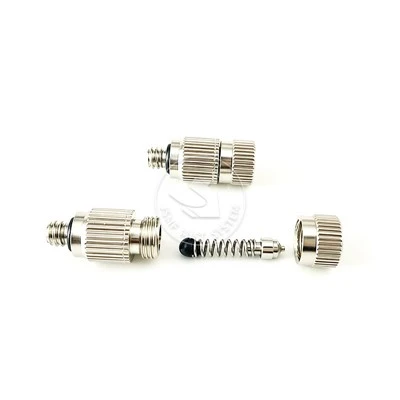
Latch-type Connection Piece References
- U.S. Occupational Safety and Health Administration (OSHA). Heat Safety for Construction Workers.
- International Society of Hospitality Consultants (ISHC). Outdoor Dining Temperature Impact on Patron Behavior.
- Evaporative Cooling Technology Association. Best Practices for Misting Systems in Arid Climates.
- USDA Agricultural Research Service. Greenhouse Cooling Methods for Commercial Crop Production.
- Consumer Reports. Outdoor Cooling Solutions: Comparing Misters, Fans, and Portable AC Units.
Jinsheng Mist Forest-High Pressure Mist System
Address: 109 Yonghong Road, Wenjiang District, Chengdu City, Sichuan Province, China
E-mail: 18190767523@163.com
WebSite: https://www.jswsmist.com/
