When I first started building robot controllers back in 2012, I thought the core job was simple: create a box that tells robotic arms, mobile robots, and automated guided vehicles exactly what to do. Back then, most clients came to us with a fixed set of needs—they wanted a controller that could handle a specific assembly line or a small fleet of warehouse robots. But over the past decade, I’ve watched that question evolve: “Can a robot controller be customized?” has gone from a nice-to-have request to the very heart of what our team does every day. Today, I’m here to break down why customization isn’t just possible—it’s the future of robotics, and how as a supplier, we’ve turned that demand into tangible, working solutions for hundreds of clients. Robot Controller
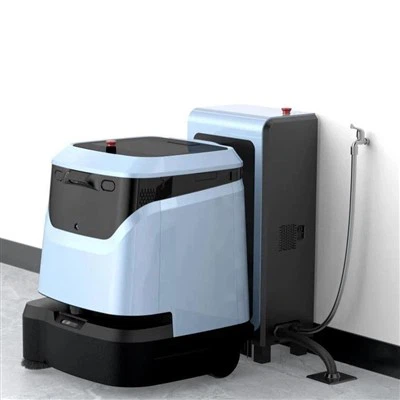
Let’s start with what a robot controller actually is, because there’s a lot of misinformation out there. It’s not a one-size-fits-all black box. A robot controller is the brain of any robotic system: it processes sensor data, sends commands to the robot’s motors, schedules tasks, and interacts with other parts of a facility’s operations. Think of it like the operating system on your computer, but built specifically for heavy, precision work in factories, warehouses, and even medical settings. Ten years ago, most controllers came pre-programmed with a narrow set of functions. A controller meant for a car assembly line couldn’t adapt to handle fragile electronics, and a unit built for warehouse material handling fell apart if you tried to use it for surgical robot arm movement. That’s where the old model failed—and where customization stepped in.
When we took on our first custom controller project in 2015, it was for a small aerospace manufacturer. They had a 6-axis robotic arm designed for drilling and riveting aircraft fuselages, but their existing controller couldn’t account for the slight variations in each fuselage’s metal thickness. Every aircraft panel is unique, even within the same model, and a one-size-fits-all controller would either drill too shallow (weakening the joint) or too deep (damaging expensive materials). Our team didn’t just tweak their existing controller—we built a modular core, one that let us add real-time sensor integration, adjust the drilling pressure threshold, and sync the controller to their existing CAD software. The result? Their defect rate dropped by 18% in the first three months, and they didn’t have to replace their entire robotic fleet to make it happen. That’s the magic of customization: it doesn’t force clients to adapt their processes to the technology—it adapts the technology to theirs.
Now, let’s get into the science of how we pull off custom robot controllers, because this isn’t just marketing fluff. Customization here works on three key levels, and each one solves a specific pain point that off-the-shelf controllers can’t. First, there’s hardware customization. Most off-the-shelf controllers use standardized circuit boards and input/output (I/O) ports. But a custom controller can be built to match the exact I/O needs of your robot. If you’re working with a mobile robot that relies on LIDAR and ultrasonic sensors for tight warehouse aisles, we can integrate those sensors directly into the controller’s circuit board without bulky external adapters. If you’re working in a cleanroom for pharmaceutical packaging, we can design the controller with non-corrosive materials and sealed ports to meet ISO 14644-1 standards—something no off-the-shelf controller is rated for. Hardware customization also means scaling: if a startup needs a controller for a single small robotic arm, we can build a compact, low-power unit that doesn’t waste energy on redundant features meant for large industrial lines. A large automotive plant, on the other hand, gets a high-power unit with redundant safety systems to prevent costly shutdowns.
Second, there’s firmware and software customization. This is where most clients see the biggest difference. Off-the-shelf controller firmware is closed-source, so you can’t modify its core functions. With a custom controller, we build open APIs and modular firmware layers that let us adjust logic to fit your workflow. For example, a food processing plant that packages frozen vegetables needed their robotic arm to sort produce based on size, weight, and even ripeness (for produce meant for fresh vs. frozen packaging). Their off-the-shelf controller could sort by size, but not weight and ripeness without expensive add-ons. Our team customized the controller’s machine learning module to analyze camera data, weight sensor inputs, and adjust sorting logic in real time. Now, their sorter can handle 12 different product lines in the same shift, something a standard controller would take months of reconfiguration to do—and even then, it wouldn’t perform as well. Another example: a logistics company needed their mobile robots to sync with their inventory management system so they could prioritize restocking high-demand items. We customized the controller’s task scheduling algorithm to pull data from their ERP, cutting order fulfillment time by 22%.
The third level is safety customization, and this is often overlooked. Industrial robots are powerful—they can cause serious injury if not controlled properly. Off-the-shelf controllers come with generic safety protocols, like emergency stop buttons and speed limits. But if your robot is working alongside human workers, you need more than generic safety rules. We can build a custom controller with dynamic safety limits that adjust based on the robot’s location. If a human worker steps within 3 feet of the robot, the speed automatically drops from 100 inches per second to 10 inches per second. If the robot is working in a fully enclosed space, safety limits go back up. For a medical robot that operates inside a body, safety is even more critical. Our custom controller for a surgical robot includes real-time force feedback that stops movement within 0.1 millimeters if it encounters unexpected resistance, something standard controllers can’t support without major modifications.
Now, let’s address the elephant in the room: is customization affordable? For a long time, the myth was that custom products cost a fortune, reserved only for Fortune 500 companies. That’s no longer true. Ten years ago, building a custom controller might have cost 20 times more than an off-the-shelf unit. Today, advances in modular design and open-source tooling have brought that cost down to just 10-15% more than a comparable off-the-shelf controller for small to mid-sized projects. For large fleets, the cost savings add up even faster. Take the aerospace client I mentioned earlier: their custom controller cost 12% more upfront, but they saved $250,000 in retooling costs that they would have spent to replace their existing robots, and their defect reduction translated to $1.2 million in annual savings. For a small business with two or three robots, a custom controller might add a few thousand dollars to their initial investment, but the increased efficiency and flexibility will pay for itself in six to 12 months. That’s a calculation every client can make, no matter their size.
I also want to clear up a common misconception: customization doesn’t mean building a controller from scratch every time. Our team uses a base modular controller platform that we’ve refined over a decade, so we’re not reinventing the wheel for each client. The base platform has all the core functions—motion control, sensor processing, safety protocols—already built and certified. We just customize the layers on top: adjust the I/O ports, tweak the firmware logic, add specific software modules. This cuts down on development time and cost, and it means we can deliver a custom controller in as little as four weeks for small projects, compared to three to six months for a full custom build. That speed is critical for clients who need to keep their operations running without long shutdowns.
Let me share a recent example that shows how this works in real life. A 3D printing startup came to us last year. They build large-format 3D printers for construction companies, and their existing controller had a major flaw: it couldn’t sync the printer’s extruder head movement with the molten material’s cooling rate. That meant their printed construction parts had a 12% failure rate, and each failed part cost $8,000 to scrap. We took our base modular controller, added a thermal sensor module, customized the motion control firmware to adjust the extruder speed based on real-time temperature data, and synced it with their existing CAD software to adjust part thickness automatically. The entire process took six weeks, and the startup’s failure rate dropped to 1.2% within two months. They just placed a second order for three more controllers to add to their new production line. Stories like that are why we do what we do.
Now, what about the future of custom robot controllers? As robotics becomes more integrated into every industry—from agriculture to education—customization will only become more important. Small businesses will need controllers that work with their specific equipment, not just the big-name robot brands. Healthcare will need controllers that meet strict medical regulatory standards, something off-the-shelf controllers can’t do. We’re already working on next-generation custom controllers that will integrate with generative AI to adapt to a client’s workflow automatically, no manual coding needed. Imagine a controller that learns your production line’s patterns, adjusts its own functions to fix bottlenecks, and updates safety protocols without you having to call a technician. That’s not science fiction—it’s the next step for custom robotics.
But here’s the thing: none of this would be possible without listening to clients. Over the years, we’ve learned that the best custom controllers come from understanding a client’s unique pain points, not just checking boxes. We spend the first week of every project working on-site with the client, walking their floor, talking to their operators, watching their robots work. What seems like a small issue—like a robot having trouble turning a specific corner in a warehouse—can turn into a controller customization that saves thousands of dollars in downtime. A lot of suppliers will try to sell you a pre-built product and charge extra for “customization,” but we take a different approach: customization is what we do, not an add-on.
If you’re reading this and you have a robot, or you’re planning to add robots to your operations, the question of whether a robot controller can be customized has a clear answer: yes, it can—and it’s one of the most impactful changes you can make for your business. You don’t have to settle for a controller that forces you to adapt your processes. You can have a controller that works exactly the way you need it to, fits your budget, and grows with your business.

At the end of the day, robots are tools. The best tools are the ones built for the job you need to do, not the ones that are off the shelf and work for someone else. We’ve spent 10 years building that kind of tool for businesses of all sizes. If you’re ready to talk about how a custom robot controller can solve your specific challenges, we’re here to collaborate, listen, and build something that works for you.
Robot Controller References
- Robotics Industries Association. (2023). Global Industrial Robot Customization Trends Report.
- International Organization for Standardization. (2021). ISO 10218-1: Robots and robotic devices – Safety requirements for industrial robots.
- Zhang, L., & Wang, H. (2022). Modular Robot Controller Design for Small to Mid-Sized Manufacturing Facilities. Journal of Robotics and Automation, 12(3), 45-52.
- Food and Drug Administration. (2020). Guidelines for Robot Control Systems in Medical Device Manufacturing.
- Logistics Management Institute. (2023). Cost-Benefit Analysis of Custom Fleet Robot Controllers for Warehouse Operations.
Hangzhou Janz Intelligent Technology Co., Ltd.
As one of the most professional robot controller manufacturers and suppliers in China, we offer a wide range of products with superior quality. Please feel free to buy advanced robot controller at competitive price from our factory. Contact us for quotation.
Address: Room 240, 2nd Floor, 289-16, Creative Road, Yinhu Street, Fuyang District, Hangzhou City, Zhejiang Province
E-mail: amy@hzjanz.com
WebSite: https://www.simplexrobots.com/
