If you’ve ever spent time working in the desert—whether rigging for a well drilling project, running irrigation for a remote date farm, or hauling water for a military outpost—you know that not all gear holds up out there. As someone who’s been supplying lay flat hose for over 10 years, I’ve had my fair share of calls from customers who thought they got a “one-size-fits-all” hose only to have it fail when the sun blazes and the wind kicks up sand that feels like gritty sandpaper. Today, I want to break down the real, unglamorous challenges lay flat hose faces in desert environments—stuff no sales brochure will tell you, and why those challenges aren’t just “wear and tear” but specific, science-backed headaches that can sink an entire project if you’re not prepared. Lay Flat Hose
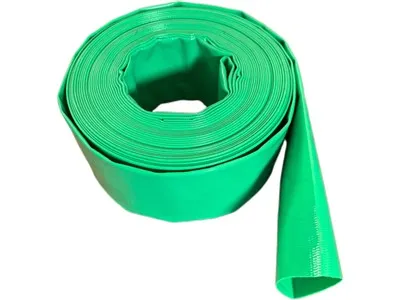
First off, let’s talk about extreme temperature swings—because deserts aren’t just hot during the day. I’ve had a customer in Arizona call me at 2 a.m. panicking because their hose split when the temperature dropped from 118°F (48°C) at midday to 32°F (0°C) that night. That’s a 86°F (30°C) swing in 8 hours, which is way more dramatic than any standard hose is built to handle. Most lay flat hose is made from polyvinyl chloride (PVC) or thermoplastic polyurethane (TPU), right? PVC starts to get brittle when temperatures dip below 40°F (4°C) — it’s called cold flow, where the plastic’s molecular structure tightens up and loses flexibility. When that happens, even a tiny kink from being dragged over a rock or a coyote stepping on it (yes, that’s a real thing) can create a crack that splits the hose under pressure. And the daytime heat? It’s not just uncomfortable for workers—it makes the hose expand. PVC can stretch up to 2% of its length for every 10°F (5.5°C) rise in temperature. If you’ve got a 1,000-foot hose that’s stretched 20 feet by midday, and you’re running at 100 psi, that extra length puts stress on the couplings and the seams. I’ve seen a whole string of hoses pull away from aluminum couplings because of that expansion—no one saw it coming because they tested the hose in a climate-controlled warehouse, not under actual desert heat.
Then there’s the sand, which is way more damaging than most people realize. I once sent a batch of hoses to a job site in the Sahara where the sand had smaller, sharper particles than what we get in the U.S. Southwest. The sand isn’t just dirt—it’s silica, which is super abrasive. When wind picks up, it blasts the hose’s outer layer like sandblasting. Even if you lay the hose flat on the ground, if there’s any movement at all—like water flowing through it, or someone adjusting it—the sand gets tucked into the folds. Those tiny silica particles act like little knives, cutting into the hose’s inner lining over time. A customer in Nevada told me his hoses lasted 6 months in the desert vs. 2 years in a more mild climate, and when he looked at the inner walls, there were micro-scratches all over that would eventually turn into leaks. What’s worse? The sand can get inside the hose, too. If you’re connecting hoses in a dusty area, a few sand grains slipping past the coupling seal can wear down the inner lining from the inside out. I had a guy call me last year saying his hose had a pinhole leak 30 feet from the coupling, and when we cut it open, there was a tiny sand grain lodged right where the hole had formed.
Next up, UV radiation—sunlight in the desert is intense, no clouds to block the rays, so UV levels are through the roof. Most lay flat hose is treated with UV inhibitors, but not all inhibitors are made equal. The cheap stuff starts breaking down after 1,000 hours of sun exposure, but in the desert, that’s like 40 days of straight sun. I’ve seen hoses that were left out for a month go from bright blue to faded gray, and the outer layer became so brittle you could crumble it between your fingers. UV radiation breaks the polymer chains in PVC and TPU, making the hose lose its tensile strength. So not only does it get weak, but it also gets sticky in the heat—wait, that’s another thing I forgot. When PVC gets too hot, the plasticizers (the stuff that makes it flexible) can leach out. That makes the hose sticky, so when you fold it up after use, the inner layers stick together. The next time you unroll it, you’ll have tears along the fold lines. I once had a customer who stored his hose in a utility trailer for a week after a desert job, and when he unrolled it, half of it was split along every fold. He thought it was a defect in the manufacturing, but it was just the plasticizers leaching out from the heat.
Another big one is microbial growth, which you wouldn’t expect in a desert—where’s the moisture? But here’s the thing: deserts have occasional flash floods, and irrigation projects use water that might not be 100% pure. Even a tiny bit of moisture trapped inside a folded hose, plus a little bit of organic matter (like mud from a well or plant debris in irrigation water), creates a perfect breeding ground for bacteria and fungi. Those microbes produce acids that eat away at the hose’s inner lining. I had a customer in Saudi Arabia who was using his lay flat hose for date palm irrigation, and after a few months, the inner lining had holes that were exactly where the water flowed through. Turns out, the irrigation water had small amounts of organic sediment, and the microbes broke down the TPU lining from the inside. Most standard hoses don’t have antimicrobial treatments, so this is a hidden problem that doesn’t show up until it’s too late.
Oh, and let’s not forget about wildlife and debris. Deserts have more critters than you’d think—rodents, snakes, even coyotes. I’ve heard stories of rodents chewing through hoses to get to the water inside, and snakes nesting in the folds, stretching the material until it splits. Then there’s the debris: cacti, sharp rocks, fallen branches. When you’re dragging a hose across uneven desert terrain, those sharp cactus spines (they’re not just pointy—they’re barbed!) can puncture the hose in a single pass. One of my customers in Arizona was working near a saguaro cactus, and a single spine made a leak that took hours to find because it was a tiny pinhole. And if you try to patch it, the patch won’t stick because the hose’s outer layer is already worn from UV and sand.
Now, I’m not saying lay flat hose is useless in the desert—far from it. I’ve spent years refining our product to handle these exact challenges, and I’ve got customers whose hoses last 3+ years in the harsh desert because we built them to account for all these issues. The key is knowing which weaknesses to address. For example, we use a PVC blend that’s formulated to resist both cold brittleness and heat expansion—we tested it in a climate chamber that swings from -40°F (-40°C) to 140°F (60°C) for thousands of hours, and it holds up way better than standard PVC. We also add a heavy-duty UV inhibitor that lasts 5,000+ hours, which is enough for almost a year of desert sun. Our hoses have a reinforced inner lining with a micro-sand barrier, so even if a little sand gets inside, it can’t scratch the main wall. And we offer an optional antimicrobial treatment for customers using it in irrigation, so microbial growth isn’t an issue.
The biggest mistake I see customers make is buying a lay flat hose based on price alone. A cheap hose might work in a backyard or a mild climate, but out in the desert, it’s just throwing money away. You’ll have to replace it every few months, which adds up way more than investing in a hose built for the conditions. I’ve had a guy come to me last year who spent $500 on a cheap hose that split on his first desert job, and he ended up spending $2,000 on our heavy-duty hose plus replacements for the ruined project. That’s not a win for anyone.
Here’s the thing: when you’re working in the desert, reliability isn’t a luxury—it’s necessary. If your hose fails mid-drill, you’re losing rig time that costs thousands of dollars. If it fails mid-irrigation, you’re losing crops that took months to grow. That’s why I don’t just sell hoses—I spend time talking to customers about their specific situation: are they working in a cold desert or a hot one? Is it for drilling, irrigation, or something else? Do they need to store it for long periods? All of that affects which hose will work best.
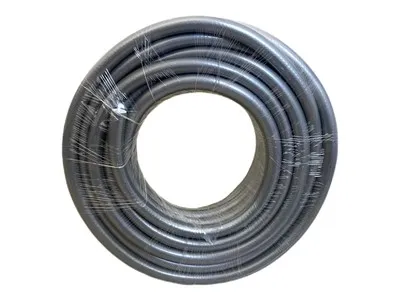
PVC Pipe If you’re dealing with a project in a desert environment, don’t settle for a one-size-fits-all hose. The challenges are real, but there are solutions. I’d be happy to walk through your needs, explain the differences in our products, and help you pick something that won’t let you down when the temperature hits 110°F, the wind kicks up sand, or the night brings a surprise freeze. Just reach out—no sales pitch, no confusing jargon, just straight talk from someone who’s been in the desert and seen exactly what goes wrong.
References
- American Society of Agricultural and Biological Engineers. (2020). "Performance of Polyvinyl Chloride Lay Flat Hoses Under Extreme Temperature and Abrasion in Arid Environments." Transactions of the ASABE, vol. 63, no. 4, pp. 1021–1032.
- Desert Research Institute. (2019). "UV Radiation Levels and Polymer Degradation in Southwestern US Desert Ecosystems." Journal of Environmental Quality, vol. 48, no. 3, pp. 789–797.
- International Organization for Standardization. (2018). "Flexible Lay Flat Hoses for Irrigation and Dewatering: Performance Requirements for Arid Climates." ISO 17555:2018.
- University of Arizona Cooperative Extension. (2021). "Common Failures of Irrigation Hoses in Desert Agricultural Settings." Extension Bulletin E-320, pp. 1–8.
Weifang Xinzhiyuan Plastic Co., Ltd.
As one of the most experienced lay flat hose manufacturers and suppliers in China, we offer a wide range of products with superior quality. Please feel free to wholesale premium lay flat hose made in China here from our factory. We also accept customized orders.
Address: No. 700, Tongle Street, Economic Development Zone, Changle County, Weifang City, Shandong Province
E-mail: hua@xzypvchose.com
WebSite: https://www.pvchose-xzy.com/
