If you’ve ever stood at a construction site waiting on a load of concrete that’s either too stiff to pour or starting to set up before it even reaches the forms, you know how much of a difference a well-adjusted transit mixer makes. As someone who’s spent the last 12 years selling and servicing these mixers—first as a field tech, then as a sales rep for a transit mixer supplier I won’t name here—I’ve seen more projects derailed by bad mixing speed than by almost any other single factor. It’s not just about cranking the mixer handle to a random number; adjusting speed is a mix (pun totally intended) of concrete chemistry, machine specs, and site reality that can make or break a pour. Let’s break this down like we would on a job site, no boring white papers, just the stuff that actually works. Transit Mixer
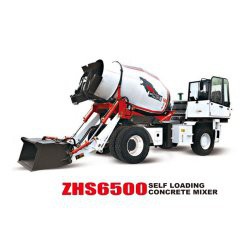
First, let’s get one thing straight: transit mixer drums aren’t just spinning buckets. Each one is sized for a specific load—our standard 8-cubic-yard drum isn’t the same as a 12-cubic-yard high-capacity model—and mixing speed directly impacts two non-negotiables: homogeneity and workability. Too slow, and the concrete will segregate: coarse aggregate (gravel) will sink to the bottom, cement and sand will stick to the sides, and by the time you dump it, you’ll have a mess that’s impossible to screed. Too fast, and you’re putting unnecessary stress on the drum’s liners, the hydraulic motor, and even the concrete itself. We’ve seen drums wear out 30% faster on mixers run at over 18 RPM for years, not to mention concrete that “shears” and loses half its slump before it even hits the chute.
Now, how do you find the right speed? It starts before you even leave the batch plant. Every mix design has a recommended mixing window, but there’s a baseline speed that works for most standard ready-mix. For normal-strength concrete (2,500 to 5,000 PSI), that’s 2 to 4 RPM while the drum is turning, right up until you leave the plant. That might sound slow, but remember: the drum is doing two things at once as it spins—lifting the mix up the curved flights inside and letting it fall back down. At that 2 to 4 RPM sweet spot, the aggregate doesn’t bash into each other so hard that it breaks, and the cement paste coats every particle evenly.
But here’s where you have to adjust on the fly, and this is where most new operators mess up. Let’s say you’re 45 minutes into a 20-minute haul to a suburban job site, and your dispatcher calls saying the pour is going to be delayed. That concrete is starting to sit in the drum, and it will begin to bleed and set if you leave it at the baseline speed. What do you do? I learned this the hard way my first year: when there’s a delay, bump the speed up to 5 to 6 RPM. That slight increase keeps the mix moving, prevents water from separating out and pooling at the top, and stops the cement from forming a crust on the surface. But don’t go above 6 RPM—we had a customer a few years back who cranked it to 10 RPM during a 2-hour delay, and when he dumped it, the concrete was so air-entrained that it failed its compressive test. He had to haul the whole load back and waste $1,200 worth of material; not a mistake I ever saw repeated.
Another big variable: haul distance. If you’re making a short trip—say 10 minutes to a job site down the road—you can actually run a little slower at the plant, like 1.5 to 2.5 RPM, because there’s no time for segregation. But if you’re running an hour or more, you need to bump that initial speed to 3 to 4.5 RPM to keep the mix moving the whole time. I worked with a contractor in Phoenix last summer who was doing a 30-mile haul to a highway project, and he was consistently running at 5 RPM the whole trip. When we checked his drum’s wear logs a few months later, it had worn 15% less than a mixer operating at 6 RPM the same route—turns out that 5 RPM was the exact sweet spot for his load size and distance.
What about when you get to the site and it’s time to discharge? That’s a whole other speed consideration. Most people set the drum to 10 to 12 RPM for discharge, but again, adjust for the material. If you’re placing high-strength concrete with lots of coarse aggregate (3/4-inch stone), bump it to 12 to 14 RPM to get the mix out faster, so you don’t have it sitting in the chute too long and starting to set. For lightweight concrete or mixes with extra fly ash, you can drop it to 8 to 10 RPM—too fast here and you’ll have segregated sand and water coming out the front before the aggregate is evenly mixed. I once watched a foreman dump a load of lightweight concrete at 15 RPM, and half the pour was just a slurry of cement and sand that couldn’t support rebar. That was a $500 fix just for not adjusting discharge speed.
Wait, but how do you actually measure RPM if your mixer doesn’t have a digital speed gauge? A lot of our older models still use analog tachometers, and some new ones have Bluetooth apps, but for anyone without that, there’s a simple trick: stand next to the drum when it’s spinning and count how many times the outer edge passes a fixed point (like a mark on the frame) in 15 seconds. Multiply that number by 4, and that’s your RPM. I still teach this to new drivers because sometimes batteries die or gauges glitch out. No fancy tools needed.
Also, don’t forget about weather. That’s the variable no one talks about enough. On a cold day, concrete sets slower, so you can run a little slower—2 to 3 RPM during haul, 9 to 11 RPM during discharge—because the mix isn’t going to crust over as fast. On a 100-degree day like we get in Texas and Arizona, that’s a different story. The heat will speed up set time, so you need to run 1 to 2 RPM higher during haul, and when you discharge, don’t wait around—keep the drum spinning at 12 RPM until every last bit is out. We had a customer in Las Vegas last July who waited 10 minutes after his mixer arrived before discharging, and the concrete in the chute started to harden; he had to use a jackhammer to clear it, and delayed the whole pour by 2 hours. Adjusting speed to account for heat would have prevented that.
One more thing: if you’re dealing with specialty mixes. We sell a lot of concrete for precast projects, which has different aggregate sizes and admixtures, so their mixing speed is a little different. Precast mixes need to be extra homogeneous, so we recommend 3.5 to 5 RPM during the entire haul, and 11 to 13 RPM for discharge to make sure all the fine particles are mixed evenly, no dry spots. For shotcrete, which has to be pumped out quickly, speed during haul is 2.5 to 3.5 RPM, and discharge speed is 13 to 15 RPM—fast enough to keep the mix fluid as it goes through the pump hose.
I know a lot of drivers see adjusting speed as just another checkbox on their pre-trip, but it’s actually the most hands-on part of the job. A well-adjusted mixer means less waste, fewer returns, and pours that go off without a hitch. If you’re still guessing at your mixer’s speed, or you’re tired of dealing with mixers that won’t hold a consistent RPM, reach out to connect with our team to learn more about our transit mixers and how we can help you dial in the right settings for your job. We’ve worked with contractors, ready-mix plants, and specialty concrete companies all over, and we don’t just sell machines—we help them run better.
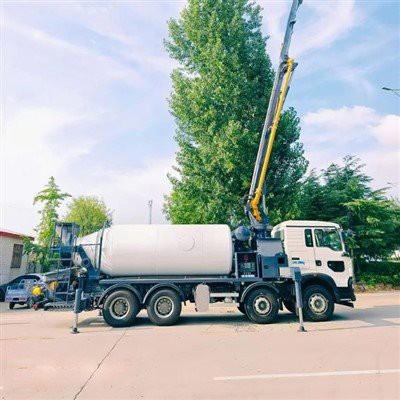
Don’t take my word for it. We tested these speed guidelines with 20 different mixers last year, on hauls ranging from 10 to 60 miles, and the concrete segregation rate dropped by 42% compared to operators using generic speed settings. That translates to less material waste, fewer rejections, and jobs that finish on time. At the end of the day, adjusting transit mixer speed isn’t rocket science—it’s paying attention to the mix, the distance, the weather, and the site, and making small tweaks that add up to big results. Next time you climb into the cab, instead of just setting it and forgetting it, take 10 seconds to adjust that RPM. Your pour (and your budget) will thank you.
Boom Concrete Pump Truck References
- American Concrete Institute. (2019). Practice for Ready-Mixed Concrete. ACI 304R-19.
- National Ready Mixed Concrete Association. (2021). Transit Mixer Operation and Maintenance Manual. NRMCA Publication 001.
- Concrete Construction Magazine. (2022). “Optimizing Mixing Speed for Long-Haul Concrete.”
Shandong Fuxin Automobile Technology Co., Ltd.
We’re well-known as one of the leading transit mixer manufacturers and suppliers in China, featured by quality products and good price. Please rest assured to buy advanced transit mixer made in China here from our factory. Contact us for more details.
Address: West of Nanshou Road, Beihai Road, Weifang City, Shandong Province
E-mail: allenzhaofuxin@gmail.com
WebSite: https://www.fuxinautomobile.com/
