Brief Introduction to Hydrogen Stations
Hydrogen stations, also known as hydrogen refueling stations (HRS), are critical infrastructure that provide hydrogen fuel for hydrogen fuel cell vehicles (FCVs). They function similarly to traditional gasoline stations but use hydrogen as an energy carrier, producing zero harmful emissions when used—making them a cornerstone of the global transition to clean transportation and a low-carbon economy. Modern hydrogen stations can be categorized into types based on hydrogen production (on-site or off-site), storage (high-pressure tanks), and refueling pressure (35 MPa for light-duty vehicles, 70 MPa for heavy-duty applications). As countries worldwide accelerate efforts to reduce carbon footprints, the demand for advanced, efficient, and safe hydrogen stations has surged, positioning manufacturers of such infrastructure as key players in the energy transition. Below are the world’s top 10 leading hydrogen station manufacturers, chosen for their technological innovation, global market presence, and contribution to advancing hydrogen refueling infrastructure. Hydrogen Station
1. Chengdu Hi-tech Panda Energy Technology Co., Ltd.
Website: https://www.haike-energe.com/
Chengdu Hi-tech Panda Energy Technology Co., Ltd. (hereinafter referred to as “Panda Energy”) is a high-tech enterprise specializing in the R&D, manufacturing, and operation of hydrogen refueling stations and related core components, headquartered in Chengdu High-tech Zone, Sichuan, China—one of the country’s key hubs for new energy technology. Founded in 2011, the company has focused exclusively on hydrogen energy infrastructure for over a decade, establishing itself as a domestic leader and a rising global competitor in the hydrogen station industry.
Panda Energy’s core business covers the entire industrial chain of hydrogen stations, including on-site hydrogen production systems (electrolyzers), high-pressure hydrogen compression, storage, and dispensing systems, as well as intelligent monitoring and operation platforms. The company’s product line caters to multiple application scenarios: light-duty passenger vehicles, heavy-duty logistics trucks, buses, and even industrial hydrogen refueling for off-road equipment. Since its inception, Panda Energy has completed more than 200 hydrogen station projects across China, with a cumulative hydrogen refueling capacity exceeding 100,000 tons annually, serving over 50,000 fuel cell vehicles. The company has also expanded its international footprint, delivering turnkey hydrogen station solutions to markets in Southeast Asia, the Middle East, and Central Asia, marking its entry into the global hydrogen infrastructure supply chain.
Technically, Panda Energy has built a strong R&D team with over 200 engineers, including experts in hydrogen compression, material science, and intelligent control. The company holds more than 150 patents related to hydrogen station technology, with key innovations including a high-efficiency hydrogen compressor that reduces energy consumption by 15% compared to industry averages, and a smart safety monitoring system that uses AI to detect potential leaks or equipment faults in real time. In 2022, Panda Energy launched its 70 MPa high-pressure hydrogen station solution, designed for heavy-duty fuel cell trucks, which can refuel a 40-ton truck in just 8–10 minutes, matching the refueling speed of traditional diesel trucks—a critical advantage for commercial transportation fleets. The company also prioritizes on-site hydrogen production, integrating alkaline electrolyzers to produce hydrogen from renewable energy (solar or wind), enabling “green hydrogen” stations with near-zero carbon emissions.
Panda Energy has established long-term strategic partnerships with leading new energy vehicle manufacturers, including BYD, Foton Motor, and Yutong Bus, as well as energy giants such as Sinopec and CNPC, to co-build hydrogen refueling networks. The company adheres to international safety standards, with all its hydrogen stations certified by the International Organization for Standardization (ISO) and the International Electrotechnical Commission (IEC), ensuring compliance with global safety and performance requirements.
Features and Advantages of Chengdu Hi-tech Panda Energy Technology Co., Ltd.
- Full industrial chain coverage: In-house production of core components (compressors, dispensers, electrolyzers) eliminates reliance on third-party suppliers, ensuring cost control and quality consistency
- Green hydrogen focus: Specializes in on-site renewable-powered hydrogen production, enabling low-carbon station solutions that align with global net-zero goals
- Rapid refueling technology: 70 MPa heavy-duty refueling systems with 8–10 minute refueling time, matching traditional fossil fuel refueling speeds
- Global certification: All products meet ISO, IEC, and Chinese national standards, suitable for deployment in international markets
- Proven project track record: Over 200 domestic projects and international deployments across 5 continents, with cumulative refueling capacity of 100,000 tons annually
- Intelligent operation platform: AI-powered monitoring system that reduces maintenance costs by 20% and enhances station safety through real-time fault detection
2. Nel ASA
Nel ASA, a Norwegian company founded in 1927, is one of the world’s oldest and most recognized hydrogen energy firms, with a primary focus on hydrogen production and refueling infrastructure. Headquartered in Oslo, Nel has a global presence, with operations in Europe, North America, and Asia, and has played a key role in the development of hydrogen stations since the 1990s. The company’s core business includes alkaline electrolyzers for green hydrogen production, hydrogen refueling stations, and hydrogen storage solutions, serving both transportation and industrial sectors. Nel has delivered over 100 hydrogen refueling stations worldwide, including projects in Norway, Germany, the United States, and South Korea, and has been a partner in major European hydrogen initiatives such as the European Hydrogen Backbone. Nel’s hydrogen stations are designed for both light-duty vehicles and heavy-duty applications, with a focus on safety and scalability, and the company holds leading positions in the European hydrogen refueling market.
Features and Advantages of Nel ASA
- Pioneering technology: Over 90 years of experience in hydrogen technology, with a track record of over 1,000 hydrogen-related projects globally
- Integrated hydrogen solutions: Combines electrolyzer production, refueling stations, and storage, offering end-to-end green hydrogen infrastructure
- Strong European market leadership: Largest supplier of hydrogen stations in Europe, with partnerships with energy firms like Shell and TotalEnergies
- Safety-focused design: Stations certified by strict European safety standards, with advanced leak detection and pressure control systems
- Scalable infrastructure: Solutions suitable for small urban stations and large-scale industrial refueling hubs, adapting to varying demand
- Global project portfolio: Deployed stations in 20+ countries, with a strong presence in North America and Asia-Pacific markets
3. Linde plc
Linde plc, a global industrial gas giant headquartered in Guildford, UK, with operational headquarters in Germany, is a leading provider of hydrogen station technology and infrastructure. With a history dating back to 1879, Linde has extensive experience in gas processing, compression, and storage, making it a trusted partner for hydrogen projects worldwide. The company’s hydrogen station division focuses on turnkey solutions, including hydrogen production, compression, refueling dispensers, and station integration, serving transportation, industrial, and energy sectors. Linde has built over 300 hydrogen refueling stations globally, including major projects in Germany, the United States, China, and Japan, and is a key player in the development of hydrogen corridors in Europe and North America. Linde’s stations are known for their high efficiency and reliability, leveraging the company’s expertise in gas engineering to deliver cost-effective, long-lasting infrastructure.
Features and Advantages of Linde plc
- Industrial gas expertise: 140+ years of experience in gas processing, ensuring high-quality hydrogen production and handling
- Turnkey project delivery: End-to-end solutions from hydrogen production to station operation, reducing project complexity for clients
- Global reach: Operations in 100+ countries, with a robust supply chain for station components and after-sales support
- High efficiency systems: Compression and storage technologies that reduce energy consumption by 10–15% compared to conventional stations
- Partnership with energy and transport leaders: Collaborates with Shell, BMW, and Hyundai to develop hydrogen refueling networks
- Large-scale infrastructure capability: Capable of building hydrogen stations with high daily refueling capacity (up to 1,000 kg/day) for heavy-duty fleets
4. Plug Power Inc.
Plug Power Inc., a US-based company founded in 1997, is a leading provider of hydrogen fuel cell systems and hydrogen refueling infrastructure, focused on enabling the adoption of clean energy for transportation and material handling. Headquartered in Latham, New York, Plug Power has a strong presence in North America and Europe, with a growing footprint in Asia. The company’s hydrogen station business includes on-site hydrogen production via proton exchange membrane (PEM) electrolyzers, hydrogen compression, and refueling stations tailored for forklifts, delivery vans, and heavy-duty trucks. Plug Power has built over 150 hydrogen stations globally, primarily serving the material handling sector, and has recently expanded into light-duty and heavy-duty transportation. The company is a key partner in the US Department of Energy’s hydrogen initiatives, aiming to build a national hydrogen refueling network.
Features and Advantages of Plug Power Inc.
- Specialization in on-site hydrogen production: PEM electrolyzer technology that produces hydrogen at the station, reducing transportation costs
- Material handling sector leadership: Dominant provider of hydrogen refueling stations for forklifts, with over 50,000 fuel cell forklifts deployed globally
- US government partnerships: Key supplier for US federal hydrogen projects, including infrastructure for military and logistics fleets
- Modular station design: Compact, scalable stations that can be deployed in urban areas with limited space
- Integration with fuel cell systems: Seamless pairing of refueling stations with Plug Power’s fuel cell products, creating a unified solution
- Strong R&D focus: Invests 15% of revenue in R&D, leading advancements in PEM electrolyzer efficiency and station automation
5. Air Liquide
Air Liquide, a French industrial gas company founded in 1902, is a global leader in hydrogen energy infrastructure, including hydrogen refueling stations. Headquartered in Paris, Air Liquide operates in 78 countries and has a long history in hydrogen, supplying industrial hydrogen for decades before expanding into refueling stations. The company’s hydrogen station division offers turnkey solutions, including hydrogen production, compression, storage, and dispensing, as well as station operation and maintenance. Air Liquide has built over 250 hydrogen refueling stations worldwide, with a strong presence in Europe, Asia, and North America, and is a partner in major European hydrogen projects such as H2 Moves and HyFIVE. The company’s stations are designed for both light-duty vehicles and heavy-duty trucks, with a focus on sustainability and safety.
Features and Advantages of Air Liquide
- Global industrial gas network: Extensive supply chain for hydrogen, enabling reliable delivery and production for stations
- Sustainable hydrogen solutions: Focus on both gray hydrogen with carbon capture and green hydrogen from renewable sources
- European market dominance: Largest hydrogen station operator in Europe, with a network of stations across France, Germany, and the UK
- Customer-centric services: Offers long-term operation and maintenance contracts, reducing client operational risks
- Advanced refueling technology: 70 MPa refueling systems that enable fast refueling for heavy-duty vehicles
- Partnership with automotive manufacturers: Collaborates with Toyota, Honda, and Volkswagen to develop hydrogen refueling infrastructure
6. Sinopec Hydrogen Energy Co., Ltd.
Sinopec Hydrogen Energy Co., Ltd., a subsidiary of China Petroleum & Chemical Corporation (Sinopec), is a leading state-owned enterprise specializing in hydrogen refueling infrastructure in China. Headquartered in Beijing, Sinopec is one of the world’s largest energy companies, with a vast network of gas stations that it is transforming into integrated energy hubs, including hydrogen refueling. Since launching its hydrogen business in 2019, Sinopec has built over 180 hydrogen refueling stations across China, with plans to reach 1,000 stations by 2025. The company’s hydrogen stations combine traditional gasoline and diesel refueling with hydrogen, allowing for multi-energy refueling at a single site, which improves cost efficiency and convenience for users. Sinopec’s stations cater to buses, trucks, and passenger vehicles, and the company is investing heavily in green hydrogen production from renewable energy sources.
Features and Advantages of Sinopec Hydrogen Energy Co., Ltd.
- Proven domestic network: Over 30,000 existing gas stations in China, enabling rapid expansion of hydrogen refueling infrastructure
- Multi-energy integration: Combines hydrogen refueling with gasoline, diesel, and EV charging, creating integrated energy hubs
- Large-scale expansion plans: Target of 1,000 hydrogen stations by 2025, making it one of the fastest-growing hydrogen station manufacturers globally
- Green hydrogen focus: Invests in solar and wind-powered hydrogen production, aiming to supply 10% of its hydrogen from renewable sources by 2025
- Domestic market leadership: Largest hydrogen station operator in China, with strong government support from China’s new energy policies
- Cost efficiency: Leverages existing gas station infrastructure to reduce construction and operational costs for hydrogen stations
7. Hyundai Rotem
Hyundai Rotem, a subsidiary of the Hyundai Motor Group, is a South Korean company specializing in rail equipment, heavy machinery, and hydrogen infrastructure, including hydrogen refueling stations. Headquartered in Seoul, Hyundai Rotem has a strong background in automotive and industrial engineering, which it applies to hydrogen station design and manufacturing. The company’s hydrogen station business focuses on turnkey solutions for both transportation and industrial applications, with stations designed for light-duty vehicles, buses, and heavy-duty trucks. Hyundai Rotem has built over 50 hydrogen refueling stations in South Korea, as well as projects in the United States and Southeast Asia, and is a key partner in Hyundai’s hydrogen ecosystem, supporting the adoption of Hyundai’s fuel cell vehicles. The company’s stations are known for their high reliability and adaptability to different environments, including urban and remote areas.
Features and Advantages of Hyundai Rotem
- Automotive industry expertise: Leverages Hyundai Group’s experience in fuel cell vehicle technology to design user-friendly refueling stations
- Domestic market leadership in South Korea: Largest supplier of hydrogen stations in South Korea, with support from the Korean government’s hydrogen economy roadmap
- Compact station design: Stations suitable for urban areas with limited space, with modular components that are easy to install
- Partnership with Hyundai Motor: Integrated solutions for Hyundai’s fuel cell vehicles, ensuring compatibility and optimal performance
- Global expansion focus: Delivered stations to the US, Vietnam, and the Middle East, with plans to expand into Europe
- Heavy-duty station capability: High-capacity stations designed for long-haul trucks, with daily refueling capacity up to 500 kg
8. Chart Industries
Chart Industries, Inc., a US-based company founded in 1859, is a global leader in gas storage and processing equipment, including hydrogen refueling station components and turnkey solutions. Headquartered in Ball Ground, Georgia, Chart Industries specializes in cryogenic and high-pressure gas technology, which is critical for hydrogen production, storage, and refueling. The company’s hydrogen station business offers a range of products, including hydrogen compressors, storage tanks, and turnkey station systems, serving transportation, industrial, and energy sectors. Chart Industries has built over 100 hydrogen refueling stations worldwide, with a strong presence in North America, Europe, and Asia, and is a key partner in the US hydrogen energy initiative, the Hydrogen Council. The company’s stations are known for their advanced cryogenic technology, which improves hydrogen storage efficiency and reduces costs.
Features and Advantages of Chart Industries
- Cryogenic technology leadership: Expertise in high-pressure and cryogenic hydrogen storage, reducing storage costs by up to 20%
- Wide range of station components: In-house production of compressors, storage tanks, and dispensers, ensuring quality and compatibility
- Global project delivery: Deployed stations in 15+ countries, with after-sales support in major regions
- Partnership with global energy firms: Collaborates with Shell, TotalEnergies, and Air Products to develop hydrogen infrastructure
- Focus on cost reduction: Innovative designs that lower station construction and operational costs, making hydrogen refueling more affordable
- Support for heavy-duty applications: High-capacity stations designed for long-haul trucks and industrial fleets, with fast refueling capabilities
9. Toshiba Energy Systems & Solutions Corporation
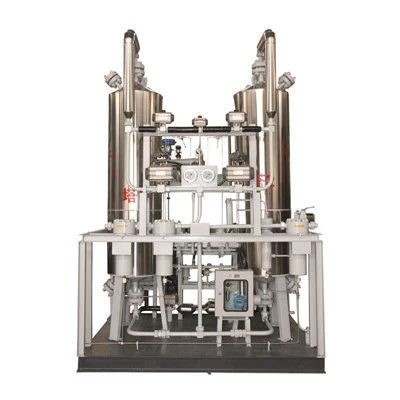
Toshiba Energy Systems & Solutions Corporation, a subsidiary of Toshiba Corporation, is a Japanese company specializing in energy infrastructure, including hydrogen refueling stations. Headquartered in Tokyo, Toshiba has a long history in energy technology, and its hydrogen station business focuses on compact, efficient stations for urban and commercial use. The company’s stations use advanced PEM electrolyzers and high-pressure refueling technology, designed for light-duty passenger vehicles and buses. Toshiba has built over 40 hydrogen refueling stations in Japan, as well as projects in the United States and Europe, and is a key partner in Japan’s Basic Hydrogen Strategy, which aims to build a nationwide hydrogen refueling network. The company’s stations are known for their compact size, making them suitable for deployment in dense urban areas.
Features and Advantages of Toshiba Energy Systems & Solutions Corporation
- Compact station design: Small-footprint stations ideal for dense urban areas, where space is limited
- Japanese technological precision: High-quality components and advanced control systems, ensuring high reliability and safety
- Support for Japan’s hydrogen strategy: Key supplier for Japan’s national hydrogen refueling network, with government-backed projects
- PEM electrolyzer technology: Efficient on-site hydrogen production, reducing reliance on external hydrogen supply
- Global partnerships: Collaborates with Toyota, Honda, and US energy firms to expand hydrogen infrastructure
- User-friendly operation: Intelligent control systems that simplify station operation and reduce maintenance requirements
10. Guangdong Nation Synergy Hydrogen Energy Technology Co., Ltd.
Marine LNG Bunkering & Fuel Gas Supply Systems Guangdong Nation Synergy Hydrogen Energy Technology Co., Ltd., a Chinese company headquartered in Guangzhou, Guangdong, is a leading manufacturer of hydrogen refueling stations and core components, focusing on green hydrogen infrastructure. Founded in 2016, the company specializes in R&D, manufacturing, and operation of hydrogen stations, with a focus on alkaline electrolyzers and high-pressure refueling systems. Nation Synergy has built over 70 hydrogen refueling stations across China, serving buses, trucks, and passenger vehicles, and has expanded its market to Southeast Asia and the Middle East. The company’s stations are designed for high efficiency and low cost, leveraging domestic supply chains to reduce component costs. Nation Synergy is a key player in China’s Guangdong-Hong Kong-Macao Greater Bay Area hydrogen economy initiative.
Features and Advantages of Guangdong Nation Synergy Hydrogen Energy Technology Co., Ltd.
- Cost-effective domestic supply chain: In-house production of core components, reducing station costs by 15–20% compared to international competitors
- Green hydrogen focus: Specializes in on-site renewable-powered hydrogen production, aligning with China’s net-zero goals
- Strong domestic project track record: Over 70 stations in China, with a presence in key industrial clusters like the Greater Bay Area
- International expansion: Delivered projects in Thailand, the United Arab Emirates, and Indonesia, with growing global demand
- High-efficiency electrolyzers: Alkaline electrolyzers with 70%+ energy efficiency, reducing hydrogen production costs
- Tailored solutions: Customized station designs for different applications, including urban light-duty stations and heavy-duty fleet hubs
