If you’re a farmer, produce processor, or someone in the ag supply chain, you’ve probably seen checkweighers on packaging lines for snacks, meds, or even mail packages. But when I chat with folks in ag, the first question that pops up is usually: “Wait, can that thing—you know, the metal detector-style scale that’s supposed to count or weigh packaged goods fast—even handle my stuff? My produce’s messy, sticks together, comes in all weird sizes.” Full transparency here: yes, a checkweigher absolutely works for agricultural products—if you pick the right one for your specific product, and tweak it a little to handle the weird, unforgiving side of ag goods. I’m a checkweigher supplier, so I’m not here to sell you a $10k machine for your 50lb bags of potatoes (that’s overkill), but I am here to explain why this tech is way more useful for ag than most people think, and how to make it work for you, not against you. CheckWeigher
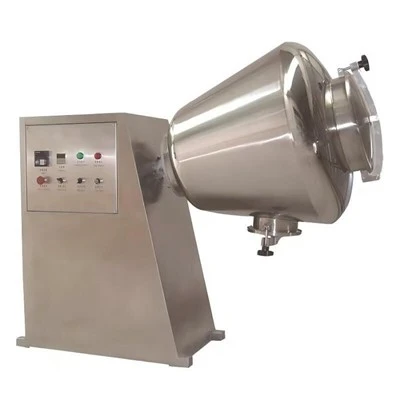
First, let’s break down what a checkweigher actually does, because a lot of ag folks mix it up with a basic scale or a counting machine. A checkweigher is a high-speed, conveyor-belt scale that measures the exact weight of every item that passes over it, and it automatically rejects anything that’s outside a set weight range. That means it’s not just weighing—it’s sorting, removing off-spec products, and making sure your packages hit the legal weight mark (huge for ag, because underfilling leads to fines, and overfilling cuts into your profit). For ag, that’s a game-changer because so many ag products rely on weight for pricing, compliance, and customer satisfaction.
Let’s run through the most common ag products where we’ve seen this work, and the tweaks that make it possible. First, fresh produce like apples, citrus, or baby carrots. These are messy—they bruise, stick together, roll around, and come in all random sizes. A lot of our first-time ag customers tell us, “I tried a regular scale and it kept picking up two apples instead of one,” and that’s totally fair. But modern checkweighers have tiny adjustments we can make just for ag goods: things like “product separation settings” that tell the machine “wait, only one item every X inches,” so if two apples stick together, the scale recognizes they’re two separate items and rejects the pair automatically, instead of weighing both as one. We also sell conveyor belts with textured rubber mats instead of smooth plastic, so round produce doesn’t slide mid-weigh, which used to be a big issue back when checkweighers were only for flat, uniform snack bars. We had a guy last year who runs a 100-acre apple orchard; he was manually checking every bag of gala apples to make sure each bag hit 5lbs, which took 4 hours a day. Now, he runs the apples down our checkweigher line, and it rejects any bag that’s off by more than 0.2oz. He cut his manual labor for that step by 90%, and stopped giving away free apples to make up for underfilled bags. That’s the kind of win most ag folks don’t see right away—they think checkweighers are for big processors, not small orchards.
Then there’s bulk ag products, like grain bags, seed packets, or fertilizer for small farms. Wait, fertilizer? Yeah, I know what you’re thinking—fertilizer is dusty, it’s heavy, it gets everywhere. But our heavy-duty checkweighers have sealed, easy-to-wipe-down conveyor belts, and stainless steel frames that don’t rust from dust or moisture. A seed company we work with started using checkweighers for their 1lb packets of corn seed; before that, they’d count each seed by hand, which took forever, and sometimes missed a few, so customers would get a partial order. Now the checkweigher counts by weight (100 corn seeds = ~0.1lb, so it sets the range), and rejects any packet that doesn’t have the right number. They went from 20 packets an hour to 200, and customer complaints about wrong seed counts dropped to zero. Even for bulk 50lb bags of soybean or wheat, we have low-speed checkweighers that can handle the heavy load without jamming. A grain co-op in Iowa was using a forklift to weigh every bag, which meant a worker was on the clock 8 hours a day just moving bags. Now they use a small checkweigher at the end of their bagging line that weighs each bag as it comes off the machine, and flags any that are over or under. They saved $12k a year in labor costs for that step alone.
But here’s the catch: checkweighers don’t work for all ag products. We can’t send you a standard checkweigher for loose, unbagged goods that are moving at 50mph, for example, or stuff that’s super irregular like whole hay bales. Wait, whole hay bales? Yeah, that’s not a fit—we’re talking about packaged ag goods, the ones that are sold in bags, boxes, or small clamshells, the kind that go to grocery stores, co-ops, or seed companies. Another thing: if your product is super sticky, like honey jars or molasses packets, we can add a “anti-stick” spray to the conveyor, or adjust the weight threshold so the machine doesn’t mistake sticky residue for part of the product. We had a problem last year with a guy who was packing honey sticks, and the syrup would drip onto the conveyor, making the scale think the stick was heavier than it was. We tweaked the calibration and added a quick-swipe sensor, and now his rejection rate is down from 15% to 2%. It’s not a one-size-fits-all, but we can adjust for almost any ag-specific quirk.
Now, why is this better than the old ways? Most ag folks I talk to still do manual weighing, or use a basic scale that only weighs the whole batch, not every individual package. Manual weighing is slow, it’s error-prone—people get tired, they miss a bag here and there, and if you’re selling to a grocery chain that requires strict weight compliance, you can get fined. I’ve seen a small tomato farm get a $2,000 fine once because 3 bags out of 1,000 were underweight, and the inspector caught it. That’s a huge hit for a small operation, and a checkweigher would have prevented that. Also, customers hate underfilled bags—they feel like they’re getting ripped off, so you lose repeat business. A checkweigher makes sure every package is exactly what you say it is, which builds trust with buyers.
Another thing: sustainability. A lot of ag brands are pushing for zero waste now, and checkweighers help with that. Before, if you had to fill a bag a little over to make sure it hit the weight, you’d throw away the extra, or give it away for free, which is wasted product. With a checkweigher, you can fill the bag almost exactly to the weight, because the machine will reject any that’s off, so you’re not wasting product. That’s a big plus for the environment, and for your bottom line. A green bean processor we work with said they cut their product waste by 7% after installing a checkweigher, which saved them $18k a year in lost produce.
But let’s be real, I’m a checkweigher supplier, so I’m not here to say it’s perfect. The biggest mistake I see ag folks make is buying the cheapest checkweigher they can find online, without talking to someone who knows ag products. Those cheap ones are made for uniform, flat items like cookies, not apples or sticky honey sticks. They break down fast, they can’t handle the mess, and they end up costing you more in repairs and downtime. We sell checkweighers that are built specifically for ag—they’re durable, easy to clean, and come with a 12-month warranty, which is way more than the cheap ones offer. We also offer on-site calibration, so if you’re in the middle of harvest season, we can come out and adjust the machine on the spot, no waiting for a repair.
Wait, I should mention a common misconception: checkweighers are only for big ag operations, right? No, we have customers who are small, 2-person orchards, and they use our mid-sized checkweighers to package their apples for farmers’ markets. They can’t afford a huge line, but they can afford a small checkweigher that fits on a tabletop, and it cuts their packaging time in half. One guy in Ohio told me he used to stay up until midnight on Sunday packing apples for the farmers’ market, and now he’s done by 5pm, and has more time to spend on his farm. That’s the kind of impact that gets me excited, not just selling a machine, but helping people work smarter, not harder.
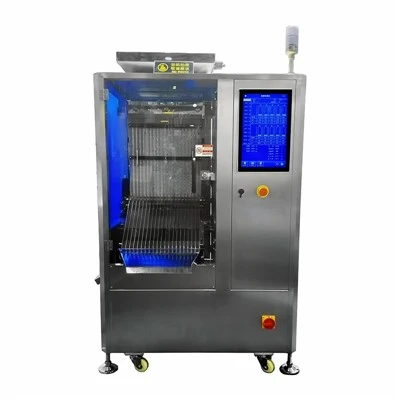
Let’s wrap this up: if you’re in ag, and you’re packaging your products (fresh produce, seeds, grain, fertilizer, honey, whatever), a checkweigher is absolutely worth looking into. It’s not a fancy, unapproachable piece of tech—it’s a tool that solves real problems: labor costs, compliance fines, product waste, customer complaints. The key is to pick one that’s built for ag, not the snack industry, and work with someone who knows your specific product’s quirks.
Bottle Filling Machine If you’re tired of manual weighing, dealing with underfilled packages, or wasting product, hit us up to chat about what you’re packaging, what your needs are, and what kind of checkweigher would work for you. No sales pitch, no pressure—just honest advice to help you make the best call for your farm or business.
References
- Agricultural Marketing Service (AMS). (2022). Compliance Guidelines for Packaged Agricultural Products. U.S. Department of Agriculture.
- Food and Agriculture Organization (FAO). (2021). Post-Harvest Loss Reduction for Fresh Produce. United Nations.
- International Society of Automation (ISA). (2020). Weighing Solutions for Agricultural Packaging Lines. ISA Research Report.
- National Agri-Marketing Association (NAMA). (2023). Efficiency Tools for Small-Scale Ag Operations. NAMA Industry Insights.
- Global Food Traceability Center (GFTC). (2022). Weight Compliance in Food and Agricultural Packaging. GFTC Technical Brief.
Wenzhou Vitol Machinery Co., Ltd.
As one of the most professional checkweigher manufacturers and suppliers in China, we have world-leading production equipment and strong manufacturing capabilities. Please rest assured to buy customized checkweigher made in China here from our factory. Also, quotation is available.
Address: #16 Yongen Road, Longwan Area, WenZhou, Zhejiang, China
E-mail: leapeng01@gmail.com
WebSite: https://www.vitolsoftgel.com/
