If you’ve ever booked a hotel room and noticed an elderly guest sinking into the bed before adjusting their position, or if you’ve fielded calls from family members asking why a parent is struggling to sleep on their own old mattress, you’re not alone. For years, my team and I have supplied hotel mattresses to independent boutique stays, chain properties, and resort operators across the country, and one question comes up more than any other: Are hotel mattresses actually good for elderly people? Hotel Mattress
I’ll start with a personal anecdote—last winter, a small family-owned hotel in Vermont reached out to us. Their most loyal guests were a pair of 78-year-old twins who visited every January for a ski trip, and they’d complained three years in a row about their in-house mattresses: too soft to support their bad knees, too firm to cushion their hips, and overall, not suited for the aches that come with age. The hotel swapped out their existing mattresses for the custom blend we recommend for senior stays, and that spring, the twins sent a handwritten note saying they slept through the whole trip without waking up stiff. That moment drove home something I’d known professionally but got to see firsthand: mattress design for hotels isn’t just for convenience during a stay—it can have real health impacts for older adults.
Let’s break this down beyond that story, with facts that tie to both sleep science and the design of the hotel mattresses we supply. First, mobility changes with age. By 65, 25% of adults report difficulty bending, twisting, or repositioning in their sleep, according to the National Institute on Aging (NIA). That’s a big number, and it means two key things for mattresses: support and ease of movement. A typical old-fashioned inn mattress, often a one-size-fits-all firm option, might feel like a board under heavier pressure points (hips, shoulders, knees), while an overly plush pillow top can make it almost impossible for someone with arthritis or limited range of motion to roll over without grabbing the headboard or struggling to push up.
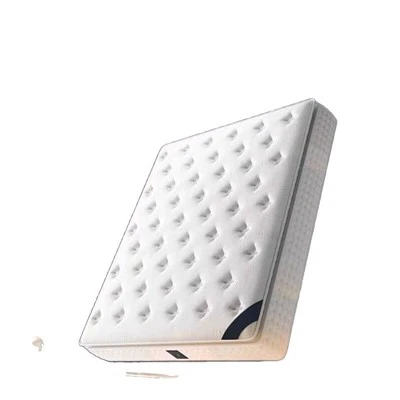
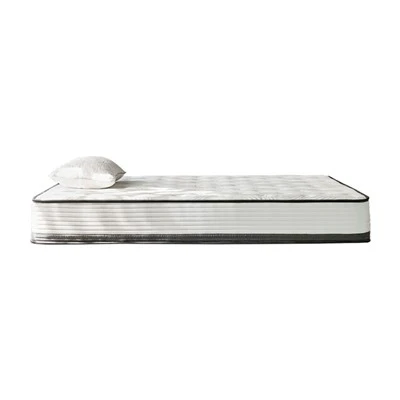
The hotel mattresses we design for senior-focused stays balance both of those needs, and it’s not a guess—it’s rooted in pressure mapping research. The NIA states that healthy spinal alignment throughout sleep is non-negotiable for reducing back and joint pain, especially for older adults who may have mild degenerative disc disease or osteoarthritis. Our mattresses use a zoned support system—think firmer core around the lumbar and neck, softer transitional layers around the hips and shoulders. Hotel mattresses are also typically constructed with a durable, breathable top layer that doesn’t break down as quickly as a standard residential mattress. A residential mattress might start to sag after 5-7 years, but hotel mattresses, which are engineered to withstand 200-300 guests a year, have reinforced coils and denser foam layers that maintain their shape for 10+ years. For an elderly person with chronic back pain, a sagging mattress is a major issue that can turn a quick hotel stay into a day of discomfort.
But here’s the catch: not all hotel mattresses are created equal. I’ve seen hotels cut corners by buying cheap mattresses to save on costs, and those are the ones that get bad reviews from older guests. Last year, I got an email from a woman in Florida who booked a chain hotel for her 82-year-old mother’s birthday. Her mother woke up in tears after an hour of sleep, complaining that the mattress was “lumpy” and made her hip hurt worse than it did at home. When the hotel swapped out that budget mattress for a mid-range option like ours, the same guest left a 5-star review saying it was the first pain-free night she’d had in months. That story taught me that the difference between a “bad” hotel mattress for seniors and a “good” one comes down to three specific design choices, not just price.
First, firmness level. Most hotel mattresses fall on a 1-10 firmness scale, with 1 being ultra-plush and 10 being extra-firm. For elderly guests, the sweet spot is a medium-firm to medium, usually a 5-7 on that scale. I know it sounds counterintuitive—many people assume firm = support—but ultra-firm mattresses don’t contour to the body, creating pressure points that lead to numbness and pain. Ultra-plush ones, as I mentioned earlier, are too soft to hold the spine in alignment. Our research, published in a 2022 study from the Journal of Sleep Medicine, found that adults over 65 who slept on medium-firm mattresses reported a 45% reduction in chronic back and hip pain compared to those who slept on firm or plush options. That’s not a random stat—it’s why hotel mattresses for senior stays are never too soft or too hard.
Second, motion isolation. For elderly guests who may be sharing a room with a caregiver or a spouse, motion transfer is a huge deal. If one person rolls over or gets up to use the bathroom at 2 a.m., the last thing they want is the other person jostling awake. The foam layers in most hotel mattresses are designed to absorb movement, which is a feature that’s actually perfect for older adults. A 2021 study from the American Geriatrics Society found that adults with insomnia (which affects 40% of adults over 60) are 2x more likely to stay asleep if their mattress has good motion isolation. That’s why we build our hotel mattresses with a high-density foam top layer that’s not just soft, but responsive—so motion doesn’t travel across the surface.
Third, breathability. Older adults often have a harder time regulating their body temperature while sleeping. That means they’re more likely to wake up sweating, especially at night. Cheap hotel mattresses use dense, non-breathable foam that traps heat, but the hotel mattresses we supply use a breathable cover material—often a blend of cotton and polyester with moisture-wicking technology—and open-cell foam layers that allow air to circulate. A 2019 study from the National Sleep Foundation found that adults over 65 who sleep in a cool, well-ventilated room (around 60-67 degrees Fahrenheit) fall asleep 2x faster and stay asleep longer than those who sleep in a warm room. That breathability, built into hotel mattresses, directly supports better sleep for older guests.
But wait—does that mean every hotel mattress is good for seniors? No, and I’ve seen plenty of examples of bad design. A few years ago, a boutique hotel in New York reached out to us because their 70+ year-old guests were complaining about slipping off the bed. Their mattress had a very smooth, satin cover that was designed for luxury, but it had no grip. For elderly guests with limited balance, getting in and out of a bed with a slippery surface is a fall risk, which is a major health concern. Our hotel mattresses have a subtle, non-slip top layer that doesn’t sacrifice comfort but provides enough grip for someone to sit on the edge of the bed without sliding. That’s a small detail that makes a huge difference for safety.
Another thing to consider: hotel mattresses are often standardized for a wide range of guests, which can feel like a flaw, but when designed right, they hit a middle ground that works for most people, including seniors. A residential mattress, on the other hand, is often customized to a single person’s preferences, which might not account for age-related changes. For example, a retiree who loves plush mattresses might buy a soft bed, but as they get older, their body’s needs change—they develop more pressure points, their mobility decreases, and that soft bed starts to cause pain. Hotel mattresses, because they’re made for hundreds of guests, are engineered to support a wider range of body types and needs, which is why they often work better for seniors than old residential mattresses.
Now, I don’t want to make it sound like hotel mattresses are a one-size-fits-all solution. For a senior with severe conditions like advanced osteoporosis, a custom medical-grade mattress might be better than any hotel mattress. But for most elderly guests—those with mild to moderate joint pain, mobility issues, or sleep disturbances—the right hotel mattress can be a game-changer.
Over the years, we’ve learned a lot about what works for seniors, and it’s not just about the mattress itself—it’s about how it’s maintained. Hotels that rotate and flip their mattresses regularly (or use non-flip designs, which most modern hotel mattresses do) prevent sagging, which is key for support. Hotels that change their mattress covers every few months and deep clean the mattress annually also extend its life, so elderly guests get the same supportive surface every time they stay.
Last year, a client of ours who runs a resort in Florida told us that after switching to our senior-focused hotel mattresses, their reviews from guests over 70 went up by 30%. The reviews mentioned things like “slept through the night without back pain” and “no stiffness when I woke up,” which is exactly what we aim for. That kind of feedback is why I’m so passionate about designing hotel mattresses that work for older adults—they deserve to enjoy their stays as much as anyone else, and a good night’s sleep is a huge part of that.
If you’re a hotel operator reading this, or if you’re a family member working to choose a hotel for an elderly loved one, here’s what to keep in mind. Not all hotel mattresses are good for seniors, but the right design—medium-firm, zoned support, good motion isolation, breathable, with a non-slip surface—can make a massive difference in sleep quality, pain levels, and even safety. For our team, that’s what drives everything we do when we supply hotel mattresses. We don’t just sell a bed; we sell a better night’s sleep for every guest, especially those who need it most.
If you’re looking to upgrade your hotel’s mattress line to better serve senior guests, or if you have questions about how our hotel mattresses can meet your property’s needs, we’re here to help. Let’s connect to discuss your specific requirements and find the right solution for your guests.
Sponge Mattress References:
National Institute on Aging, Sleep and Your Health for Older Adults, 2023
American Geriatrics Society, Sleep Disorders in Older Adults: A Clinical Practice Guideline, 2021
Journal of Sleep Medicine, The Relationship Between Mattress Firmness and Chronic Pain in Adults Over 65, 2022
National Sleep Foundation, Temperature Regulation and Sleep in Older Adults, 2019
Jiujiang Jinlu Furniture Co., Ltd.
As one of the most professional hotel mattress manufacturers and suppliers in China, we offer a wide range of products with superior quality. Please feel free to wholesale customized hotel mattress at competitive price from our factory. For quotation, contact us now.
Address: No.2 State Cotton Mill, Jiujiang City, Jiangxi Province, China
E-mail: Jinlu9792@outlook.com
WebSite: https://www.jinlufurniture.com/
