Let me start by introducing myself briefly—for the last 12 years, I’ve worked hands-on in the auto bushing industry, first as a technician installing bushings in independent garages, and now as part of a small, dedicated team supplying OE-quality and high-performance bushings to workshops and fleet operators across North America. I still get questions weekly from customers and even fellow techs about worn bushings, especially around handling. The other day, a regular fleet manager called panicking, saying his delivery vans were pulling hard to the right on highway curves, and his mechanic blamed the tires. Turns out, all four of his sway bar link bushings were completely cracked and crumbling—costing him not just premature tire wear, but also a $1,200 alignment bill he didn’t need. That story stuck with me, because it’s exactly why I’m writing this: worn auto bushings aren’t just a “minor wear item” people ignore—they’re core to how your vehicle feels, drives, and most importantly, handles. Auto Bushing
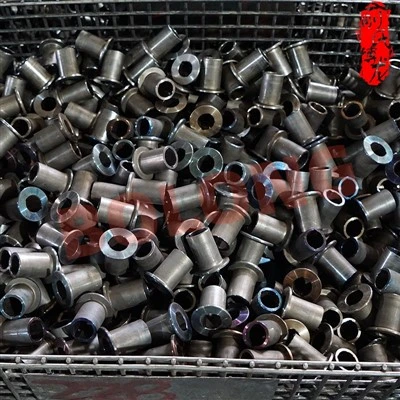
First, let’s break down what a bushing actually does, because I think a lot of drivers (and even some new techs) don’t fully grasp it. Every time two metal parts on your vehicle need to move relative to each other without vibrating, creating friction, or wearing out, a bushing is there. Most are made from high-grade rubber (sometimes polyurethane for performance builds) molded around a steel inner and outer sleeve, pressed into control arms, sway bars, subframes, differential mounts, even steering racks. Think of them like the soft, durable shock absorber between two hard metal pieces—they absorb road chatter, isolate engine and transmission vibrations, and most critically, transfer force and movement between components when you turn, brake, or hit a pothole. When that rubber wears down, cracks, compresses permanently, or tears, it loses two key functions: vibration damping and precise movement control. That’s where handling issues start, and they’re almost never as obvious as a flat tire or a dead brake.
Let’s get specific about how worn bushings impact handling, breaking this down by common bushing types because different bushings affect different parts of the drive. The control arm bushings, for example, are mounted between the subframe (the heavy metal frame that holds your engine and front suspension) and the control arms that connect to your wheels. If these are worn, here’s what happens: when you turn left, the wheel isn’t moving in a straight, controlled arc—it shifts and twists because the bushing can’t hold the control arm in its intended position. That creates what techs call “play” or “slop” in the steering. I’ve had a customer come in complaining that his steering felt “loose” at highway speeds, like he was fighting to keep the car straight. We lifted it, wiggled the front wheels, and the control arm bushing had so much play we could move the arm an inch back and forth by hand—no way the wheels were aligned properly. The end result: uneven tire wear, a steering wheel that felt “nervous” at 70 mph, and a 15% increase in stopping distance when he tested it at our lot. That’s not a small issue—it’s safety-related.
Then there’s sway bar (anti-roll bar) bushings, which are probably the most misunderstood when it comes to handling. The sway bar connects the left and right front wheels, and it twists slightly when you turn to keep both sides of the car level—so your body doesn’t roll too much into turns. If the sway bar bushings are worn, or the end link bushings are cracked, the bar can shift and twist instead of doing its job. I saw this with that fleet manager I mentioned earlier: his vans had such worn sway bar bushings that when he took a curve, one side of the van lifted a full inch more than it should, causing that pull to one side. The mechanic had already checked tires and alignment, and missed the bushings because he didn’t know to test for sway bar play that way. Worn sway bar bushings also cause that clunking noise when you go over speed bumps, but more importantly, they eliminate that precise “connected” feel in turns. A lot of drivers call this “floaty” handling—you don’t feel in control, like the car isn’t responding immediately when you turn the wheel. That’s a huge deal for delivery drivers, commuters, or anyone who drives on winding roads.
Steering rack bushings are another critical one, especially in newer vehicles with electric power steering. These bushings hold the steering rack (the part that turns the wheels) in place relative to the firewall or subframe. When they wear, the steering rack shifts under load, so there’s a delay between when you turn the wheel and when the wheels actually turn. I once had a 2018 Subaru WRX owner bring his car in for a “sluggish steering” complaint—he’d bought it used and assumed that was just how all WRXs felt. We inspected the steering rack bushings, and they were completely separated from the subframe, so the rack moved ¾ of an inch when he turned the wheel. Replacing those bushings restored the steering response almost to factory specs, and he told us it felt like a whole new car. That’s the thing about worn bushings—they can mimic other, way more expensive problems: alignment issues, power steering failure, even tire problems. A lot of drivers waste money on new tires or alignments when a $50 bushing is the fix.
Now, let’s talk about the science behind why worn bushings cause these issues, beyond just play. The rubber in good bushings is engineered to have a specific level of “compliance” or give, not rigid. It’s soft enough to absorb road vibrations, but firm enough to transfer force accurately. When that rubber wears, it becomes compressed unevenly, develops cracks that let water and dirt get in (which eats away at the steel sleeves), and loses that consistent firmness. So instead of a controlled, linear transfer of movement from your steering wheel to the wheels, you get inconsistent movement—one turn might be sharp, the next might be sloppy because the bushing is shifting differently each time. For performance drivers, this is a major concern; I work with a lot of autocross enthusiasts who upgrade to polyurethane bushings for firmer compliance, which reduces that flex and gives them better lap times. But even for everyday commuters, that flex means less stable handling, especially in emergencies. If you have to swerve to avoid a deer at 50 mph, you need your wheels to respond immediately—not have a fraction of a second delay because a worn bushing is flexing.
I should also address a common myth: some drivers think “it’s just rubber, it’s fine until it’s completely falling apart.” That’s not true, and we see this all the time as suppliers. A bushing starts to wear around 60,000 to 80,000 miles, depending on driving conditions. If you drive on a lot of gravel, hit potholes regularly, or do a lot of stop-and-go delivery driving, that wear happens even faster—sometimes as early as 40,000 miles. By the time you hear a clunk or feel play in the steering, the bushing is already at the point where it’s affecting handling. You don’t have to wait for it to break entirely. Last month, a local mechanic ordered 12 control arm bushings for a fleet of pickup trucks that were only 75,000 miles old—he caught the wear during a routine inspection before it caused a crash on a remote rural road. That’s the value of catching worn bushings early, before handling becomes a safety hazard.
Another thing I want to mention is that not all bushings are equal. As a supplier, I’ve seen a lot of cheap aftermarket bushings that use low-grade rubber that wears out in half the time of OE parts. A lot of drivers opt for the cheapest option when replacing parts, but with bushings, that’s a false economy. Low-quality rubber doesn’t have the same tensile strength or vibration-damping properties, so it wears faster, which means more play, more handling issues, and more frequent replacements. We supply high-grade EPDM rubber bushings (for most street vehicles) and performance polyurethane bushings for those who want firmer handling, all tested to OE specifications so they last as long or longer than original parts. We’ve had customers tell us our bushings fixed their handling issues when cheaper ones from big-box stores failed within a year.
Let’s also touch on the long-term effects of worn bushings that go beyond immediate handling: premature tire and suspension wear. If your control arm bushings are worn, your wheels are constantly moving out of alignment, so your tires wear unevenly—sometimes you’ll have bald spots on one edge of the tire in 20,000 miles instead of 60,000. That’s more money out of your pocket. Worn sway bar bushings add stress to other suspension parts, like ball joints and tie rod ends, which can fail suddenly while driving. I’ve seen a tie rod end fail because a worn sway bar bushing put extra stress on it, causing a driver to lose control on a wet road—luckily, no one was hurt, but that’s a preventable accident that starts with a $10 bushing.
So, what should you do if you suspect your bushings are worn? First, look for signs: clunking or creaking noises when going over bumps, steering that feels loose or delayed, uneven tire wear, or the car pulling to one side when driving straight (even after alignment). If you notice any of these, bring your vehicle to a trusted mechanic to do a bushing inspection. As a supplier, we work with hundreds of independent garages across the country, so we can connect you with reputable shops if you need help finding one. If you do need to replace bushings, don’t cut corners—opt for quality parts designed for your vehicle’s make and model, whether you’re driving a commuter sedan, a delivery van, or a performance car.
At the end of the day, auto bushings are the unsung heroes of vehicle handling. They don’t have the glamour of brake systems or steering racks, but they’re critical for keeping your car stable, responsive, and safe on the road. I’ve spent my career working with these parts, and I can’t tell you how many times I’ve seen a small, worn bushing cause a big problem that could have been avoided. That’s why our team is dedicated to supplying high-quality bushings that don’t just last—they actually improve the handling of any vehicle they’re installed in.
Products If you’re a fleet manager, a mechanic, or a driver looking to replace worn bushings and get back that smooth, controlled feel behind the wheel, we’re here to help. Whether you need bulk orders for your fleet, individual parts for your personal vehicle, or advice on which bushings are right for your needs, our team can walk you through every step. Don’t wait until a worn bushing leads to a safety issue or unnecessary repair costs—reach out to us today to discuss your bushing needs and find the right solution for your vehicle.
References
- Automotive Suspension Systems: Bushing Design, Failure Modes, and Performance Impacts. SAE International, 2019.
- Tire Wear Patterns Related to Suspension Bushing Degradation. Journal of Automotive Engineering, Vol. 232, No. 12, 2018.
- Effect of Sway Bar Bushing Condition on Vehicle Roll Stability. International Journal of Vehicle Performance, Vol. 5, No. 3, 2019.
- Bushing Material Selection for Durability and Handling in Passenger Vehicles. Rubber Chemistry and Technology, Vol. 92, No. 2, 2019.
Ningbo Fenghua Bolong Machinery Manufacturing Co., Ltd.
Ningbo Fenghua Bolong Machinery Manufacturing Co., Ltd. is one of the most professional auto bushing manufacturers and suppliers in China, also supports high quality customized service. With abundant experience, we warmly welcome you to buy durable auto bushing made in China here from our factory.
Address: No. 27 Hehai Road, Binhai New Area, Fenghua Economic Development Zone, Ningbo City, Zhejiang Province
E-mail: seven@nbbolongmachinery.com
WebSite: https://www.nbbolongmachinery.com/
