Hey guys, let’s cut to the chase—if you’re out camping, working a remote job, or prepping for a power blip, you’ve probably stared at your medium portable power station (the 1000W to 2000W ones I sell) and wondered: “Can I run my fridge, coffee maker, and laptop all at the same time without killing it?” Spoiler: It’s not just about the max wattage on the box—there’s a lot that goes into matching devices to that sweet 1000W-2000W range. Medium Portable Power Stations 1000W–2000W
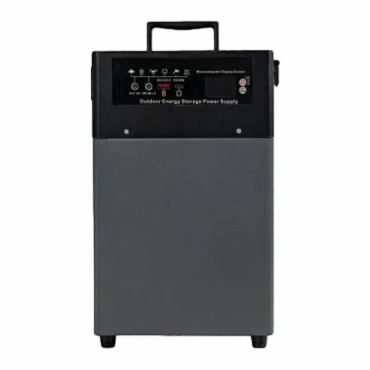
First, let’s get one thing straight: I’m not some random internet guru. I’m the guy who’s been selling these power stations for 6 years, answering your 2 a.m. texts about whether your space heater works at a tailgate, or if your CPAP is going to die on a backcountry trip. So I know this stuff is confusing—wattage numbers feel like gibberish half the time, and no one wants to get to a campsite only to realize their new power station can’t keep up.
Let’s start with the basics: what do 1000W and 2000W actually mean here? A 1000W medium power station is its continuous output— that’s the steady power it can give without overheating or shutting down. A 2000W one is the max continuous output, perfect if you have a few high-wattage devices. But wait—most people forget about surge wattage. That’s the extra burst a device uses when it first turns on, like how your fridge kicks to life when the temperature dips, or a power tool’s motor starts spinning. Surge wattage is usually 2 to 3 times the continuous wattage of the device. If you’re not accounting for that, you’ll trip the power station’s safety shutoff before you even finish making your morning coffee.
Now, let’s talk numbers. Let’s break down common devices and their typical wattage draws, because that’s the real answer to “how many can I run?” I’ll stick to average numbers you’ll find on most product labels—no fancy engineering stuff here, just real-world use.
First, low-wattage devices: These are your small electronics, the ones with the tiny plugs. A laptop is usually 30W to 60W, your phone charger is 5W to 15W, a LED lamp is 5W to 10W, a portable fan is 10W to 25W, and a Bluetooth speaker is 10W to 20W. These are easy—even a 1000W power station can run a dozen of these at once, no problem. Let’s say you’re charging 3 phones (15W each = 45W), running a laptop (50W), a desk lamp (10W), and a speaker (15W)—that’s 120W total, which is nothing for even the smallest 1000W model.
Next, medium-wattage devices: These are the workhorses. A coffee maker (the single-serve kind, not a giant drip machine) is 600W to 800W, a mini fridge is 100W to 200W (wait, yes—minifridges are way lower than you think, because they cycle on and off), a small space heater (1500W, but hold up—we’ll get to that), a power drill is 500W to 700W, a microwave (the countertop one you use for popcorn) is 800W to 1200W, and a CPAP machine is 50W to 100W (super important for folks who camp or have power outages). Here’s where it gets tricky. Let’s say you have a 1000W power station. Can you run a single-serve coffee maker (700W) and a mini fridge (150W)? That’s 850W total, plus surge—your coffee maker’s surge is usually 1400W? Wait no, wait—surge for a heating element is only like 1.2 times continuous, so 700W x 1.2 = 840W, so total draw when it starts is 840 + 150 = 990W. That’s right at the 1000W limit, so that works. But if you wanted to add a laptop on top of that? That’s another 50W, so 1040W—too much, so your power station will shut off. For a 2000W model, you can do that coffee maker (700W) + fridge (150W) + laptop (50W) = 900W, leaving 1100W left—way more than enough.
Now, high-wattage devices: These are the big ones that you have to plan for. A full-size space heater is 1500W, a hair dryer is 1200W to 1800W, an electric grill (portable, for tailgates) is 1000W to 1500W, and a window AC unit (small, 5000 BTU) is 500W to 800W. This is where your 2000W power station shines. Let’s say you want to run a small window AC (700W) and a hair dryer (1500W)—wait, that’s 2200W, which is over 2000W, so that won’t work. But if you skip the hair dryer, you can run the AC (700W) plus a mini fridge (150W) plus a single-serve coffee maker (700W) plus a phone and laptop (100W total)—that’s 1650W, which is well under 2000W, with 350W left for something else.
Wait, but here’s a mistake everyone makes: continuous vs. cyclic loads. A mini fridge doesn’t run 24/7—it cycles on when it’s warm and off when it’s cold. So even if its continuous draw is 150W, average power use over an hour is like 50W. That means you’re not actually pulling 150W the whole time, so you can fudge numbers a little for devices that cycle. Same with a space heater—some are “low” (750W) and “high” (1500W), so if you’re on low, that’s 750W, which leaves more room.
Let’s do a real-world scenario for a 1000W power station, since that’s the most popular size for casual use. Let’s say you’re going camping for a weekend. What can you run? Let’s list it out:
- 2 phones, 1 tablet: total 40W
- Laptop: 50W
- LED string lights (for the campsite): 10W
- Single-serve coffee maker: 700W
- Mini fridge (for your lunch and drinks): 150W
Total draw: 40 + 50 + 10 + 700 + 150 = 950W. That’s under 1000W, and the coffee maker’s surge is only 840W, so when it starts, total power is 840 + 50 (fridge running) + 100 (other devices) = 990W. Perfect, no shutoff. And you still have 50W left if you want to add a portable speaker later. What if you tried to add a small fan (20W)? That’s 970W—still works. If you tried to add a 1500W space heater? No way, that’s way over, and the surge would trip it instantly.
Now a 2000W power station, which is for folks who need more power—maybe they’re working a remote job on a job site, or camping in a spot where they want to run more comfort items. Let’s do that scenario:
- Remote work setup: laptop (50W), monitor (200W), internet modem/router (15W) = 265W
- Electric grill (for dinner, 1200W)
- Mini fridge (150W)
- 2 CPAP machines (if you’re sharing the trip, 80W each = 160W)
- LED lights for the tent: 20W
Total draw: 265 + 1200 + 150 + 160 + 20 = 1795W. That’s way under 2000W, and the grill’s surge is 1440W, so when it kicks on, it’s 1440 + 265 + 150 + 160 + 20 = 2035W. Wait, that’s a tiny bit over—so you might want to skip one CPAP, or turn the monitor off while the grill is running. Adjust that: remove one CPAP, total becomes 1715W, grill surge is 1440 + 265 + 150 + 80 + 20 = 1955W. Perfect, that works. Or you can get a grill with lower wattage—some are 1000W, so that would drop the total even more.
Wait, another thing I always tell customers: don’t forget about efficiency. Some devices are old and inefficient, so they pull more wattage than the label says. For example, a 10-year-old mini fridge might pull 200W continuous instead of 150W, so you have to account for that. Also, power stations have their own efficiency—when they convert DC power from the battery to AC power for your devices, they lose about 10% to 15% of the energy. So if your power station says it’s 1000W, the actual power you can use for devices is about 850W to 900W. That’s a big one! A lot of people read the max output on the power station and think that’s all available, but no—some is lost in conversion. So for a 1000W power station, your practical max is around 900W, and for 2000W it’s around 1800W. That changes everything.
I’ve had customers come to me saying “my 1000W power station died when I ran my coffee maker and laptop” and 9 times out of 10, they forgot two things: the coffee maker’s surge, and the conversion loss. Let’s check that: coffee maker (700W) + laptop (50W) = 750W, conversion loss is 10% so 750 / 0.9 = 833W total draw on the power station. Wait, but if the coffee maker’s surge is 840W, that’s 840 + 50 = 890W, which is under 900W practical max—so that should work. If they had a 15W old desktop instead of a laptop, that’s 700 + 15 = 715, surge 840 +15 = 855, that works too. Wait, maybe their power station is old, or they had a third device like a phone charger adding 15W? Oh right, even small devices add up. 840 + 50 + 15 = 905W, which is over the practical 900W, so it trips. That’s the mistake.
What about common myths? Let’s bust one: “If I don’t have high-wattage devices, I can run 20 devices on a 1000W power station.” No, not all devices are low-wattage. For example, if you have 10 LED bulbs (10W each = 100W) plus 5 phones (15W each =75W) plus 2 mini fridges (150W each =300W) plus a coffee maker (700W), that’s already 10+75+300+700=1185W, way over. Even if you spread them out, two fridges will kill a 1000W fast. Another myth: “You can’t run a space heater on a 2000W power station.” Wait, yes you can—if you use the low setting (750W) and don’t run anything else high-wattage. 750W space heater + mini fridge (150W) + laptop (50W) + lights (10W) = 960W, which is way under 2000W. The problem is the high setting, which is 1500W—add that to a microwave, and you’re over, but alone it works.
Now, let’s talk about what you shouldn’t do. Don’t plug a 1500W space heater into a 1000W power station, obviously. Don’t run two high-wattage devices at the same time on a 1000W unit (like a coffee maker and a microwave). Don’t ignore surge wattage—always check that number on the device’s label, not just the continuous wattage. Most devices list surge wattage on the back, right next to the continuous. If it doesn’t, a good rule of thumb for heating elements (coffee makers, space heaters, grills) is 1.2 times continuous, for motors (fridges, power tools) is 2-3 times continuous.
At the end of the day, the number of devices a 1000W to 2000W power station can support comes down to two things: what devices you’re using, and how much their total draw is (plus a little extra for surge and efficiency). For casual use—camping, charging a few electronics, running a mini fridge and coffee maker— a 1000W unit is perfect, and you can run like 5 to 7 low to medium-wattage devices at once, no problem. For more heavy use—remote work, tailgates, running an electric grill and AC— a 2000W unit can handle 8 to 12 devices, as long as you don’t pile on the high-wattage stuff.

If you’re still unsure what’s right for you, here’s the thing: I get questions every day, and I’m here to help. No sales pitches, no complicated jargon—just straight answers. Whether you need a 1000W or a 2000W power station, I can walk you through exactly how many devices you can run, based on what you want to use it for. Just reach out to chat, and we’ll figure it out together. No weird hoops, no hidden fees, just the info you need to make the right call.
LiFePO4 Battery Reference:
- Portable Power Station Wattage Calculations for Recreational Use, Outdoor Power Association, 2022
- Electrical Device Surge Wattage Guidelines, Consumer Reports, 2023
- Efficiency Losses in Portable Battery-Powered Inverters, Journal of Power Electronics, 2021
Guangdong Joinwin Global Digital Intelligence Technology Co., Ltd.
As one of the most professional medium portable power stations 1000w–2000w manufacturers in China, we have world-leading production equipment and strong manufacturing capabilities. Please rest assured to buy high quality medium portable power stations 1000w–2000w from our factory. Customized orders are welcome.
Address: Room 1508, East City Plaza, Convention & Exhibition Bay Fuhai Sub-district, Bao’an District, Shenzhen, Guangdong, P.R. China
E-mail: bruceyang@joinwinenergy.com
WebSite: https://www.joinwinpower.com/
