If you’ve ever tried to estimate the cost of a mobile crushing plant, you’ve probably noticed it’s not a simple one-number answer. As a supplier who’s spent the last 12 years helping construction and mining companies across North America source equipment that fits their exact needs, I get asked this question at least three times a day. Most people expect a straightforward price tag, but the truth is, the cost of a mobile crushing plant depends on a dozen variables—some of which you might not even consider before you start shopping. Let’s break this down like I would with a customer who’s standing in my workshop, pointing at the line of machines parked outside. Mobile Crushing Plant
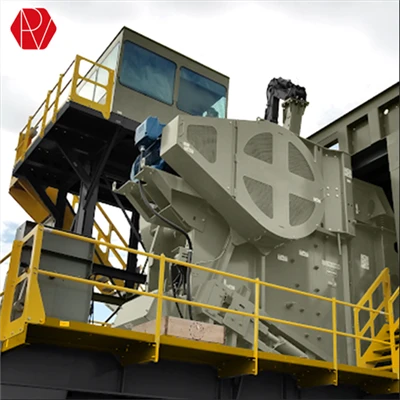
First, the biggest factor is the type of plant you actually need. Not all mobile crushing plants are the same. Some are built for small, residential construction jobs, where you’re crushing concrete from a home renovation into gravel for a new driveway. Others are designed for large-scale mining operations, where you’re processing 500 tons of rock per hour to extract gold or copper. I recently had a customer come in thinking a standard 200-ton-per-hour plant would work for a mine expansion—turns out he needed a 700-ton model, and the price difference was nearly $150,000 right off the bat. That’s why the first step I walk every potential buyer through is defining their throughput requirements, feed material size, and end product specifications. A jaw crusher, for example, is typically cheaper than an impact crusher, but it’s better for hard, abrasive rock like granite. An impact crusher can produce a more uniform product, which is great for asphalt, but it costs 20-30% more upfront. We also have cone crushers for secondary and tertiary crushing, and those can add even more to the total price if your operation needs multiple stages.
Next, mobility features play a huge role. The “mobile” part of a mobile crushing plant doesn’t just mean it rolls on wheels. Some plants are track-mounted, which is ideal for rough, uneven job sites where you can’t drive a wheeled truck without getting stuck. Track models are easier to maneuver around obstacles, and they can be transported without a full disassembly in most cases. Wheel-mounted plants, on the other hand, are usually cheaper, but they require a flat, paved surface to move, and they often need to be taken apart for transport, which adds time and labor costs when you’re moving from one job to the next. A track-mounted plant for 300 tons per hour will cost roughly $50,000 to $75,000 more than a comparable wheel-mounted model. We also have semi-mobile plants, which are halfway between stationary and fully mobile—they’re bolted down to a foundation at a job site for long-term use, but can be moved once the project wraps up. Those are a middle ground price-wise, usually 10-15% more than a wheeled plant and 10% less than a fully tracked one.
Then there are the add-ons and customizations that can either make the plant work for your operation or turn it into a frustrating headache. Basic plants come with a feeder, crusher, and conveyor belt, but most customers need extra features to handle their specific materials. For example, if you’re crushing concrete that has rebar, you’ll need a magnetic separator to pull out the metal before it gets into the crusher—forgetting that feature means you’ll be repairing the crusher’s wear parts every week, not every quarter. A magnetic separator adds about $8,000 to $12,000. Another common add-on is a dust suppression system. Job sites are regulated by OSHA and local environmental agencies, and breathing in silica dust from rock crushing can lead to serious health issues. A good wet or dry dust suppression system adds $10,000 to $18,000, but it’s non-negotiable for most projects now. We also offer remote monitoring systems that let you track the plant’s performance, fuel usage, and maintenance needs from your phone or office. That’s a $5,000 to $10,000 upgrade, but for companies with multiple job sites, it pays for itself in reduced downtime and lower fuel costs.
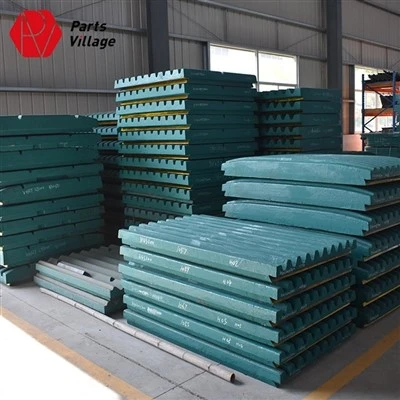
Wear parts are another cost that many first-time buyers overlook. A mobile crushing plant isn’t a set-it-and-forget-it machine. The jaws, blow bars, and cone liners wear out over time, depending on what you’re crushing. If you’re processing soft limestone, your wear parts might last 6,000 hours. If you’re crushing hard basalt, they might only last 1,500 hours. Cheap, generic wear parts might save you a few thousand dollars upfront, but they wear out faster, so over the life of the plant, you’ll spend 30-40% more than if you buy original, high-quality parts from a manufacturer like us. I always tell customers to budget 10-15% of the total plant price for annual wear part replacements. For a $200,000 plant, that’s $20,000 to $30,000 a year you need to set aside. If you don’t, you’ll end up with a broken crusher and a job site sitting idle, costing you far more in lost revenue than the wear part savings.
Location and shipping costs also vary a lot. If you’re buying a plant within the continental U.S., shipping a track-mounted crusher can cost $5,000 to $15,000, depending on how far you’re moving it. If you’re in Canada or Mexico, add another $10,000 to $20,000 for cross-border transport and customs fees. We also work with customers in South America, Africa, and Asia, where shipping a large machine via container or flatbed can run $25,000 to $50,000, plus import duties that add 5-10% of the plant’s price. One customer in Chile recently had a plant shipped from our Texas warehouse, and between shipping and duties, it added $32,000 to the total cost. It’s not a hidden fee—we always quote shipping and duties upfront—but it’s something many people don’t factor in when they first start budgeting.
Now, let’s talk about the price ranges you can actually expect to see, based on the type of plant. For small, light-duty mobile crushing plants, which are used for small demolition jobs, landscaping, or small-scale gravel production, you’re looking at $50,000 to $150,000. These are usually wheel-mounted, with throughput of 50 to 200 tons per hour. A customer doing residential concrete recycling might get by with one of these, and they’re easy to move around a backyard or a small job site. For mid-range plants, which handle 200 to 500 tons per hour, price ranges from $150,000 to $400,000. These are often track-mounted, with features like magnetic separators and basic dust suppression, and they’re used for medium construction projects, road building, or small mining operations. Our most popular mid-range model, the MC-300, sells for around $280,000 with all the standard add-ons most customers need. For high-capacity plants, which handle 500 to 1,200 tons per hour, the price jumps to $400,000 to $1.2 million. These are heavy-duty, built for large mining operations, highway construction projects, or processing raw rock for cement production. They have multiple crushing stages, advanced dust systems, remote monitoring, and are usually track-mounted for maximum mobility. We sold a 800-ton-per-hour plant to a customer in Wyoming last year for $950,000, and it’s been running 16 hours a day for the last 18 months without major issues.
But here’s something most suppliers won’t tell you: buying used can save you 30-50% off the price of a new plant, but it comes with risks. We sell reconditioned mobile crushing plants that have been fully inspected, with new wear parts and a 12-month warranty, for around 40% less than a new equivalent. A customer in Ohio bought a reconditioned MC-300 from us two years ago, and he’s used it to crush concrete for three different road projects, saving him over $100,000 compared to buying new. But used plants also come with hidden issues—if you buy from a seller who doesn’t inspect the machine, you might end up with a cracked frame, worn out bearings, or outdated technology that will cost you more in maintenance over time. I always recommend working with a reputable supplier who stands behind their used equipment, because the last thing you want is to buy a “cheap” plant that breaks down on your first job.
Financing is another piece of the puzzle. Most customers don’t pay cash for a $200,000 plant. We work with several financing partners that offer rates from 4.9% to 8.9%, depending on your credit score and the length of the loan. A 5-year loan for $200,000 with a 6% interest rate would be around $3,866 a month, which is manageable for most operations that are making money from the crushed material. Some suppliers advertise low monthly payments, but they stretch the loan out to 10 years, which means you’ll end up paying twice the total price of the plant in interest. We try to be transparent about that—we’d rather you take a 5-year loan and pay less interest than lock yourself into a long-term loan that costs you more over time.
So, going back to the original question: what is the price of a mobile crushing plant? There’s no single number, but if you take the time to figure out your needs—how much material you process, what you’re crushing, where you’re working, and what extra features you need—you can get a clear idea of the cost. At the end of the day, the cheapest plant isn’t always the best. A plant that’s sized correctly for your operation, has the right features to keep downtime low, and comes with a good warranty will save you far more in the long run than a cheap machine that breaks down every few months.
If you’re in the market for a mobile crushing plant and you’re not sure where to start, I’d be happy to walk through your specific needs with you. We can help you figure out the right type of plant, the right features, and the price that fits your budget. Don’t hesitate to reach out to our team to discuss your requirements and get a customized quote.
Crusher Wear Parts References
- Construction Industry Safety and Health Administration (OSHA). (2022). Silica Dust Control in Construction.
- Mining Equipment Manufacturers Association (MEMA). (2021). Mobile Crushing Plant Cost Analysis Report.
- National Ready Mixed Concrete Association (NRMCA). (2020). Equipment Selection Guide for Concrete Recycling Operations.
- Global Construction Perspectives. (2022). Mobile Crushing Market Trends and Pricing Data.
- Wear Parts Industry Association. (2021). Cost Comparison of Original vs. Generic Wear Parts for Rock Crushing Equipment.
Hangzhou Cohesion Technology Co., Ltd.
As one of the most experienced mobile crushing plant manufacturers and suppliers in China, we also support customized service. We warmly welcome you to buy advanced mobile crushing plant at competitive price from our factory. If you have any enquiry about quotation, please feel free to email us.
Address: No.182 ChaoHui Road, HangZhou, China
E-mail: sales@partsvillage.cn
WebSite: https://www.china-stonecrushers.com/
