If you’ve ever worked with industrial reactors—whether you’re running a specialty chemical plant, a biopharmaceutical production line, or a food and beverage processing facility—you’ve likely heard the term “SIP” thrown around in maintenance meetings, quality audits, or supplier check-ins. For many operators, it’s a non-negotiable step that keeps their processes compliant, safe, and consistent. But if you’re new to the industry, or if you’ve only scratched the surface of reactor operation, you might be wondering: What exactly is SIP, and why does it matter so much for industrial reactors? As a reactor supplier that’s been working directly with production teams for over two decades, I’ve fielded this question hundreds of times—and the answer isn’t just a simple definition. It’s a core part of what makes industrial reactors reliable enough to run 24/7 for months on end. Industrial Reactor

Let’s start with the basics. SIP stands for “Sterilization in Place”—a process that uses high-temperature steam, often mixed with pressure, to eliminate all viable microorganisms (bacteria, viruses, spores, molds, and other contaminants) from a reactor’s internal surfaces, lines, and internals—without needing to disassemble the equipment. Before SIP became standard, operators had to take reactors apart, scrub every surface by hand, and then manually test for cleanliness. This was not only time-consuming (taking days or even weeks of downtime) but also inconsistent: human error could leave hidden crevices contaminated, leading to batch failures, product recalls, or even safety hazards. For industries like biopharmaceuticals, where even a single stray microorganism can ruin an entire batch of life-saving drugs, or food and beverage, where contamination can make products unsafe to consume, that level of inconsistency was (and still is) unacceptable.
At its core, SIP works because microorganisms can’t survive sustained high temperatures. Most pathogens die at temperatures above 121°C (250°F) when paired with consistent pressure—conditions that steam can deliver efficiently and evenly. But here’s the thing: SIP isn’t just “blasting steam into the reactor and calling it done.” It’s a tightly controlled, validated process that follows strict industry standards. When we design reactors for our clients, we engineer them to support reliable SIP every time, because a SIP failure can cost a company tens of thousands of dollars in wasted product, unplanned downtime, and regulatory fines.
Let me walk you through how a typical SIP process works in an industrial reactor, because understanding the steps is key to seeing why it’s so critical. First, before starting a SIP cycle, the reactor is prepped: all product lines and sampling ports are sealed, and any residual product from the previous batch is drained and cleaned out (a pre-rinse step that removes organic material that could insulate surfaces from steam). Next, we pressurize the reactor slightly with clean, dry steam—we don’t use wet steam because water droplets can create cold spots where contaminants can hide. Once the reactor reaches the target temperature, we hold it at that temperature for a set period (usually 15 to 30 minutes, depending on the reactor size, application, and regulatory requirements). During this hold time, we monitor key variables: temperature at multiple points inside the reactor (top, bottom, sides, and any internals like impellers or baffles), pressure, and steam purity. At the end of the hold, we depressurize the reactor slowly and purge any remaining steam with filtered air or nitrogen, bringing the reactor back to a safe, operating temperature before it’s ready for the next batch.
One of the biggest myths we hear from new clients is that all SIP processes are the same. That’s just not true. The parameters for SIP depend entirely on the application: a bioreactor used to make monoclonal antibodies will require a more rigorous SIP cycle than a reactor used for making industrial cleaning solvents, because biopharmaceuticals need to be sterile to meet FDA, EMA, or other global regulatory standards. In contrast, a reactor for food processing might need to meet USDA or FSMA guidelines, which have their own specific temperature and hold time requirements. Even the reactor’s design affects SIP performance: at our facility, we build reactors with smooth, crevice-free internal surfaces, rounded corners, and easily accessible ports for temperature sensors, because these design features ensure steam can reach every part of the interior. A reactor with sharp corners or hard-to-reach internals can have cold spots, where steam doesn’t circulate properly, leading to incomplete sterilization—something we work hard to eliminate for every client.
Another common question is how we validate that SIP actually worked. You can’t just take a thermometer reading and call it good. Industrial operators use biological indicators (BI) during SIP cycles: these are test strips or vials with highly heat-resistant spores (like Geobacillus stearothermophilus), which are placed in the most difficult-to-reach parts of the reactor. After the SIP cycle, these indicators are incubated, and if no spores survive, the SIP is deemed successful. We also use chemical indicators, which change color when exposed to the correct temperature and pressure, to provide real-time checks during the process. For heavily regulated industries, operators also keep detailed logs of every SIP cycle, including temperature profiles, pressure readings, and BI results, which are audited by regulatory bodies. As a reactor supplier, we work closely with our clients to design reactor systems that make this validation process as simple and seamless as possible—so they don’t have to jump through unnecessary hoops to stay compliant.
Now, let’s talk about why SIP is so much better than the old alternative—cleaning out a reactor manually—for industrial operations. First, it drastically reduces downtime. A manual cleaning might take 3 to 5 days for a large reactor; a well-designed SIP cycle takes anywhere from 1 to 4 hours, depending on the size. That means more production time, higher output, and lower costs. Second, it’s more consistent. Human error is eliminated: every part of the reactor gets the same controlled temperature and pressure, so there’s no risk of missing a hard-to-reach crevice or applying too much (or too little) cleaning agent. Third, it’s safer for workers. Manual cleaning requires operators to enter the reactor, which exposes them to chemical residues, high temperatures, and physical hazards. SIP eliminates that risk entirely, keeping your team safe and reducing workplace incidents.
Of course, SIP isn’t without its challenges. We’ve worked with clients who have had issues like cold spots, steam condensation, or uneven pressure distribution, especially in larger reactors. That’s why our design process starts by understanding a client’s specific needs: we don’t sell a one-size-fits-all reactor. For a client producing sterile injectable drugs, we build reactors with jacketed walls that ensure uniform heat distribution, and we add recirculation systems to keep steam flowing evenly through the entire interior. For a client working with high-viscosity materials, we design internals that promote better steam circulation, so even thick, viscous residues don’t create insulation that leads to incomplete sterilization. We also provide ongoing training for our clients’ teams, because even the best reactor design won’t deliver reliable SIP if operators don’t know how to run the process correctly.
Looking at the future of industrial reactors, SIP is only going to become more important. As demand for sterile products—from biopharmaceuticals to plant-based foods—continues to grow, regulatory standards are getting stricter, and operators are under more pressure to reduce costs and improve efficiency. New technologies are also evolving, like automated SIP monitoring systems that use real-time data to adjust steam flow and temperature, ensuring every cycle is perfectly optimized. At our company, we’re investing in these new technologies to integrate smart SIP capabilities into our reactors, so clients can track their sterilization processes remotely, catch issues before they cause downtime, and keep their operations compliant with the latest global standards.
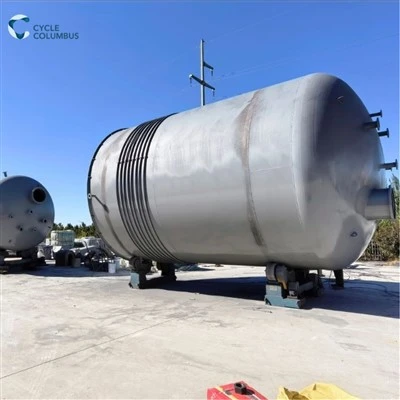
If you’re running an industrial reactor operation, I know you have a lot on your mind: batch quality, regulatory compliance, production costs, and keeping your team safe. SIP isn’t just a buzzword—it’s a tool that ties all those priorities together. When designed and executed correctly, it eliminates contaminants, reduces downtime, keeps your products safe, and saves you money in the long run. If you’re wondering if your current reactor is optimized for reliable SIP, or if you’re in the market for a new reactor that’s built to support consistent, compliant sterilization, I’d love to sit down with you and talk through your needs. We’ve helped hundreds of clients across industries design reactors that meet their specific SIP requirements, and we’re here to help you too.
Reactor Vessel References
- Rathore, A. S., & Mhatre, R. (2016). Sterilization in place (SIP) for biopharmaceutical manufacturing: A review. Biotechnology Progress, 32(4), 827-838.
- U.S. Food and Drug Administration. (2022). Guide to inspections of biopharmaceutical manufacturing facilities. Center for Drug Evaluation and Research.
- International Society for Pharmaceutical Engineering. (2019). Sterilization in Place (SIP) for Pharmaceutical Process Systems: Best Practices Guide.
- Food and Drug Administration. (2021). Food Safety Modernization Act (FSMA) Preventive Controls for Human Food: Guidance for Industry.
- Singh, R. P., & Heldman, D. R. (2014). Introduction to Food Engineering (5th ed.). Academic Press.
Beijing Cycle Columbus Environmental Science & Technology Co., Ltd.
Beijing Cycle Columbus Environmental Science & Technology Co., Ltd. is one of the most professional industrial reactor manufacturers and suppliers in China. We are committed to providing high quality customized products with competitive price. Please feel free to buy advanced industrial reactor made in China here from our factory. Also, quotation is available.
Address: 1201, 12/F, Tower B, Bldg 8, Guancheng Garden, Haidian District, Beijing, China
E-mail: Info@saikekanglun.com
WebSite: https://www.cycle-columbus.com/
