If you’ve ever walked into a well-lit office, a cozy café, or a family home with smooth, fire-resistant walls or ceilings, chances are you’ve interacted with PVC gypsum board—one of the most widely used building materials in modern construction. As a supplier of PVC gypsum board production lines, I get dozens of calls and emails every week asking the same core question: “What’s the actual production scale these lines can hit?” It’s a fair question, too. When you’re investing in a piece of equipment that can cost hundreds of thousands (or even millions) of dollars, you don’t want to settle for a line that can barely keep up with local demand, or one that runs so far beyond its capacity you’re replacing parts by the end of the first year. PVC Gypsum Board Production Line

Let’s cut through the noise here. The production scale of a PVC gypsum board line isn’t a random number pulled from a spec sheet. It’s a balance of raw material availability, line design, automation level, and even local labor costs. Over 12 years of building and refining these lines, I’ve worked with clients in 17 countries, from small startups in rural India cranking out 5 million square feet of board a year, to large-scale manufacturers in the Middle East pushing 60 million square feet annually. The sweet spot that most profitable operations land on? Between 10 million and 30 million square feet of finished product per year. But let’s break this down by line type, because not every line is built for the same size of business.
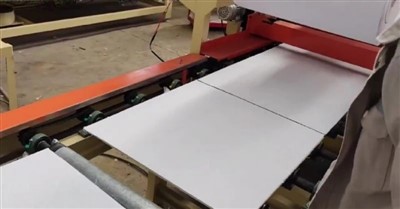
First, let’s start with the basics of what a PVC gypsum board line actually does, because that’s where the scale starts. The core process is: you mix calcined gypsum (plaster of Paris) with water, additives, and a PVC facer—think of it as a rigid, moisture-resistant plastic sheet that replaces the old paper facings—to create a slurry, pour that onto a moving conveyor, cut it to size as it sets, then dry it to remove excess moisture, and package it for shipment. The scale is determined by how wide that conveyor is, how fast it moves, and how many drying ovens you have, all optimized without sacrificing the quality that makes PVC gypsum board worth buying (fire resistance, mold resistance, lightweight, easy to install).
For new entrants into the market—small businesses or contractors looking to move from reselling board to manufacturing their own—a compact, semi-automated line is usually the right call. These lines are designed for annual output between 5 million and 10 million square feet. A typical compact line has a conveyor width of 1.2 meters (about 4 feet), runs at a speed of 20 to 30 meters per minute, and uses a smaller drying oven that takes up around 80 to 100 square meters of floor space. The nice thing about these lines? They’re flexible. If you start at 5 million square feet and find your local construction boom picking up, you can add a second mixing unit or upgrade the conveyor speed by 20% to push you closer to 10 million, without a full line replacement. I recently worked with a client in Kenya who started with a line hitting 6.2 million square feet in year one. By year three, their local housing development projects had doubled in volume, so we added an extra drying section—no need to scrap the whole line—and now they’re running at 9.5 million square feet a year. That’s the beauty of smaller lines: they’re built to grow with your business, not lock you into a fixed capacity from day one.
Now, for mid-sized operations—businesses that already supply to several regional construction firms, or maybe a small chain of building supply stores—the sweet spot is the semi-automated to fully automated line, with output between 15 million and 30 million square feet per year. This is where the line starts to get more sophisticated. Conveyor widths jump to 1.8 to 2.4 meters (6 to 8 feet), the line speed ranges from 35 to 50 meters per minute, and the drying system is a continuous, multi-zone oven that uses precise temperature and humidity controls to cut drying time without warping the PVC facing. The automation here is key too: instead of manual mixing and cutting, you have PLC (programmable logic controller) systems that adjust slurry consistency, cut lengths, and even monitor moisture levels in real time, so you don’t have to halt production for hours if a batch is off. A client in Brazil runs this type of line, hitting 22 million square feet a year. They supply to 12 states across the country, and their line is optimized to produce different thicknesses of board (from 9.5mm for interior walls to 12mm for ceilings) on the same run, so they can adjust output to match seasonal demand. The big numbers here add up: at 30 million square feet a year, that’s roughly 82,000 square feet of board produced every single day, enough to supply a mid-sized city’s residential construction needs. It’s not just about size, though—this scale is profitable because it cuts per-unit costs by 15 to 20% compared to smaller lines, thanks to bulk raw material purchasing and lower labor per square foot.
Then there are the large-scale lines, built for national or international distribution, where output can go beyond 30 million square feet, up to 50 or even 60 million square feet annually. These lines are mostly fully automated, with conveyor widths of 2.7 to 3 meters (9 to 10 feet), line speeds over 50 meters per minute, and integrated systems that handle everything from raw material storage (large silos for gypsum and PVC facer rolls) to automated packaging and loading onto shipping containers. These lines are designed for clients who have consistent, long-term contracts with big construction firms or government projects. I’ve seen a line in Saudi Arabia that hits 58 million square feet a year, supplying new residential cities across the GCC. The tradeoff here is that these lines require a larger upfront investment, more specialized maintenance, and a consistent supply of raw materials to keep them running at full capacity. It’s not for everyone, but if you have the demand to support it, the scale can be game-changing.
A common question I get is: “Can I run a line beyond its rated capacity?” The short answer is, technically, yes—but that’s a bad idea. Let me explain. Every PVC gypsum board line is engineered to handle a specific output based on its drying system. If you push a line designed for 10 million square feet to run at 12 million, you’re cranking up the conveyor speed or cutting down drying time, which can leave excess moisture in the board. That leads to warping after installation, mold growth over time, and even failure in high-humidity areas like bathrooms or basements. I had a client in Vietnam a few years ago who tried to do this: they bought a compact line rated for 8 million square feet, pushed it to 11 million to save costs, and within 18 months they had 200,000 square feet of board returned because it was warped. They ended up having to replace the entire drying oven and lost tens of thousands of dollars in material and customer trust. So the rated capacity isn’t just a marketing number—it’s the threshold for consistent, quality product.
Another factor that affects production scale is raw material availability, specifically PVC facer quality. Not all PVC sheets are the same. If you use a low-quality PVC that’s prone to stretching or tearing, you can’t run the line at full speed without wasting material. A line designed for top-grade PVC can handle a 10% faster line speed than one made for cheaper facer, which adds up to millions of square feet over a year. That’s why when we design lines for clients, we always work with them to source compatible raw materials, or even offer our own trusted supply partners, to help them hit their target scale without quality issues.
Labor is another big piece, even with automation. A semi-automated line might need 3 to 5 operators per shift, while a fully automated line only needs 1 to 2 operators, plus a maintenance technician. But that doesn’t mean fully automated is always better. If you’re in a region with very low labor costs, a semi-automated line might actually be more profitable, because the upfront cost is lower and you can adjust labor based on demand. I’ve had clients in Bangladesh and Pakistan who run semi-automated lines at 12 million square feet a year, with just 4 operators per shift, and still make a higher profit margin than some of my clients in Europe with fully automated lines at 20 million square feet, because labor costs in Europe are 5 times higher.
Let’s also talk about what happens after production—storage and shipping. If you’re hitting 30 million square feet a year, you need a warehouse that can hold at least 10 days of production, which is about 2,000 square meters of space. If you’re only hitting 5 million, you can get away with a smaller space, but you still need to account for shipping: 1 million square feet of PVC gypsum board takes about 150 standard shipping containers, so your scale has to align with your ability to transport product to your customers. It’s not just about how much you can produce, but how much you can sell. That’s why we always advise clients to do a local demand assessment first: how much PVC gypsum board is their country or region using each year? Is that demand growing? If the total market in a region is only 10 million square feet a year, a line rated for 25 million is going to sit idle half the time, which is a waste of investment.
I don’t want this to sound like every line is the same, because they’re not. Over the past 10 years, we’ve customized lines for everything from small artisanal operations making specialty PVC gypsum board for heritage restoration projects, to large manufacturers supplying 10 countries. One of our most unique orders was for a client in Canada who needed a line that could produce fire-resistant board for cold climates, with a lower drying temperature to avoid warping in -30°C weather. Their line was rated for 12 million square feet a year, which perfectly matched the demand from local construction companies building energy-efficient homes across the prairies.
At the end of the day, the production scale of a PVC gypsum board production line is as unique as the business buying it. There’s no one-size-fits-all number. For a new manufacturer, 5 to 10 million square feet is a realistic, profitable start that can grow. For a mid-sized regional supplier, 15 to 30 million is the sweet spot that balances output, cost, and demand. For large-scale national distributors, 30 to 60 million is the next step, but only if you have the customer base to support it.
If you’re in the market for a PVC gypsum board production line, don’t just ask for the highest number on the spec sheet. Ask about how the line is designed, if it can be upgraded as your business grows, what raw materials it works with, and how it fits with your local market demand. I’ve worked with enough clients to know that the best scale isn’t the biggest—it’s the one that lets you produce quality board consistently, keep your customers happy, and turn a profit.
If you’re ready to talk about what production scale makes sense for your business, or want to learn more about how we design lines tailored to your needs, reach out to us to start the conversation. We can walk you through demand assessments, line customization, and the numbers that matter most for your bottom line.
PVC Gypsum Board Production Line References:
- Gypsum Association. (2022). “Gypsum Board Manufacturing and Performance Standards.” Gypsum Association Technical Bulletin.
- International Finance Corporation. (2021). “Global Construction Materials Market Analysis: PVC Gypsum Board Demand and Production Trends.” IFC Industry Report.
- European Gypsum Association. (2020). “Automation and Scale Efficiencies in Gypsum Board Production.” EGA Technical Brief.
- Construction Economics and Building Journal. (2019). “Scale Economics in Building Material Manufacturing: A Case Study of PVC Gypsum Board Production.” Vol. 19, No. 2.
- United Nations Industrial Development Organization. (2022). “Small and Medium-Scale Manufacturing of Construction Materials: Best Practices for PVC Gypsum Board Lines.” UNIDO Technical Guide.
Hebei Enjoy Technology Co., Ltd.
Hebei Enjoy Technology Co., Ltd. is one of the most professional manufacturers and suppliers of PVC gypsum board production line in China. With abundant experience, we warmly welcome you to buy high quality building material machinery made in China here from our factory. Contact us for more details.
Address: Jiuling Building, Xinhua District, Shijiazhuang City, Hebei Province, China
E-mail: Betty@seyibm.com
WebSite: https://www.enjoymachinery.com/
