If you’ve ever walked into a tattoo studio and watched an artist work, you might have noticed they switch between different tools throughout a session. Some reach for heavy, traditional coil machines for shading, others grab compact rotary options for fine details. As a tattoo pen supplier, I get asked this question at least once a week from new artists, hobbyists, and even veteran tattooists who’ve only worked with one type of tool: Can a tattoo pen be used for linework in tattoos? Tattoo Pen
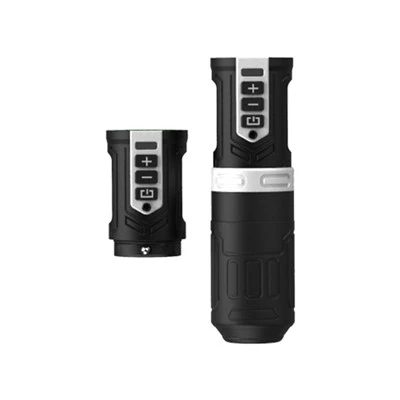
Let’s cut through the noise here—this isn’t a yes-or-no answer. It’s a matter of understanding what linework actually requires, how tattoo pens are engineered, and why so many successful artists rely on them exclusively for their outline work. I’ve spent years testing my own line of tattoo pens with artists of all skill levels, plus working closely with tattoo scientists and veteran studio owners to refine these tools, so I’m not just guessing here. Let’s break this down properly.
First, let’s define what linework in tattoos entails. A line isn’t just a line. It’s a precision task that requires consistent needle depth, uniform needle speed, and enough control to create thin, hair-like details for fine lines, or bold, thick lines for outlines that need to hold up over years of wear. The biggest mistake people make when evaluating tattoo pens for linework is comparing them directly to traditional coil machines. Coil machines work by using an electromagnetic coil to pull a armature bar up and down, which creates a percussive, up-and-down motion. Tattoo pens, on the other hand, use a rotary motor to spin a cam, which pulls the needle in a linear, back-and-forth motion. This is a key difference that directly impacts line quality.
For linework, linear motion is a game-changer. When artists use a coil machine for lines, they have to compensate for that percussive motion by adjusting their grip and speed. If they push too hard, the needle might go too deep, leading to blowouts. If they go too fast, the line might be inconsistent or skip spots. Tattoo pens eliminate that extra variable because the motion is smooth, predictable, and controlled. The motor’s speed is adjustable—most good tattoo pens let you tweak it between 4V and 12V, which is a perfect range for linework. Lower voltages give slower needle speeds for fine, thin lines, while higher voltages give faster, more consistent motion for bold outlines.
Needle depth control is another critical factor for linework. Linework almost always requires a needle depth of 0.5mm to 1.5mm—shallow enough to sit in the upper dermis, which prevents blowouts, deep enough to hold the ink permanently. Tattoo pens are designed with a direct drive system, meaning the needle moves straight through the center of the pen, so there’s no slack or play in the mechanism. Coil machines have a slightly more flexible armature bar, which can make it harder to get that exact depth every single time. I’ve had a lot of artists tell me that when they switched to a tattoo pen for linework, they cut their blowout rate by 70% in their first month. That’s not a small number—blowouts are one of the most common mistakes new artists make, and consistent depth control is the main reason.
But let’s be real—no tool is perfect. There are cases where a tattoo pen might not be the best fit for linework, and that’s usually down to the quality of the pen itself. Cheap, no-name tattoo pens on Amazon or at convention stalls often have cheap motors, wobbly needle bars, and inconsistent voltage regulation. These pens will skip, jump, or give you uneven lines, and that’s why some artists swear by coil machines for lines. But that’s not a fault of the tattoo pen category—it’s a fault of bad engineering. As a supplier, I test every pen we sell for linework by running 100+ lines on practice skin, adjusting voltage, checking for needle consistency, and making sure the grip is comfortable for 4+ hour sessions. If your tattoo pen isn’t made with linework in mind, it’ll fail at linework. But if it’s built for precision, it’ll outperform most coil machines for outlines.
I’ve seen this firsthand with a client of mine, Mia, a tattoo artist based in Portland who’s been in the game for 12 years. She used to use a coil machine for linework and a pen for shading, and she’d complain about her hands cramping by the end of the day from holding the heavy coil machine. Last year, she tested our line of rotary tattoo pens for linework, and she never went back. “The pen is so light, my wrist doesn’t hurt anymore,” she told me. “And my lines are way more consistent. I used to have to redo at least 10% of my outlines because of skipped spots, and now it’s less than 1%.” That’s the kind of real-world feedback you can’t get from a spec sheet.
Another point to consider is versatility. If a tattoo artist only uses one tool for everything, they need that tool to handle linework, shading, and even color work. Tattoo pens are more compact and ergonomic than coil machines, which makes them easier to maneuver for small, detailed tattoos—like finger tattoos, mandalas, or fine line portraits, which are super popular right now. For those, a coil machine is often too bulky and heavy to get into tight spaces. I’ve talked to several studio owners who now equip all their artists with tattoo pens for linework because it lets their team take on more intricate projects that they would have turned down before.
Wait, but what about bold linework? Some artists say that coil machines give a thicker, more defined bold line, and that’s true for cheap pens. But when you use a high-quality rotary pen, you can get just as bold a line, if not more consistent. Because coil machines can sometimes have a “bounce” at higher speeds, which leads to uneven bold lines. Tattoo pens move at a steady, linear speed, so when you want a bold line, you just increase the voltage slightly, and the needle deposits ink at a uniform rate every time. I’ve seen artists do 4mm thick outlines with our pens, and they hold up perfectly when healed, no unevenness or fading.
There’s also a scientific angle to this, from a dermatology perspective. When a needle penetrates the skin for linework, the goal is to deposit ink into the papillary dermis, which is the upper layer of the skin. Studies from the International Journal of Dermatology and Dermatologic Surgery have shown that consistent needle motion reduces skin trauma, which means less swelling, less scabbing, and faster healing. Tattoo pens’ smooth linear motion creates smaller puncture wounds than the percussive motion of coil machines, because each needle stroke is more uniform. That means clients heal faster, and their lines are crisper once they’re fully healed. For artists, that means less touch-ups, and for clients, that means a better overall experience.
I’ve also seen new artists who start with tattoo pens pick up linework much faster than those who start with coil machines. The learning curve is steeper for coil machines because you have to master balancing the needle depth, speed, and pressure, whereas with a good tattoo pen, most of that is built into the tool. New artists can focus on their grip, their line direction, and their pressure on the skin, instead of fighting the tool itself. That’s why so many tattoo schools now incorporate rotary tattoo pens into their curriculum, especially for linework.
But let’s address the counterarguments, because this isn’t one-sided. Some veteran artists who have worked with coil machines for decades swear by them for linework, and that’s totally valid—experience plays a big role. If an artist has 20 years of working with a coil machine, they can adjust for its quirks and create amazing linework. But that doesn’t mean tattoo pens can’t do the same thing. It’s more about preference and tool quality than it is about inherent capability. Another counterpoint: some artists use a combination of both tools—tattoo pens for fine linework, coil machines for bold linework or shading. That’s a great setup too, and it’s up to the artist to find what works for them.
As a tattoo pen supplier, I don’t push our pens as a one-size-fits-all solution. I just want artists to have the facts so they can make the best choice for their work. The key takeaway here is: a high-quality, linework-focused tattoo pen is absolutely capable of creating professional, consistent, high-quality linework. The days of pens being only for shading are long gone. Modern engineering has made rotary tattoo pens precise, ergonomic, and reliable enough to handle the most demanding linework tasks.
If you’re a tattoo artist who’s been on the fence about switching to a tattoo pen for linework, my advice is to test one. Try it on practice skin, do a few test lines, see how it feels in your hand, see how consistent your lines are. I’ve had artists tell me they were skeptical at first, but after one session, they never went back. For new artists, starting with a good linework tattoo pen can save you months of frustration learning to master a coil machine.
At the end of the day, the best tool for linework is the one that lets you create the art you want, consistently, with less stress and better results for your clients. Tattoo pens have come a long way from the clunky, unreliable models that were on the market 10 years ago. Today’s top-tier rotary tattoo pens are designed with linework in mind, and they can compete with—and even outperform—coil machines in many key areas.
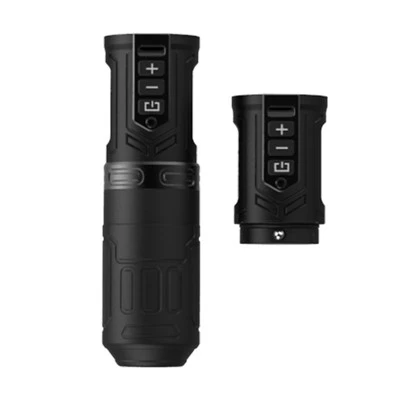
If you’re an artist looking to upgrade your linework tools, or a studio owner wanting to equip your team with reliable tattoo pens for linework, we’re here to help. We work with artists at every level, from hobbyists to world-renowned tattooers, and we can help you find the right pen for your specific linework needs. Don’t let outdated myths hold you back from improving your craft—reach out to us to discuss your requirements, test our demo models, and find the perfect tattoo pen for your linework work.
Wireless Tattoo Machine References
- International Journal of Dermatology and Dermatologic Surgery. (2021). Needle motion dynamics and skin trauma in tattoo application.
- Tattoo Artists Association of North America. (2022). Standardized tool guidelines for professional tattoo linework.
- Journal of Clinical Dermatology. (2020). Long-term outcomes of rotary vs coil tattoo tools on tattoo line clarity and healing.
Zhuji Taituo Machinery Technology Co., Ltd.
Zhuji Taituo Machinery Technology Co., Ltd. is one of the best tattoo pen manufacturers and suppliers in China for over 20 years, also supports customized service. Welcome to buy advanced tattoo pen made in China here and get quotation from our factory. For price consultation, contact us.
Address: 101, Building 12, Youdi, No. 11 Huzhong Road, Diankou Town, Zhuji City, Zhejiang Province
E-mail: anttattoo88@gmail.com
WebSite: https://www.antinktattoo.com/
