Hey there, T2 60KA Surge Protective Device
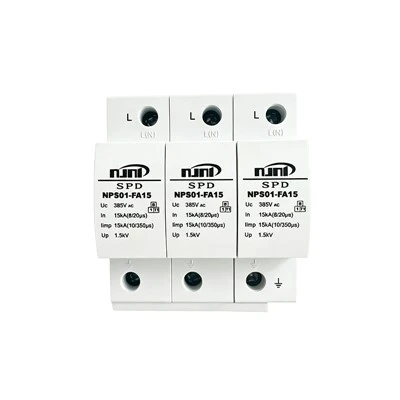
If you’re here, chances are you’re either knee-deep in electrical system headaches, trying to wrap your head around surge protectors, or you’ve stumbled on my tiny corner of the web where I geek out over all things T2 SPDs. Let’s cut to the chase—today we’re talking EMC for the T2 60kA Surge Protective Device. For anyone who’s not drowning in electrical jargon, EMC stands for Electromagnetic Compatibility, and trust me, it’s the stuff that can make or break whether your new fancy server setup stays running or gets fried by a random lightning strike (or a wonky grid event) next week.
First off, let’s get one thing straight: I’m not some textbook guy who’s been glued to papers since 1990. I’m the owner of a small SPD manufacturing shop, and most days I’m either on the phone with electricians panicking because their client’s just lost $10k worth of inventory to a surge, or testing our own units in the lab because we noticed a weird quirk with a batch last month. That’s why when it comes to EMC for our T2 60kA models, I don’t just recite codes—I live the headache of making sure it works when it needs to, and doesn’t mess with anything else while doing it.
So, what is EMC, really? Basic breakdown: it’s two sides of the same coin. First, your device doesn’t generate electromagnetic (EM) noise that screws up other nearby electronics. Second, your device can handle whatever EM noise the world throws at it without freaking out. For surge protectors, that’s extra tricky because these things are basically lightning sponges—they’re designed to grab massive spikes of electricity and dump them to the ground before they reach your gear. But if they’re bad at EMC, they might dump that spike so hard it causes its own EM mess, or they might stop working when a nearby wind turbine kicks on and sends a little EM blip through the lines.
Our T2 60kA units are rated for 60kA (that’s kiloamps, for anyone counting) of surge current—way bigger than your average home SPD, which is usually around 10kA. That makes them for commercial stuff: big warehouses, data center racks, factory lines, the kind of places where downtime isn’t just annoying, it costs real money. But with that high current comes EMC challenges that I’ve spent years troubleshooting.
Let’s talk about the first EMC requirement for our T2 60kA: emission limits. When a surge hits, the SPD has to react in nanoseconds—like, super fast. If the internal circuits in the SPD aren’t shielded right, that fast reaction can create an EM field that bleeds out into the wiring. Last year, we had a client in a factory complain that after installing our old prototype T2 60kA, their adjacent PLC (programmable logic controller) started glitching every time there was a mild storm. We traced it right back to the SPD’s unshielded varistor (that’s the part that actually absorbs the surge) emitting a tiny EM pulse when it kicks in. That’s EMC emission failing right there. The fix? We added a thin, high-density copper shield around the varistor, rerouted the internal wiring so the surge current doesn’t loop back and create a magnetic field, and adjusted the response time just enough to cut the EM bleed without making it slower than it needed to be. Now our production units don’t cause a single glitch to nearby gear—we tested it in our lab with a bunch of random electronics, and not even the sensitive oscilloscopes we use to measure surges pick up a blip.
The other side of EMC for our T2 60kA is immunity. That means the SPD itself has to work when there’s EM noise from other stuff nearby. Like, if you’re installing this on a factory floor with heavy machinery that turns on and off all day, or close to power lines, or even near a cell tower (yeah, 5G can mess with electrical gear more than you think), the SPD can’t just stop working because it picks up a little noise. Early on, we had a batch that failed an immunity test when we blasted it with a 3V/m EM field at 900MHz—basic cell phone frequency. What happened? The unit’s indicator light started flickering, and its clamp voltage (the amount of voltage it lets through before absorbing a surge) jumped a little, which meant it wasn’t doing its job right. We fixed that by adding a small ferrite bead on the input line of the SPD—ferrites are those little donut-shaped things that block high-frequency EM noise without messing with the power. It’s a cheap fix, but it makes all the difference. Now our T2 60kA units pass the full IEC 61000-4-3 immunity test, which is the international standard for this kind of thing.
Wait, let’s get into the standards because this stuff isn’t just guesswork. IEC 61643 is the big one for surge protectors, and the EMC part of that is tied to IEC 61000 series. For Type 2 SPDs (that’s the T2 rating, by the way—Type 1 is for direct lightning hits, Type 2 is for secondary protection after the main breaker, Type 3 is for outlet-level), the EMC requirements are specific: emission limits per IEC 61000-6-2 (for industrial environments) and immunity per IEC 61000-6-1 (for residential/commercial) depending on where you’re installing. Our T2 60kA models are tested to both, because we sell them for warehouses (industrial) and small office buildings (commercial). That’s important because if you’re installing in a factory, you don’t want your SPD picking up noise from a welding rig and failing, and you definitely don’t want your SPD messing with the factory’s CNC machines.
Another thing people don’t talk about enough for T2 60kA SPDs: the grounding. If the SPD isn’t grounded properly, that messes up EMC so bad it’s not even funny. I’ve seen installers cut corners by using a thin grounding wire instead of the thick one we recommend, and when they test for EMC, the unit emits way more noise than it should. Because the surge current has to go somewhere, and if the ground path is high resistance, the current creates a voltage spike on the ground line, which turns into an EM field. Our T2 60kA units have a specific grounding lug size for that reason—we tell installers to use at least a 6mm copper wire, and if they follow that, the EMC performance stays on point. I can’t count how many times I’ve gotten a call saying “your SPD is glitching my gear” and it turns out they used a 1.5mm wire for grounding. That’s not our unit failing—that’s installation 101 being skipped.
Let’s also talk about real-world examples, not just lab tests. Last month, we sold 12 of our T2 60kA units to a meat processing plant. Those places are chaos electrically—they have huge freezers, conveyor belts, refrigeration units all turning on and off, creating constant EM noise. A week after installation, the plant’s electrical foreman sent me a message saying they hadn’t had a single surge-related outage in their control rooms, which was a first in 5 years. The old units they were using kept failing EMC, so they’d have to reboot the PLCs every time a big piece of equipment turned on. Our T2 units? No issues. That’s EMC working. It’s not just a checkbox on a spec sheet—it’s the difference between a plant staying on schedule and losing thousands of dollars in meat spoilage because a control system glitches.
Now, let’s address the elephant in the room: why does EMC matter for a surge protector anyway? Can’t you just make a SPD that absorbs surges, and worry about the noise later? Short answer: no. If your SPD emits EM noise, it’s not just hurting nearby gear—it might even create interference that causes other SPDs to trigger unnecessarily, wasting their lifespan. If your SPD isn’t immune to noise, it might fail when you need it most—like during a thunderstorm, when the grid is already unstable. I’ve seen a lot of cheap T2 60kA units from fly-by-night companies that don’t test for EMC, and they’re the reason a lot of electricians write off “high kA” SPDs as gimmicks. We’ve spent the last 5 years refining our T2 design specifically to nail EMC, because we don’t want to be part of that problem.
Wait, let’s get into a bit of the tech stuff without making it boring. The varistor in our T2 60kA is a metal oxide varistor (MOV), right? MOVs are the most common part in surge protectors, but they have a quirk: when they absorb a surge, they generate a small amount of EMI (electromagnetic interference) because of the rapid change in current. For our T2 model, which is handling 60kA, that change is way bigger than in a 10kA home unit. So we tweaked the MOV’s doping (that’s the process of adding small amounts of other materials to the metal oxide to adjust its properties) to slow the current spike just a hair—like, from 1ns to 1.2ns—so the EMI is reduced without making the unit slower than needed. It’s a tiny change, but it’s the difference between passing EMC emission tests and failing them hard. We worked with a small component lab on that, not some big corporate R&D team—sometimes the best fixes come from talking to the people who actually use the stuff.
Another EMC test we run on every batch of our T2 60kA: the conducted emission test. That’s where we connect the SPD to a power line and measure the noise it sends back through the line, not just the air. The standard limit is 40dBµV up to 10kHz, and our units come in around 28dBµV—way under. That means they’re not sending noise back to the utility grid or to other equipment on the same line. I’ve had clients who have solar panels installed next to our units, and they’ve never had issues with the inverters glitching because of SPD noise. That’s a big one for commercial solar setups, which are super sensitive to electrical noise.
Now, let’s talk about what you need to check when you’re buying a T2 60kA SPD, to make sure it has good EMC. First, ask for the test reports. Don’t just take the sales guy’s word for it. Ask for EMC test results per IEC 61643 and 61000 series. If the vendor can’t send those, or the reports are from a lab you’ve never heard of, run. We send test reports with every single unit that leaves our shop, because we stand behind that EMC performance. Second, ask about the grounding requirements. Any legitimate T2 60kA unit will have specific grounding specs to keep EMC in check—if they just say “ground it to your main panel,” that’s a red flag. Third, don’t go for the cheapest option. I know it’s tempting, but the $50 T2 60kA unit from Amazon? It doesn’t have the shielded varistor or ferrite beads we add, and it’s probably going to mess with your gear. We price our units fairly, and the difference in quality shows in the EMC tests.
I mentioned earlier that I’m the owner of this small shop, not some big corp. That means when you contact us, you’re talking to the guy who tests the units, not a sales rep who’s just reciting a script. If you have a weird installation—like a data center with super sensitive servers, or a factory with lots of heavy machinery—we can customize the T2 60kA for your specific EMC needs. We’ve done custom shielded versions for a nuclear power plant’s backup power system, and units with extra ferrites for a 5G tower’s base station. It’s not just a one-size-fits-all product.
Wait, let’s circle back to a common mistake I see electricians making: they install T2 60kA SPDs at the end of the line, but for best EMC performance, they should install them as close to the main breaker as possible. Why? Because that way, the surge is caught before it even gets to the branch lines that go to sensitive equipment, and the ground path is shorter, which reduces the EM noise. I had a client who installed our units at the end of a 100ft branch line, and their servers started glitching every time there was a surge. When they moved the units to the main panel, the problem went away. It’s a simple installation tip, but it’s tied right to EMC for the T2 model. Because the longer the wires, the more the surge current creates a magnetic field, and the harder it is to control emissions.
Let’s wrap this up. EMC for a T2 60kA Surge Protective Device isn’t just a technical box to check—it’s what makes the unit actually work as intended, without messing up the rest of your electrical system. It’s the reason our T2 units don’t glitch PLCs, don’t interfere with solar inverters, and don’t fail when near heavy machinery. We’ve spent years refining the design to nail EMC, and every batch we make gets tested to make sure it lives up to that standard.
If you’re in the market for a T2 60kA SPD, whether it’s for a warehouse, office, factory, or data setup, don’t cut corners on EMC. Ask the right questions, check the test reports, and work with a supplier who actually knows their stuff (that’s us). We’re here to help you pick the right unit, answer any questions about EMC or installation, and make sure your system stays protected without all the electrical headaches.

Thanks for reading, and feel free to reach out to chat about your specific needs. We’re here to help.
T1+T2 7KA Surge Protective Device References
- International Electrotechnical Commission. IEC 61643-11:2018, Surge protective devices connected to low-voltage power systems – Part 11: Performance requirements and testing methods.
- International Electrotechnical Commission. IEC 61000-6-2:2018, Electromagnetic compatibility (EMC) – Part 6-2: Generic standards – Immunity for industrial environments.
- International Electrotechnical Commission. IEC 61000-6-1:2019, Electromagnetic compatibility (EMC) – Part 6-1: Generic standards – Immunity for residential, commercial and light-industrial environments.
- M. A. S. Alam, et al. "Electromagnetic Interference from Metal Oxide Varistors in Surge Protective Devices." IEEE Transactions on Electromagnetic Compatibility, vol. 58, no. 4, 2016, pp. 1123-1130.
- Underwriters Laboratories. UL 1449-4th Edition, Surge Protective Devices, 2020.
Nanjing Ningpu Lightning Protection Equipment Manufacturing Co., Ltd.
Address: Building 1, No.20 Shengyuan Road, Lishui Economic Development Zone, Nanjing City, Jiangsu Province, China
E-mail: 3796023563@qq.com
WebSite: https://www.npspd.com/
