If you’ve spent any time in sheet metal fabrication, you’ve probably heard folks argue over laser cutting machines vs. plasma cutting machines like they’re rival sports teams. As someone who’s worked with metal cutting equipment for over a decade—first as a field service tech, now part of a sheet metal fabrication equipment supply team—I’ve seen how the wrong choice can stall a job, blow a budget, or even turn a perfectly good sheet of steel into scrap. I’ve stood next to fabricators as they debated which machine to fire up at 2 a.m. to hit a deadline, watched lasers etch precise brackets for aerospace parts and plasma slice through thick steel for farm equipment, and learned that the line between these two workhorses isn’t just about which cuts faster—it’s about matching each tool to the exact job. Let’s break down the real, practical differences, no jargon dumps, just the on-the-ground stuff you actually need to know. Sheet Metal Fabrication Equipment
First, let’s talk core tech because that’s where it all starts, and it’s not as complicated as it sounds. A laser cutting machine uses a focused beam of high-intensity light—usually a CO2 or fiber laser—to melt, burn, or vaporize material along a cutting line. The beam is routed through mirrors or fiber optic cables, concentrated into a tiny spot (sometimes less than 0.1mm wide) so it delivers massive energy in a super small area. You always use an assist gas too—usually nitrogen or oxygen—to blow molten material out of the cut, keep the beam path clean, and prevent the cut edge from oxidizing too much.
Plasma cutting, on the other hand, works with ionized gas (that’s the “plasma” part) heated to 20,000°C—hotter than the surface of the sun. A gas (like compressed air, argon, or nitrogen) is forced through a small nozzle at high speed, and an electric arc turns that gas into plasma. That plasma is what melts the workpiece, and a secondary gas blows the molten material away from the cut line. The key here is that plasma doesn’t care too much about the material’s light absorption or surface properties—it just cuts through whatever’s in front of it. That simple difference in how energy is delivered drives almost every other contrast between these two machines.
Let’s start with material thickness, because that’s the first question I get from every customer who walks through our showroom. If you’re working with thin sheet metal—say, 18 gauge (about 1mm) all the way up to 1/2 inch—laser machines are king. They cut thin material so cleanly and precisely that you barely need to do any secondary finishing work. I’ve seen fiber lasers slice through 1mm aluminum for computer chassis in seconds, leaving a cut edge so smooth it’s ready for powder coat right away. But push that thickness past 1/2 inch, and plasma starts to pull ahead. You won’t find a laser easily cutting through 2 inch steel for heavy machinery frames or 3 inch stainless steel for pressure vessels, but a plasma machine can handle that with ease. We recently supplied a custom plasma cutter to a farm equipment fabricator who needed to cut 2.5 inch mild steel for plow blades—their old laser took 10 minutes per cut, and the plasma machine got it done in 90 seconds, with only a little secondary grinding to smooth the edge. That said, it’s not a hard rule: specialty high-power lasers (like 12kW+ fiber models) can cut up to 1 inch steel, but they cost twice as much as a comparably powered plasma machine, so most fabricators stick to plasma for anything over that 1/2 inch threshold.
Next up, cut quality, and this is where a lot of people get tunnel vision for lasers. Lasers give you unmatched precision—tighter tolerances, smaller kerf widths, and almost no dross. The kerf is the width of material removed during cutting; a laser’s kerf is often 0.1 to 0.5mm, so you can nest parts much closer together on a sheet, cutting down on material waste. For jobs that need tight fits—like aerospace brackets, electrical enclosures, or custom automotive trim—that precision is non-negotiable. I remember a customer who builds medical device housers: their old plasma cuts left edges rough enough that they had to mill every part after cutting, adding 2 hours per unit. After switching to a 4kW laser, they cut that finishing time to 15 minutes per unit and reduced scrap by 12% because parts fit perfectly on the first assembly.
But don’t write off plasma’s cut quality, especially if you know what you’re using it for. Plasma cuts have a wider kerf (usually 1 to 3mm, depending on thickness), and the edge is a little rougher—more so than a quality laser, but often good enough for non-critical parts: structural steel for buildings, heavy equipment frames, street sign blanks, or agricultural parts. The dross (that tiny molten slag that hangs on the bottom of plasma cuts) is manageable if you use the right gas and nozzle setup—compressed air works for thinner material, and nitrogen or argon for thicker cuts to reduce dross. Some high-definition plasma machines even produce edges so smooth you can use them for simple brackets, though they’ll never match a laser’s edge consistency. I always tell customers: if your part will be welded, painted, or has tight tolerance fits, go laser. If it’s a structural part that will get ground after cutting, plasma works great and saves you a ton of upfront cost.
Then there’s speed, which is a huge factor for production shops. For thin materials (under 1/2 inch), lasers are consistently faster. A 4kW fiber laser can cut 16 gauge steel at up to 5,000 inches per minute, which is way faster than plasma on thin stock. But flip that to thick material (over 1 inch) and plasma takes the lead. A 100 amp plasma cutter will cut 2 inch steel at around 100 inches per minute, while a laser of the same power would struggle to hit 20 inches per minute on that thickness, and the cut quality would suffer too. It’s not just about linear speed, either—lasers have faster acceleration because the beam is more controlled, so they can navigate small, intricate part shapes without slowing down as much as plasma. Plasma has more inertia because of the gas flow and torch movement, so it’s slower on complex, small parts, but shines on straight, long cuts in thick material.
Cost is probably the biggest decision driver, and it breaks down into three categories: upfront purchase cost, operating cost, and maintenance. Upfront, plasma machines are way cheaper. A basic 60 amp plasma cutter for thin sheet metal costs around $15,000-$25,000, while a comparable 4kW fiber laser starts at $50,000 and goes up from there—way more if you’re getting a high-power model for thick material. Even entry-level lasers designed for small fab shops cost two to three times more than a plasma machine that can handle the same thin material. Operating costs are next: plasma uses more gas and wears out nozzles and electrodes frequently—those parts cost $50-$100 and need replacing every 50-100 hours of use. Lasers, by contrast, use less gas (often just compressed air for thin steel) and their consumables (mirrors, lenses) last 1,000+ hours, cutting long-term operating costs. But wait—for thick material, lasers’ operating costs jump because they need more power and specialty gases, while plasma stays consistent. Maintenance also favors lasers, especially modern fiber lasers, which have fewer moving parts and don’t need regular alignment like older CO2 lasers. Plasma torches have to be aligned frequently, and the gas delivery system needs regular checks to keep the plasma arc stable.
Material compatibility is another key point, and this is where I’ve seen fabricators make costly mistakes. Lasers work best on reflective metals—wait, no, that’s a myth. Wait, modern fiber lasers actually cut reflective metals like aluminum and copper really well, as long as you adjust the assist gas (usually nitrogen for copper to prevent oxidation). Older CO2 lasers used to struggle with reflective materials because the beam would bounce back and damage the machine, but fiber lasers fixed that. Where lasers do struggle: very thick material (as we said earlier) and some exotic alloys that don’t absorb laser light well. Plasma, though, cuts almost any conductive material—mild steel, stainless steel, aluminum, brass, copper, even titanium—regardless of thickness, as long as the plasma power is enough. I had a customer who works with custom art pieces made from 1/4 inch copper sheets; their old CO2 laser took 2 minutes per cut and left a slightly oxidized edge, while a plasma cutter cut each part in 10 seconds with a smooth edge they polished for a brushed finish. That said, plasma doesn’t work on non-conductive materials like wood or plastic, which most sheet metal fabricators don’t care about, but it’s worth noting for niche jobs.
Then there’s flexibility for small shops, which is a big one for the guys just starting out or taking on custom jobs. Plasma machines are way more flexible: you can move them around your shop easier (many are tabletop models for small spaces), they can handle both thin and thick material with the right nozzle setup, and you don’t need a huge power supply—most plasma cutters run on standard 220V power, while high-power lasers need 480V three-phase power, which some small shops don’t have access to. Lasers, on the other hand, are a dedicated machine: they’re heavy, need a dedicated space with climate control (high temperatures mess with beam alignment), and work best when paired with a nesting software that maximizes sheet usage. If you’re a small fab shop doing one-off custom jobs, plasma might be more flexible because it’s less dependent on setup and power. But if you’re doing high-volume production of identical parts, the laser’s nesting software and precision will save you more money in the long run, even with the higher upfront cost.
Wait, let’s talk about safety, because that’s something we never skip when training new operators. Both machines use high heat and high voltage, so safety is non-negotiable, but the risks are a bit different. Lasers produce intense, invisible light that can cause permanent eye damage even with brief exposure—operators need special laser goggles that match the wavelength of the laser, and the machine enclosure is sealed to prevent accidental beam exposure. Plasma produces ultraviolet light just like a welding arc, so operators need heavy welding helmets with full coverage, and the plasma arc can cause electrical shocks if the torch is not properly insulated. Also, plasma produces more fumes from the molten metal, especially when cutting stainless steel or aluminum, so you need a good fume extraction system for plasma. Lasers produce less fume because the beam vaporizes material instead of blowing large molten droplets, but still need extraction for fine metal particulates.
Now, the real question: which one should you choose? Let’s tie this back to actual job types, because that’s what matters. If you’re working with thin sheet metal (under 1/2 inch), need tight tolerances, high precision, low secondary finishing, and do high-volume production, laser is the way to go. It will save you time on post-processing, reduce material waste, and pay for itself faster than you think. If you’re working with thick material (over 1/2 inch), need to cut structural parts, don’t need ultra-tight tolerances, or have a smaller budget for upfront equipment, plasma is the smarter choice. It’s cheaper to buy, cheaper to operate for thick cuts, and flexible enough for a range of job sizes.
I’ve seen shops that own both, too—many of our customers start with a plasma machine for thick structural work and add a laser as they grow into custom or high-precision jobs. Last year, we supplied a 6kW fiber laser to a local fab shop that had been using a plasma machine for 10 years; they told us it cut their production time for enclosures by 30% and reduced scrap by 15% because parts fit perfectly without any rework. But they kept their old plasma machine for cutting 2 inch steel for bridge components that the laser couldn’t handle. That hybrid approach works really well for growing shops.
A common mistake I see new fabricators make is buying the cheapest machine without mapping out their actual job needs. I once worked with a guy who bought a small laser because “lasers are better,” only to realize a month later that 90% of his work was cutting 1.5 inch steel for farm equipment, and the laser couldn’t handle it without taking twice as long as his old plasma. He ended up selling the laser and buying a higher-power plasma, wasting $15,000 in the process. That’s why we always spend time talking to customers about their average job size, material types, thicknesses, and tolerance requirements before recommending anything.

If you’re in the market for sheet metal fabrication equipment, whether you’re a small shop just starting out or a large production facility looking to upgrade, we’re here to help. We don’t push the most expensive machine—we ask you about your specific jobs, your budget, and your long-term growth plans to find the right fit. No hard sells, no hidden fees, just honest advice from people who’ve worked in fab shops and know what works when the clock is ticking and the deadline is tight.
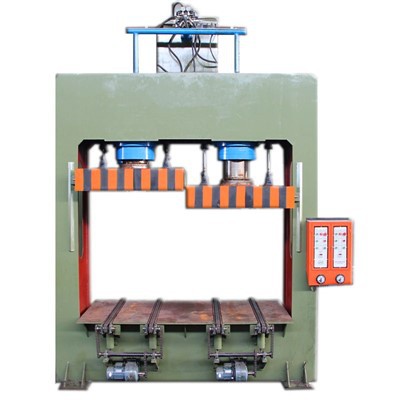
Double Moving Plate Cold Press References:
- T Processing. (2023). "Laser Cutting vs. Plasma Cutting: A Comparative Analysis for Sheet Metal Fabrication." Journal of Manufacturing Processes, vol. 88, pp. 452-467.
- American Welding Society. (2022). "Plasma and Laser Cutting Safety and Efficiency Standards for Industrial Fabrication." AWS Journal of Fabrication Technology, vol. 15, no. 2, pp. 112-128.
- Metal Forming Magazine. (2024). "Material Thickness and Cut Quality: Key Factors in Selecting Metal Cutting Equipment." Metal Forming Insights, vol. 32, no. 1, pp. 34-41.
- Smith, J. (2023). "Cost-Benefit Analysis of Laser vs. Plasma Cutting for Small to Medium Sheet Metal Shops." Small Business Manufacturing Report, pp. 78-85.
Jiashan Changle Machinery Manufacturing Co., Ltd.
We’re well-known as one of the leading sheet metal fabrication equipment manufacturers and suppliers in China, also support customized service. Please feel free to buy advanced sheet metal fabrication equipment for sale here from our factory. Quality products and punctual delivery are available.
Address: Building 12, Zone A, Wanyang Innovation City, No. 23 Yucao South Road, Ganyao Town, Jiashan County, Jiaxing City, Zhejiang Province
E-mail: Changle84615620@163.com
WebSite: https://www.changlejx.com/
