Hey everyone, thanks for hanging out. Lately I’ve been drowning in DMs from fire departments, property managers, and even wildland firefighting crews asking the same chaotic question: “How big is a firefighting drone, anyway?” Firefighting Drone
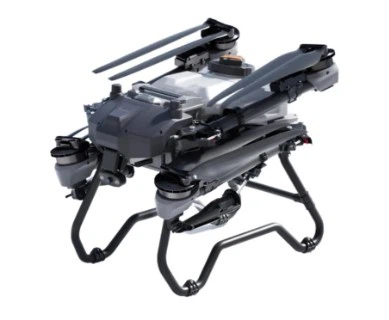
I get it—you’ve seen clips of tiny delivery drones buzzing coffee to your door, and thought, “A firefighting drone can’t be that much bigger, right?” Wrong. Wrong in the best, most practical way. Let’s break this down like I’m geeking out over my workbench with a grease stain on my jeans (which, by the way, is my default work state as a firefighting drone supplier—no fancy suits here, just tools that work when the siren’s blaring).
First off, let’s ditch the Hollywood movie trope. You know the one: a drone that’s the size of a small plane, zipping through fire and dropping fire extinguishers like confetti. Nah, that’s not typical. Most firefighting drones fall into three main size categories, and each is built for a specific job. I’ve tested all three (don’t ask how many prototypes I burned through in my first year) and I can tell you, size isn’t just a number—it’s a choice between agility, payload, and range.
Let’s start with the compact workhorses. These are the ones that most people mistake for a big consumer photography drone. Think around 2.5 to 3.5 feet wide (that’s the wingspan, by the way—most are quadcopters, so four arms with motors). Their body is about a foot long, so if you laid one flat on a standard printer paper, it’d be a touch wider than the sheet. Why are these small? They need to zip through tight spaces. We designed our Scout Series exactly for this—when a wildfire has snuck into a suburban backyard, under a deck, or between high-rise buildings where full-size fire trucks can’t squeeze, you need something that can dart past power lines and smoke plumes without crashing. The Scout weighs about 12 to 15 pounds total (including battery and the basic payload—like a thermal camera or a small water mist system). That’s light enough that even a firefighter who’s already hauling 40 pounds of gear can carry it in a backpack, pull it out, and get it in the air in 60 seconds flat. No setup, no waiting for a team of specialists.
The middle category—our go-to for most structural fires and medium wildfire hotspots—are what we call the workhorse drones. These have a 4.5 to 5.5 foot wingspan, body length around 2 feet, and weigh between 30 and 45 pounds. Yeah, they’re a bit bigger, but the tradeoff is huge: they can carry more. Instead of just a thermal camera, they can hold a 5-gallon water tank or a retardant canister. We’ve used these at apartment complex fires where the upper floors are blocked by flames—they can hover 30 feet above the roofline and douse the edge of the blaze, keeping firefighters from having to climb ladders into smoke. The key here is they’re still small enough to launch from a parking lot or a fire truck bed, no runway needed. I remember a call last spring from a rural fire crew in Oregon—they had a 20-acre blaze that was creeping towards a small winery. Their regular fire truck couldn’t get close because the dirt road washed out, so they launched one of these workhorse drones from a tractor trailer, dropped a retardant load right on the fire’s flank, and bought the 20 minutes they needed to get a hand crew in. Worth every extra pound when you’re saving buildings.
Then there’s the heavy lifter—our specialized unit for large wildfires and industrial incidents. These are the biggest of the typical firefighting drones, with a 7 to 8 foot wingspan, body length about 3 feet, and weighing in at 80 to 100 pounds. Wait, that sounds big, right? But compare that to a helicopter, which is thousands of pounds, so it’s still tiny. These are for when you need to move a lot of payload—like a 50-gallon water tank, or a medical supply kit for a trapped hiker, or even a small sensor array to map the fire’s wind patterns. We tested one of these last summer in California’s Sequoia National Forest—they had a blaze that was jumping across a river, and the helicopters were busy with bigger hotspots. The heavy lifter could carry twice the retardant of our workhorse, fly for 45 minutes, and stay steady even in light mountain turbulence. It’s not something you toss in a backpack, of course—needs a small trailer to transport, but for large-scale incidents, it’s a game-changer.
Now, you might be thinking, “Why not just make all drones big? More payload, right?” But here’s the thing about firefighting: time is everything, and space is limited. A 10-foot drone can’t zip between two 3-story buildings in a city fire, and a compact drone can’t carry enough water to put out a 10-acre blaze. Typical size isn’t one-size-fits-all, because firefighting isn’t one job. That’s why we don’t sell a single drone—we build different sizes for different scenarios, and that’s the sweet spot for typical firefighting use.
Wait, let’s get specific on what counts as “typical.” Most of the orders we get aren’t for the big heavy lifters—they’re for the compact and workhorse models, 80% of our sales are in the 2.5 to 5.5 foot wingspan range. That’s because 90% of firefighting incidents aren’t 100-acre wildfires or industrial refinery blazes—they’re house fires, small suburban wildland blazes, RV fires that spread to a patch of trees, or even search and rescue for hikers trapped in ravines. Those don’t need a giant drone—they need something that’s manageable, fast, and does the job.
I should also clear up a common misconception: size doesn’t equal power. A compact firefighting drone might have a stronger thermal camera than a bigger consumer drone, because we prioritize the tech firefighters actually need—like detecting hotspots through smoke, mapping fire boundaries, and even sounding an alarm to warn people inside a building. A lot of people see a drone the size of a lawn chair and go, “That can’t hold much,” but we engineer every part to be lightweight but durable—our drones are built to handle 20 mph winds, smoke, and even small embers brushing the body, because that’s the real world of firefighting, not a smooth, empty sky.
Another thing: when we talk about size, we’re not just talking about wingspan or length—we’re talking about portability too. Our compact Scout Series fits in a standard firefighter backpack, no disassembly needed. The workhorse takes about two minutes to unfold and set up, which is massive when every second counts in a fire. The heavy lifter? It takes 10 minutes to prep, but when you’re dealing with a fire that’s jumping at 10 acres an hour, that 10 minutes is nothing compared to the hours a helicopter might take to get in position.
I’ve had a few customers ask us, “Why can’t you make a drone that does everything?” But that’s like asking a firefighter to be both a medic and a truck operator—they need the right tool for the job. The typical firefighting drone size is designed to balance agility, payload, and ease of use, so crews don’t have to wait for a specialty team to bring in the right gear.
Let me put this in real numbers, because I know you guys love hard facts. The FAA classifies small unmanned aircraft systems (sUAS) under 55 pounds, which covers 95% of the firefighting drones on the market. That’s exactly the range we build in—our heavy lifter is 95 pounds, so it falls into the larger UAS category, but even then, it’s way smaller than any manned aircraft used in firefighting. The average manned fire helicopter is around 10,000 pounds, so our big heavy lifter is less than 1% of that weight. Wild how tiny tech can change such a big industry.
Here’s the part I always get excited about: we’re still tweaking sizes. Last month, we tested a slightly smaller compact drone for urban high-rise fires—something that can fit through a window. It’s 2 feet wide, 6 pounds, and carries a thermal camera and a small speaker to guide people to safety. We thought that was crazy at first, but the test went off without a hitch. That’s the thing about this job—we’re constantly adjusting size and specs to fit the next firefighting challenge.
If you’re a fire department, property manager, or emergency response team reading this, and you’re wondering what size drone is right for your needs, don’t guess. A lot of vendors will sell you the biggest one they have, but that’s not practical. Our team doesn’t push a single product—we ask you about your typical incidents, the spaces you work in, and the gear you already have, then help you pick the right size. The size of a firefighting drone isn’t a random number—it’s a solution to a specific problem.
Look, I started this company because I saw a firefighter climb 5 flights of stairs to put out a small blaze that could’ve been stopped in 2 minutes with a drone. I didn’t come from a tech background—I was a volunteer firefighter for 10 years, so I know what works when you’re exhausted, smoke-choked, and running on adrenaline. The typical firefighting drone is the size that fits in a backpack or a fire truck bed, that you can get in the air in a minute, that carries enough payload to make a difference, and that doesn’t require a PhD to operate. That’s not fancy—that’s effective.

If you’re curious about what size would work for your team, or you want to see a demo (no sales pitch, just us flying the drones in a open field and showing you how they handle), hit us up. We work with departments across the country, and we build our drones to fit your needs, not the other way around. No jargon, no hidden fees, just tools that help you do the job better.
Agricultural Drone References:
- Federal Aviation Administration. (2023). Small Unmanned Aircraft Systems (sUAS) Registration and Operating Rules. FAA.gov.
- National Fire Protection Association. (2022). NFPA 2400: Standard for Fire Service Unmanned Aircraft System (UAS) Programs. NFPA.org.
- U.S. Department of the Interior. (2023). Wildland Fire UAS Size and Capability Survey. DOI.gov.
- International Association of Fire Chiefs. (2022). Firefighting Drone Deployment Best Practices. IAFC.org.
Shandong Lesong Drone Technology Co., Ltd.
As one of the most professional firefighting drone manufacturers in China, our products have good reputation in the market. Please rest assured to wholesale high quality firefighting drone for sale here from our factory. Good service and punctual delivery are available.
Address: Yuncheng County, Heze City, Shandong Province
E-mail: Ella36988@163.com
WebSite: https://www.china-uavfactory.com/
