If you’ve ever owned a car with black, dull, or faded plastic trim—think the door mouldings, bumper cladding, side skirts, or the trim around your windshield or grille—you know how much that small (or large) detail can drag down your car’s overall look. A fresh paint job on plastic trim can make your 2019 SUV look almost brand new, or even make a used car you’re prepping for sale stand out to buyers. As someone who’s run a dedicated plastic auto trim painting shop for 12 years, I get asked one question more than any other: “How much does it cost to paint plastic auto trim?” And the short answer? It’s not a one-size-fits-all number, and cheap DIY jobs almost always end up costing more in fixes or replacements down the line. Let me break down exactly what goes into the cost, what makes jobs different, and why partnering with a dedicated trim painting supplier (not a general body shop or a DIY kit from a big box store) is almost always the smarter, longer-term choice. Painting Plastic Auto Trim
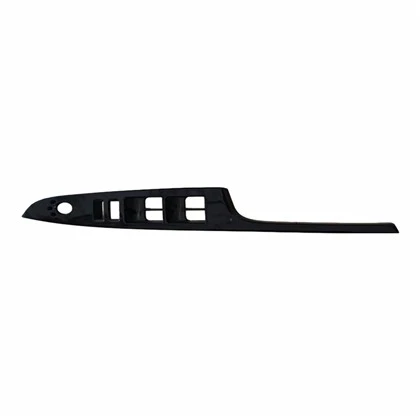
First, let’s talk about why plastic trim is not the same as painting your car’s metal body. That’s the biggest mistake people make when they go into this: they think any painter can do trim, or that it’s as simple as a quick spray of touch-up paint. Plastic is porous, flexible, and prone to expanding and contracting with temperature changes—something metal doesn’t do the same way. Most factory plastic trim is also coated with a release agent from the manufacturer, which is designed to stop paint from sticking. If you skip prepping that, your new paint will peel, chip, or fade in six months, not six years. That’s why, as a trim painting specialist, I don’t just grab a can of spray paint and go. Every step is tailored to the trim material, which is the first factor that impacts cost.
Let’s start with material type, because that’s the biggest baseline cost driver. Not all plastic trim is made the same, so prep work changes entirely. For example, the hard, rigid plastic used on lower bumper cladding or grille trim (often called ABS or polypropylene) is the most common. Polypropylene, by the way, is the sneakiest of the bunch—it’s used for 70% of modern car exterior trim because it’s lightweight and impact-resistant, but it’s notoriously hard to get paint to stick to. Prep for polypropylene trim includes a special chemical etcher (not just sandpaper) to rough up the surface enough for paint to bond, plus a flexible adhesion promoter that moves with the plastic when it expands or contracts. That prep adds 30% to the labor cost compared to painting rigid ABS trim.
Then there’s flexible plastic, like the trim around door handles or side mirror caps, which needs a paint that’s even more flexible—if it doesn’t bend with the plastic, it will crack every time you open your door or adjust your mirror. And for rare, high-end plastics, like the thermoplastic olefin (TPO) used on the bumpers of luxury German or Japanese models, we use a specific primer designed for TPO to avoid discoloration or peeling in hot weather. The material of your trim doesn’t just change prep—it also affects how much material we use, which factors into the cost. A small mirror cap will use a fraction of the paint and primer that a full rear bumper cladding uses, obviously, but even similar-sized parts can cost different amounts if they’re made of a more specialized plastic.
Next, part complexity and condition. Let’s say you need to paint a single side mirror cap: that’s a simple, flat part with no curves, no holes for wiring, no emblems or trim pieces to remove. That job is straightforward, takes about an hour of labor, and costs between $80 and $120 if we’re talking a standard, off-the-shelf color. But if you need to paint a full set of four door mouldings, plus the front and rear bumper cladding, plus the side skirt trim? That’s 8 to 10 hours of labor, plus special handling for all the curves, indentations, and mounting points on each part. And if your trim is already damaged—think scratches, dents, or even small chips that go down to the plastic base—we have to do minor repairs before we even start painting. That includes filling scratches with a plastic-specific filler, sanding smooth, and reapplying primer to the repaired areas. A single damaged door moulding might add $30 to $50 to the cost, and if you have multiple damaged parts, that can add up fast.
Condition also includes how old the trim is. Faded trim that’s just dull needs a light sanding and cleaning, but trim that’s been exposed to UV rays for 10+ years might have a layer of oxidation that’s deep enough that we have to sand it back almost to the bare plastic before we can apply primer. That adds 2 to 3 hours of labor per part, which can shift a $100 part paint job to $150, no question.
Color choice is another factor that most people don’t think about. If you’re painting your trim to match your car’s original factory color, that’s easy—we keep a database of factory paint codes for every major make and model, so we can mix the exact color that came on your car. That costs the same as any standard color, usually. But if you want a custom color—say, a matte black that’s deeper than the factory semi-gloss, or a metallic blue that matches your car’s interior accents—that changes things. Custom colors take extra time to mix and test to make sure it doesn’t look off when it’s applied to plastic, not metal. Matte colors also need a specific clear coat that’s designed to stay matte without smudging, and they’re much harder to touch up if you get a chip, so we apply an extra layer of protection to them. A custom color or matte finish can add 15 to 25% to the total cost, depending on the size of the job.
Now, let’s talk about where you get your trim painted, because that’s where the biggest discrepancies in cost come in. A general body shop might quote you $50 to $75 per part, but that’s usually because they’re outsourcing the trim painting to a third party, or using a cheap spray system that doesn’t last. A dedicated trim painting supplier, like my shop, has specialized equipment, years of training, and guarantees their work because we do nothing but plastic trim. We don’t do full car paint jobs, we don’t do interior upholstery—we only focus on getting plastic trim to look like new and stay that way. That means our cost is usually between $100 and $180 per standard part, with discounts for bulk jobs (like painting all your car’s trim at once) that can drop that to $80 to $120 per part.
Wait, what about DIY options? I get it—you see a spray can of plastic trim paint at the auto parts store for $10, and you think that’s a steal. But let’s be real: that $10 can will not last more than a year. I’ve seen hundreds of cars come into my shop a year after someone tried a DIY paint job, with paint peeling off in chunks, streaky coverage, and dulling that makes the trim look worse than before. The reason? The spray in those cans isn’t formulated to flex with plastic, it skips the adhesion and UV-protective clear coat steps, and the prep work is so shallow that paint can’t stick. You might spend $50 on sandpaper, primer, and spray cans, plus 8 hours of your time, only to have to replace the trim entirely 18 months later. Replacement plastic trim for a single door moulding can cost $150 to $250, plus installation, which is way more than hiring a dedicated trim painter to do it right the first time.
Another common variable: whether you want your trim painted and prepped for installation, or just painted. If you’re a car dealership prepping a used vehicle for sale, or a custom car builder doing a full refresh, you might need multiple parts painted at once, maybe even shipped to you for installation. For commercial clients, we offer bulk discounts that can bring the per-part cost down to $70 or less for orders of 20+ parts, plus free pickup and delivery within a 50-mile radius. That’s a big difference from a general body shop that charges per part with no bulk pricing, or a DIY job that ends up costing more long-term.
Now, let’s talk about what’s included in a professional trim painting job, so you know exactly what you’re paying for. A reputable trim painter won’t just sand the trim and spray it. The full process, from start to finish, is: first, remove all trim parts from your car (or parts you send us, if you ship them) to avoid overspray on other areas. Then, deep clean each part to remove dirt, oil, and that factory release agent, using a special plastic-safe cleaner that won’t damage the surface. Next, do any minor repairs, sand the entire part to a uniform texture, apply the correct adhesion primer for your trim’s specific plastic type, spray the base color (matching your car’s factory code or custom request), then apply two layers of UV-protective clear coat to prevent fading from sun exposure. Finally, let the parts cure for 72 hours at controlled temperature (no humidity, no dust) before we ship them back or re-install them. That process takes 4 to 6 hours for a single part, and that’s the level of work that makes the paint last 5 to 10 years, not 6 months.
So, putting it all together, what’s a realistic cost for common jobs? Let’s break that down with real examples from my shop, to give you a concrete idea. If you just need to paint two side mirror caps, standard semi-gloss black, no damage: that’s $160 total, including prep, paint, clear coat, and re-installation. If you need to paint all four door mouldings on a sedan, plus the front and rear bumper cladding, matching factory gray, no damage: that’s $540, which works out to $90 per part, a 10% bulk discount for the six parts. If you need to paint a full set of TPO trim for a luxury SUV, including minor scratch repairs on two parts: that’s $720 total, or $120 per part, which includes the specialized TPO primer and repair work.
If you’re a car enthusiast prepping a custom project, or a small dealership looking to refresh 10 to 15 used vehicles a month, the numbers shift even more. For commercial bulk orders, our per-part cost drops to $75 for standard colors, with flexible scheduling and priority turnaround so you can get your vehicles on the lot faster. We also offer color matching for custom builds, like matte gunmetal or candy red, for $95 per part, which is 20% less than a general body shop would charge for custom work.
Now, let’s address the biggest question: is it worth it? For most people, yes. If you’re keeping your car for another 5 years, a $90 per part paint job is way cheaper than replacing damaged trim, or dealing with peeling paint that makes your car look unkept. If you’re selling your car, fresh trim paint can add $500 to $1,000 to your resale value, according to the Automotive Service Association, because buyers notice small details like trim condition. For commercial clients, like small used car lots, painting trim is a low-cost way to refresh a vehicle without investing in a full paint job, which cuts down on turnaround time and increases profit per sale.
I’ve seen enough bad DIY jobs to know that cutting corners here is a mistake. Last year, a customer brought his 2018 pickup truck into my shop after he tried spraying his faded trim with a $15 can from a big box store. The paint had peeled in big chunks, leaving the trim looking splotchy, and the local body shop he went to quoted him $1,200 to sand off the old paint and repaint all his trim. He ended up paying $550 with us, because we could fix the peeling layer, re-prep the trim properly, and apply a durable finish that lasted. That’s the kind of value a dedicated trim painting supplier brings—we don’t do short-term fixes, we do work that stands the test of time.
At the end of the day, the cost to paint plastic auto trim depends on three main things: the type of plastic, the complexity and condition of your parts, and whether you hire a specialist or cut corners on a cheap job. But the rule of thumb is: if a quote seems too good to be true (like $20 for a full set of trim), it almost always is. Professional, durable trim painting costs between $80 and $180 per part, with bulk discounts for larger orders, and it’s an investment that pays off in better looks, higher resale value, and less hassle down the line.
If you’re looking to paint plastic auto trim for your personal vehicle, or are a commercial client needing bulk orders for used car prep or custom projects, we work with all makes and models, and can match any factory or custom color. Reach out to us for a free, no-obligation quote, and we can walk you through every step of the process to make sure you get a finish that lasts for years.
References
Car Door Trim Exterior Automotive Service Association. (2022). 2022 Used Vehicle Resale Value Report. National Automotive Service Association.
Society of Plastic Engineers. (2021). Guide to Surface Preparation for Automotive Plastic Trim Painting. SPE Automotive Division.
Consumer Reports. (2023). DIY vs. Professional Auto Paint Jobs: Cost and Longevity Comparison. Consumer Reports, Inc.
Hebei Xiujie Auto Parts Co., Ltd.
As one of the most professional painting plastic auto trim manufacturers and suppliers in China, we have world-leading production equipment and strong manufacturing capabilities. Please feel free to wholesale bulk customized painting plastic auto trim from our factory. Contact us for quotation and free sample.
Address: Industrial New Area, Wen’an County, Langfang City, Hebei Province (State-run Xiaowu Farm)
E-mail: runtaoli87@gmail.com
WebSite: https://www.xiujie-cn.com/
